Yao Zihong, Chen Hui
The Second Clinical Medical College of Lanzhou University, Lanzhou, Gansu, China.
Department of Endocrinology and Metabolism, Lanzhou University Second Hospital, Lanzhou, Gansu, China.
Front Endocrinol (Lausanne). 2024 Dec 16;15:1456922. doi: 10.3389/fendo.2024.1456922. eCollection 2024.
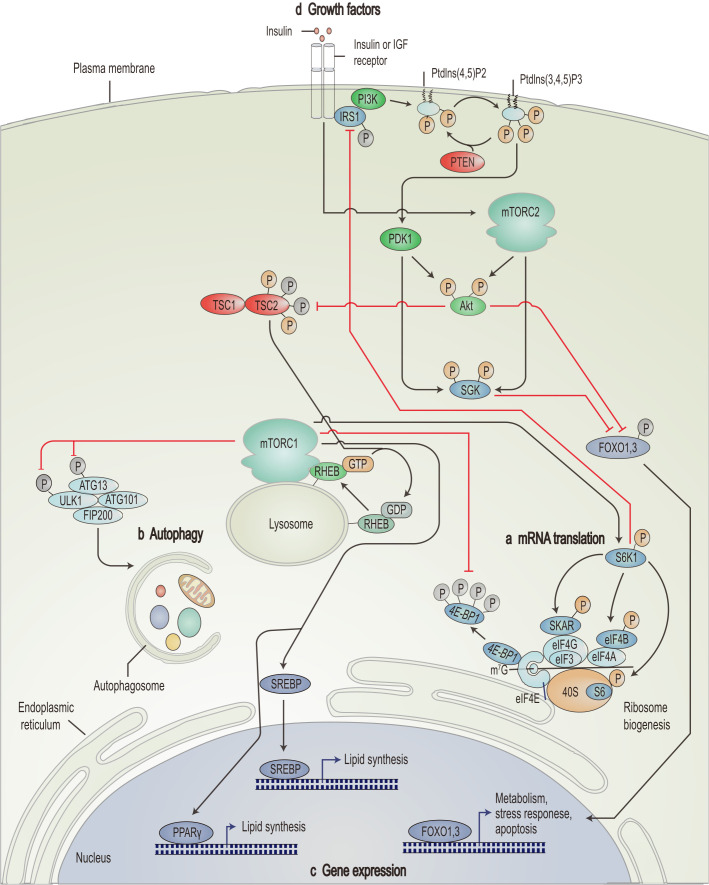
Although pituitary tumors (PTs) are mostly benign, some PTs are characterized by low surgical resection rates, high recurrence rates, and poor response to conventional treatments and profoundly affect patients' quality of life. Everolimus (EVE) is the only FDA-approved mTOR inhibitor, which can be used for oral treatment. It effectively inhibits tumor cell proliferation and angiogenesis. It has been administered for various neuroendocrine tumors of the digestive tract, lungs, and pancreas. EVE not only suppresses the growth and proliferation of APT cells but also enhances their sensitivity to radiotherapy and chemotherapy. This review introduces the role of the PI3K/AKT/mTOR pathway in the development of APTs, comprehensively explores the current status of preclinical and clinical research of EVE in APTs, and discusses the blood-brain barrier permeability and safety of EVE.
尽管垂体瘤(PTs)大多为良性,但一些垂体瘤的特点是手术切除率低、复发率高、对传统治疗反应不佳,严重影响患者的生活质量。依维莫司(EVE)是唯一获得美国食品药品监督管理局(FDA)批准的mTOR抑制剂,可用于口服治疗。它能有效抑制肿瘤细胞增殖和血管生成。已被用于治疗消化道、肺部和胰腺的各种神经内分泌肿瘤。EVE不仅能抑制垂体腺瘤(APT)细胞的生长和增殖,还能增强其对放疗和化疗的敏感性。本综述介绍了PI3K/AKT/mTOR通路在垂体腺瘤发生发展中的作用,全面探讨了依维莫司在垂体腺瘤的临床前和临床研究现状,并讨论了依维莫司的血脑屏障通透性和安全性。