• 文献检索
  • 文档翻译
  • 深度研究
  • 学术资讯
  • Suppr Zotero 插件Zotero 插件
  • 邀请有礼
  • 套餐&价格
  • 历史记录
应用&插件
Suppr Zotero 插件Zotero 插件浏览器插件Mac 客户端Windows 客户端微信小程序
定价
高级版会员购买积分包购买API积分包
服务
文献检索文档翻译深度研究API 文档MCP 服务
关于我们
关于 Suppr公司介绍联系我们用户协议隐私条款
关注我们

Suppr 超能文献

核心技术专利:CN118964589B侵权必究
粤ICP备2023148730 号-1Suppr @ 2026

文献检索

告别复杂PubMed语法,用中文像聊天一样搜索,搜遍4000万医学文献。AI智能推荐,让科研检索更轻松。

立即免费搜索

文件翻译

保留排版,准确专业,支持PDF/Word/PPT等文件格式,支持 12+语言互译。

免费翻译文档

深度研究

AI帮你快速写综述,25分钟生成高质量综述,智能提取关键信息,辅助科研写作。

立即免费体验

可溶性CD52通过人类精液介导免疫抑制。

Soluble CD52 mediates immune suppression by human seminal fluid.

作者信息

Harrison Leonard C, Stone Natalie L, Bandala-Sanchez Esther, Huntington Nicholas D, McLachlan Robert I, Rautela Jai, O'Bryan Moira K

机构信息

Population Heath and Immunity Division, Walter and Eliza Hall Institute of Medical Research, Parkville, VIC, Australia.

The University of Melbourne, Department of Medical Biology, Parkville, VIC, Australia.

出版信息

Front Immunol. 2024 Dec 16;15:1497889. doi: 10.3389/fimmu.2024.1497889. eCollection 2024.

DOI:10.3389/fimmu.2024.1497889
PMID:39737172
原文链接:https://pmc.ncbi.nlm.nih.gov/articles/PMC11682959/
Abstract

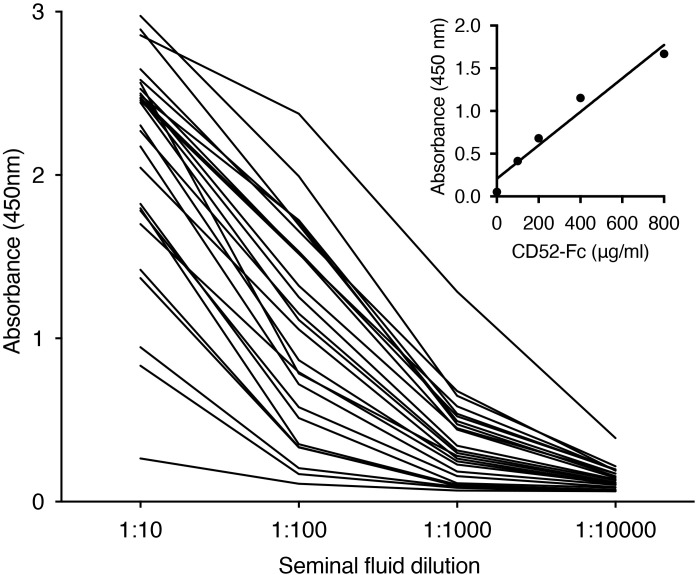
Seminal fluid provides for the carriage and nutrition of sperm, but also modulates immunity to prevent allo-rejection of sperm by the female. Immune suppression by seminal fluid has been associated with extracellular vesicles, originally termed prostasomes, which contain CD52, a glycosylated glycophosphoinositol-anchored peptide released from testicular epithelial cells. Previously, we reported that human T cell-derived CD52, bound to the danger-associated molecular pattern protein, high mobility group box 1 (HMGB1), suppresses T cell function via the inhibitory sialic acid-binding immunoglobulin-like lectin-10 (Siglec-10) receptor. Here we show that human seminal fluid contains high concentrations of CD52 complexed with HMGB1, which mediates T cell suppression indirectly via Siglec-7 on antigen-presenting cells. Proliferation of natural killer (NK) cells, which express Siglec-7 and play a key role in the immune defence of the uterus, was directly suppressed by seminal fluid CD52. These findings elucidate a critical function of seminal fluid to suppress cellular immunity and facilitate reproduction.

摘要

精液不仅为精子提供运输和营养,还能调节免疫,防止女性对精子产生同种异体排斥反应。精液的免疫抑制作用与细胞外囊泡有关,这些囊泡最初被称为前列腺小体,其中含有CD52,一种从睾丸上皮细胞释放的糖基化糖磷脂酰肌醇锚定肽。此前,我们报道过,与危险相关分子模式蛋白高迁移率族蛋白B1(HMGB1)结合的人T细胞衍生的CD52,通过抑制性唾液酸结合免疫球蛋白样凝集素10(Siglec-10)受体抑制T细胞功能。在此,我们表明,人精液中含有高浓度与HMGB1复合的CD52,其通过抗原呈递细胞上的Siglec-7间接介导T细胞抑制。精液中的CD52直接抑制了自然杀伤(NK)细胞的增殖,NK细胞表达Siglec-7,在子宫免疫防御中起关键作用。这些发现阐明了精液在抑制细胞免疫和促进生殖方面的关键功能。
https://cdn.ncbi.nlm.nih.gov/pmc/blobs/92be/11682959/5c5d8e8bc63c/fimmu-15-1497889-g007.jpg
https://cdn.ncbi.nlm.nih.gov/pmc/blobs/92be/11682959/3e5f34be3b70/fimmu-15-1497889-g001.jpg
https://cdn.ncbi.nlm.nih.gov/pmc/blobs/92be/11682959/4741e3723bac/fimmu-15-1497889-g002.jpg
https://cdn.ncbi.nlm.nih.gov/pmc/blobs/92be/11682959/779ad9c167b3/fimmu-15-1497889-g003.jpg
https://cdn.ncbi.nlm.nih.gov/pmc/blobs/92be/11682959/c931936bb29d/fimmu-15-1497889-g004.jpg
https://cdn.ncbi.nlm.nih.gov/pmc/blobs/92be/11682959/4b642b702bac/fimmu-15-1497889-g005.jpg
https://cdn.ncbi.nlm.nih.gov/pmc/blobs/92be/11682959/67a298d0bce2/fimmu-15-1497889-g006.jpg
https://cdn.ncbi.nlm.nih.gov/pmc/blobs/92be/11682959/5c5d8e8bc63c/fimmu-15-1497889-g007.jpg
https://cdn.ncbi.nlm.nih.gov/pmc/blobs/92be/11682959/3e5f34be3b70/fimmu-15-1497889-g001.jpg
https://cdn.ncbi.nlm.nih.gov/pmc/blobs/92be/11682959/4741e3723bac/fimmu-15-1497889-g002.jpg
https://cdn.ncbi.nlm.nih.gov/pmc/blobs/92be/11682959/779ad9c167b3/fimmu-15-1497889-g003.jpg
https://cdn.ncbi.nlm.nih.gov/pmc/blobs/92be/11682959/c931936bb29d/fimmu-15-1497889-g004.jpg
https://cdn.ncbi.nlm.nih.gov/pmc/blobs/92be/11682959/4b642b702bac/fimmu-15-1497889-g005.jpg
https://cdn.ncbi.nlm.nih.gov/pmc/blobs/92be/11682959/67a298d0bce2/fimmu-15-1497889-g006.jpg
https://cdn.ncbi.nlm.nih.gov/pmc/blobs/92be/11682959/5c5d8e8bc63c/fimmu-15-1497889-g007.jpg

相似文献

1
Soluble CD52 mediates immune suppression by human seminal fluid.可溶性CD52通过人类精液介导免疫抑制。
Front Immunol. 2024 Dec 16;15:1497889. doi: 10.3389/fimmu.2024.1497889. eCollection 2024.
2
CD52 glycan binds the proinflammatory B box of HMGB1 to engage the Siglec-10 receptor and suppress human T cell function.CD52 聚糖结合 HMGB1 的促炎 B 盒结构域,以结合 Siglec-10 受体并抑制人 T 细胞功能。
Proc Natl Acad Sci U S A. 2018 Jul 24;115(30):7783-7788. doi: 10.1073/pnas.1722056115. Epub 2018 Jul 11.
3
Siglec-10 expression is up-regulated in activated human CD4 T cells.Siglec-10 在活化的人 CD4 T 细胞中表达上调。
Hum Immunol. 2020 Feb-Mar;81(2-3):101-104. doi: 10.1016/j.humimm.2020.01.009. Epub 2020 Feb 9.
4
Specific Sialoforms Required for the Immune Suppressive Activity of Human Soluble CD52.人可溶性 CD52 免疫抑制活性所需的特定唾液酸形式。
Front Immunol. 2019 Aug 27;10:1967. doi: 10.3389/fimmu.2019.01967. eCollection 2019.
5
The immunological function of CD52 and its targeting in organ transplantation.CD52的免疫功能及其在器官移植中的靶向作用。
Inflamm Res. 2017 Jul;66(7):571-578. doi: 10.1007/s00011-017-1032-8. Epub 2017 Mar 10.
6
Identification of Siglec-9 as the receptor for MUC16 on human NK cells, B cells, and monocytes.鉴定 Siglec-9 为人类 NK 细胞、B 细胞和单核细胞上的 MUC16 受体。
Mol Cancer. 2010 May 24;9:118. doi: 10.1186/1476-4598-9-118.
7
Siglec-7 Defines a Highly Functional Natural Killer Cell Subset and Inhibits Cell-Mediated Activities.唾液酸结合免疫球蛋白样凝集素7定义了一个高功能的自然杀伤细胞亚群并抑制细胞介导的活性。
Scand J Immunol. 2016 Sep;84(3):182-90. doi: 10.1111/sji.12455.
8
Probing the cis interactions of the inhibitory receptor Siglec-7 with alpha2,8-disialylated ligands on natural killer cells and other leukocytes using glycan-specific antibodies and by analysis of alpha2,8-sialyltransferase gene expression.利用聚糖特异性抗体并通过分析α2,8-唾液酸转移酶基因表达,探究抑制性受体Siglec-7与自然杀伤细胞和其他白细胞上的α2,8-二唾液酸化配体的顺式相互作用。
J Leukoc Biol. 2006 Oct;80(4):787-96. doi: 10.1189/jlb.1005559. Epub 2006 Jul 20.
9
T cell regulation mediated by interaction of soluble CD52 with the inhibitory receptor Siglec-10.可溶性 CD52 通过与抑制性受体 Siglec-10 的相互作用介导 T 细胞调节。
Nat Immunol. 2013 Jul;14(7):741-8. doi: 10.1038/ni.2610. Epub 2013 May 19.
10
Siglec-7 expression is reduced on a natural killer (NK) cell subset of obese humans.Siglec-7 在肥胖人群的自然杀伤 (NK) 细胞亚群上的表达减少。
Immunol Res. 2017 Oct;65(5):1017-1024. doi: 10.1007/s12026-017-8942-y.

本文引用的文献

1
A discrete subset of epigenetically primed human NK cells mediates antigen-specific immune responses.一组离散的受表观遗传学调控的人类自然杀伤细胞亚群介导了抗原特异性免疫反应。
Sci Immunol. 2020 Oct 16;5(52). doi: 10.1126/sciimmunol.aba6232.
2
The Role of the Epididymis and the Contribution of Epididymosomes to Mammalian Reproduction.附睾的作用和附睾小体对哺乳动物生殖的贡献。
Int J Mol Sci. 2020 Jul 29;21(15):5377. doi: 10.3390/ijms21155377.
3
The cancer-natural killer cell immunity cycle.癌症-自然杀伤细胞免疫周期。
Nat Rev Cancer. 2020 Aug;20(8):437-454. doi: 10.1038/s41568-020-0272-z. Epub 2020 Jun 24.
4
HLA-DR-expressing NK cells: Effective killers suspected for antigen presentation.表达 HLA-DR 的 NK 细胞:具有抗原呈递功能的有效杀伤细胞。
J Leukoc Biol. 2021 Feb;109(2):327-337. doi: 10.1002/JLB.3RU0420-668RR. Epub 2020 May 18.
5
Siglec-10 expression is up-regulated in activated human CD4 T cells.Siglec-10 在活化的人 CD4 T 细胞中表达上调。
Hum Immunol. 2020 Feb-Mar;81(2-3):101-104. doi: 10.1016/j.humimm.2020.01.009. Epub 2020 Feb 9.
6
The Female Response to Seminal Fluid.女性对精液的反应。
Physiol Rev. 2020 Jul 1;100(3):1077-1117. doi: 10.1152/physrev.00013.2018. Epub 2020 Jan 30.
7
CD52 glycan binds the proinflammatory B box of HMGB1 to engage the Siglec-10 receptor and suppress human T cell function.CD52 聚糖结合 HMGB1 的促炎 B 盒结构域,以结合 Siglec-10 受体并抑制人 T 细胞功能。
Proc Natl Acad Sci U S A. 2018 Jul 24;115(30):7783-7788. doi: 10.1073/pnas.1722056115. Epub 2018 Jul 11.
8
Siglec expression on the surface of human, bull and ram sperm.人、牛和公羊精子表面的 Siglec 表达。
Reproduction. 2018 Apr;155(4):361-371. doi: 10.1530/REP-17-0475.
9
CD52 inhibits Toll-like receptor activation of NF-κB and triggers apoptosis to suppress inflammation.CD52 抑制 Toll 样受体激活 NF-κB 并触发细胞凋亡以抑制炎症。
Cell Death Differ. 2018 Feb;25(2):392-405. doi: 10.1038/cdd.2017.173. Epub 2017 Dec 15.
10
Functional deficit of sperm and fertility impairment in men with antisperm antibodies.患有抗精子抗体的男性精子功能缺陷与生育能力受损
J Reprod Immunol. 2015 Nov;112:95-101. doi: 10.1016/j.jri.2015.08.002. Epub 2015 Sep 2.