Wang Jiying, Xu Weisheng, Wang Qingqing, Yang Peng, Kan Yanpeng, Huang Chao, Lin Fuqing
Department of Pain Medicine, Shanghai Tenth People's Hospital, Tongji University School of Medicine, Shanghai, 200072, People's Republic of China.
Department of Anesthesiology, Shanghai Tenth People's Hospital, Tongji University School of Medicine, Shanghai, 200072, People's Republic of China.
J Pain Res. 2024 Dec 25;17:4521-4531. doi: 10.2147/JPR.S497061. eCollection 2024.
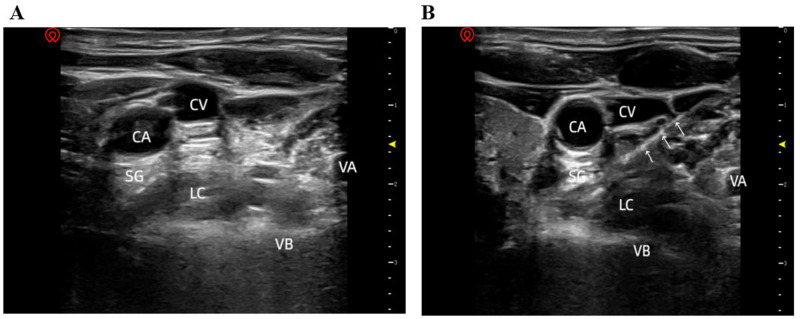
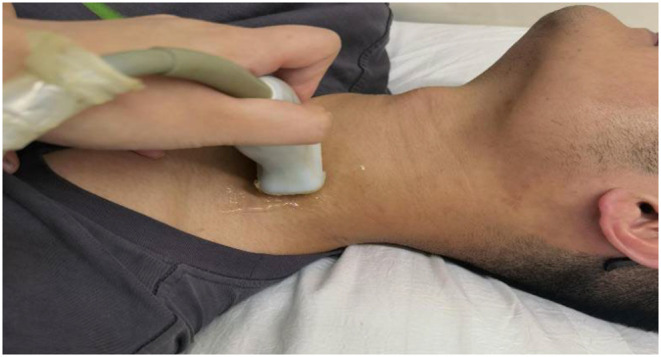
The best tool for the management of pain associated with distal symmetric peripheral neuropathy (DSPN) is a matter of debate. Therefore, the study aimed to explore whether ultrasound-guided pulsed radiofrequency (PRF) therapy of the stellate ganglion (SG) in type 2 diabetes mellitus (T2DM) patients with painful DSPN could decrease pain severity and the need for analgesics.
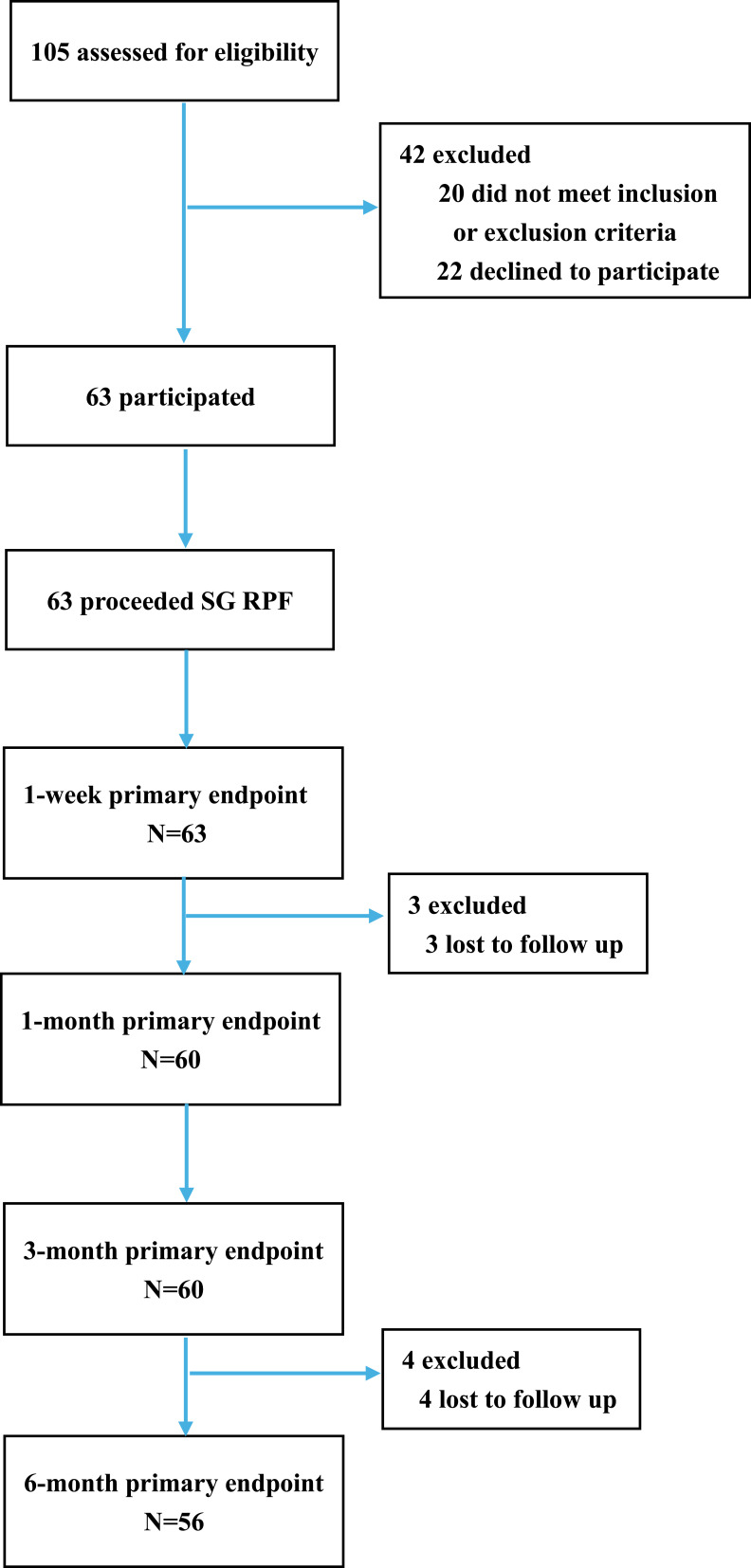
Fifty-six T2DM patients with refractory painful DSPN were enrolled in this study, who then received bilateral ultrasound-guided PRF therapy of SG. The patients completed visual analog scale (VAS), simplified McGill pain questionnaire (SF-MPQ), Toronto clinical score system (TCSS), sleep duration at night (SDN), pain disability index (PDI), Karnofsky performance status (KPS), and depression screening scale (PHQ-9). After procedures, the degree of perceived pain relief, numbness relief and chills relief of the patients, and side effects were assessed. All patients underwent evaluation after the last procedure at 1, 4, 12 and 24-week follow-up periods.
The postoperative VAS, SF-MPQ, TCSS, PDI and PHQ-9 scores were significantly lower, while the KPS values higher than the preoperative (P<0.05). The postoperative SDN was longer than the preoperative (P<0.05). The degree of perceived pain relief, chills relief, and numbness relief at 4, 12, and 24 weeks were lower than that at 1 week after the procedures (P<0.05). The postoperative rates of administration of analgesic were lower than those of preoperative period (P<0.05). The significant effective rates at 1, 4, 12, and 24 weeks after the procedure were 67.86%, 42.86%, 21.43%, and 17.86% and the total effective rates were 89.29%, 71.43%, 46.43%, and 32.14%. No serious complication was observed.
Ultrasound-guided stellate ganglion PRF therapy can effectively relieve pain and improve the quality of life in T2DM patients with refractory painful DSPN.
用于管理与远端对称性周围神经病变(DSPN)相关疼痛的最佳工具存在争议。因此,本研究旨在探讨超声引导下对2型糖尿病(T2DM)合并疼痛性DSPN患者进行星状神经节(SG)脉冲射频(PRF)治疗是否能降低疼痛严重程度以及减少镇痛药的使用需求。
本研究纳入了56例难治性疼痛性DSPN的T2DM患者,随后对其进行双侧超声引导下的SG PRF治疗。患者完成视觉模拟量表(VAS)、简化麦吉尔疼痛问卷(SF-MPQ)、多伦多临床评分系统(TCSS)、夜间睡眠时间(SDN)、疼痛残疾指数(PDI)、卡氏功能状态评分(KPS)以及抑郁筛查量表(PHQ-9)。治疗后,评估患者的疼痛缓解程度、麻木缓解程度、寒战缓解程度以及副作用情况。所有患者在最后一次治疗后的1、4、12和24周随访期进行评估。
术后VAS、SF-MPQ、TCSS、PDI和PHQ-9评分显著低于术前,而KPS值高于术前(P<0.05)。术后SDN长于术前(P<0.05)。术后4周、12周和24周的疼痛缓解程度、寒战缓解程度和麻木缓解程度低于治疗后1周(P<0.05)。术后镇痛药的使用比例低于术前(P<0.05)。术后1周、4周、12周和24周的显效率分别为67.86%、42.86%、21.43%和17.86%,总有效率分别为89.29%、71.43%、46.43%和32.14%。未观察到严重并发症。
超声引导下星状神经节PRF治疗可有效缓解T2DM合并难治性疼痛性DSPN患者的疼痛并改善其生活质量。