Aphaiso Beedou, Piromyou Pongdet, Boonchuen Pakpoom, Songwattana Pongpan, Wongdee Jenjira, Greetatorn Teerana, Teamtisong Kamonluck, Camuel Alicia, Tittabutr Panlada, Boonkerd Nantakorn, Giraud Eric, Teaumroong Neung
School of Biotechnology, Institute of Agricultural Technology, Suranaree University of Technology, Nakhon Ratchasima, 30000, Thailand.
Deparment of plant science, Faculty of Agriculture and environment, Savannakhet University, Savannakhet 14, Kaysone Phomvihane, Laos.
Sci Rep. 2024 Dec 30;14(1):31646. doi: 10.1038/s41598-024-78913-2.
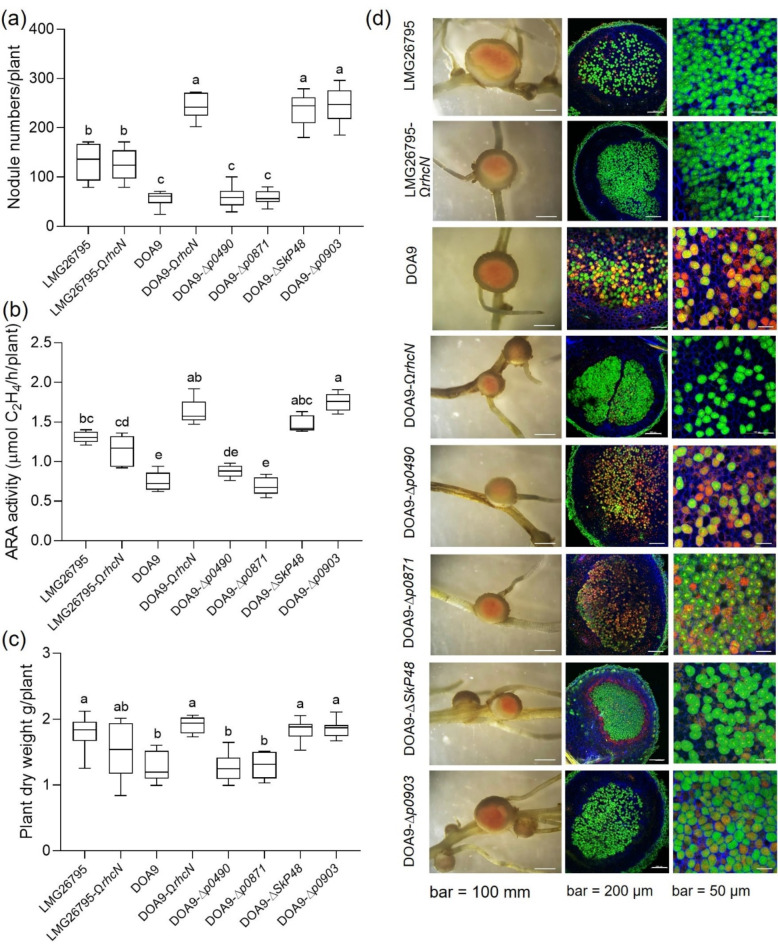
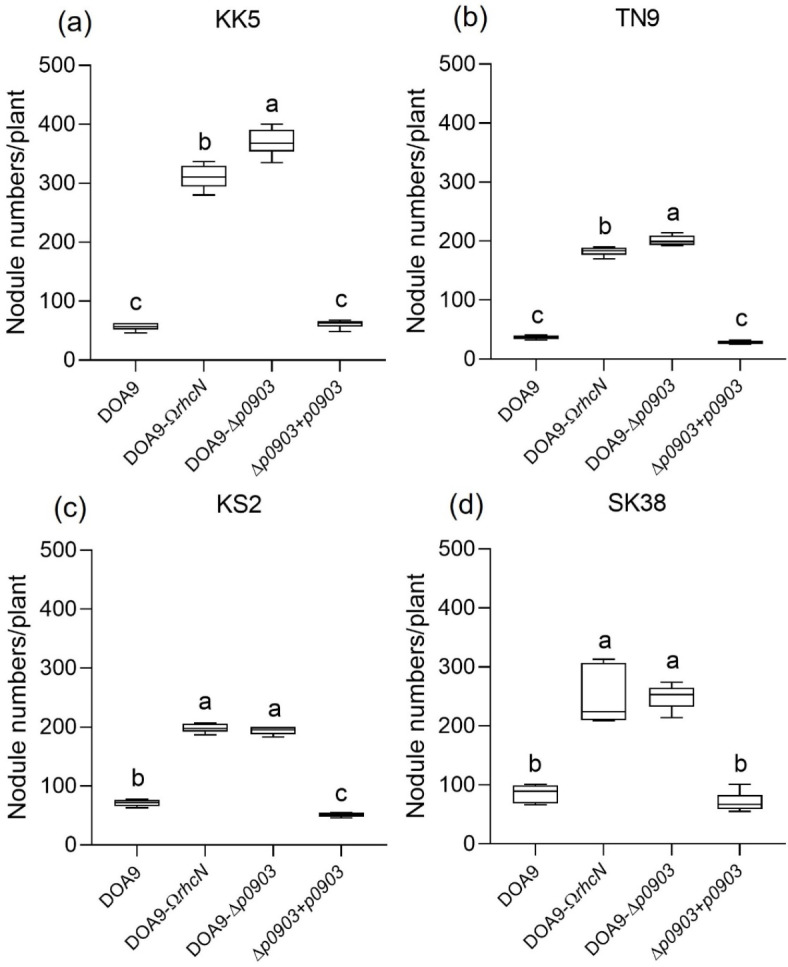
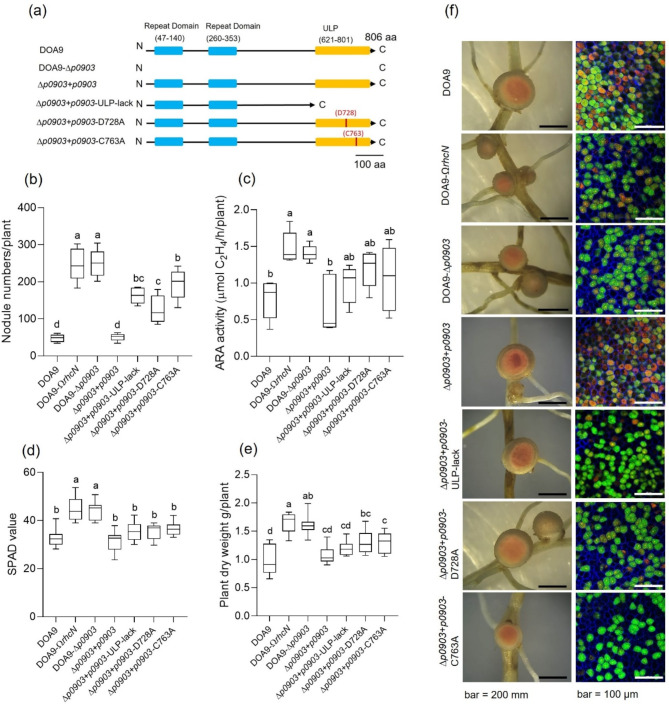
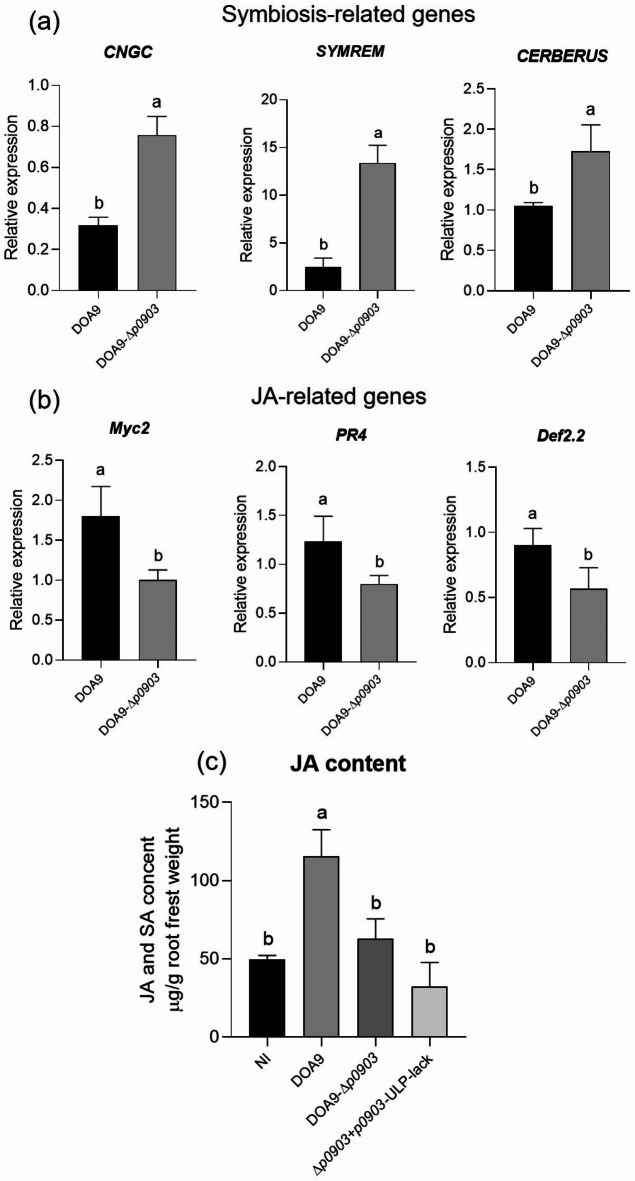
Effector proteins secreted via the type III secretion system (T3SS) of nitrogen-fixing rhizobia are key determinants of symbiotic compatibility in legumes. Previous report revealed that the T3SS of Bradyrhizobium sp. DOA9 plays negative effects on Arachis hypogaea symbiosis. In this study, we characterized the symbiotic role of 4 effector proteins (p0490, p0871, SkP48, and p0903) containing the small ubiquitin-like modifier (SUMO) protease domain identified in DOA9 during symbiosis. While the DOA9 strain and the two mutants of SUMO-proteases, p0490 and p0871, induced inefficient nodulation in A. hypogaea, the mutation of SUMO-proteases SkP48 or p0903 promoted efficient symbiosis comparable to the type strain Bradyrhizobium arachidis CCBAU051107. Complementation study of ∆p0903 with various mutated forms of p0903 highlighted importance of ubiquitin-like protein (ULP) domain in restriction of nodulation in A. hypogaea. We observed the accumulation of jasmonic acid (JA) and upregulation of several defence genes involved in the JA/ethylene (ET) signalling pathway at the early stage of infection in roots inoculated with DOA9 strain compared with those inoculated with the DOA9-∆p0903 strain. Our data highlight the importance of SUMO-protease effectors during the symbiotic interaction between bradyrhizobia and A. hypogaea, which could be useful for the development of high-performance inocula to improve its growth.
通过固氮根瘤菌的III型分泌系统(T3SS)分泌的效应蛋白是豆科植物共生兼容性的关键决定因素。先前的报告显示,慢生根瘤菌属DOA9的T3SS对花生共生具有负面影响。在本研究中,我们表征了在共生过程中在DOA9中鉴定出的4种含有小泛素样修饰物(SUMO)蛋白酶结构域的效应蛋白(p0490、p0871、SkP48和p0903)的共生作用。虽然DOA9菌株以及SUMO蛋白酶的两个突变体p0490和p0871在花生中诱导了低效结瘤,但SUMO蛋白酶SkP48或p0903的突变促进了与模式菌株花生慢生根瘤菌CCBAU051107相当的高效共生。用各种p0903突变形式对∆p0903进行的互补研究突出了泛素样蛋白(ULP)结构域在限制花生结瘤中的重要性。与接种DOA9-∆p0903菌株的根相比,我们观察到在用DOA9菌株接种的根的感染早期,茉莉酸(JA)积累以及参与JA/乙烯(ET)信号通路的几个防御基因上调。我们的数据突出了SUMO蛋白酶效应蛋白在慢生根瘤菌与花生共生相互作用中的重要性,这可能有助于开发高性能接种物以促进其生长。