Plöger Ruben, Behning Charlotte, Walter Adeline, Gembruch Ulrich, Strizek Brigitte, Recker Florian
Department of Obstetrics and Prenatal Medicine, University Hospital Bonn, Venusberg Campus 1, 53127, Bonn, Germany.
Institute for Medical Biometry, Informatics and Epidemiology, University Hospital Bonn, Venusberg Campus 1, 53127, Bonn, Germany.
Sci Rep. 2024 Dec 30;14(1):31844. doi: 10.1038/s41598-024-83160-6.
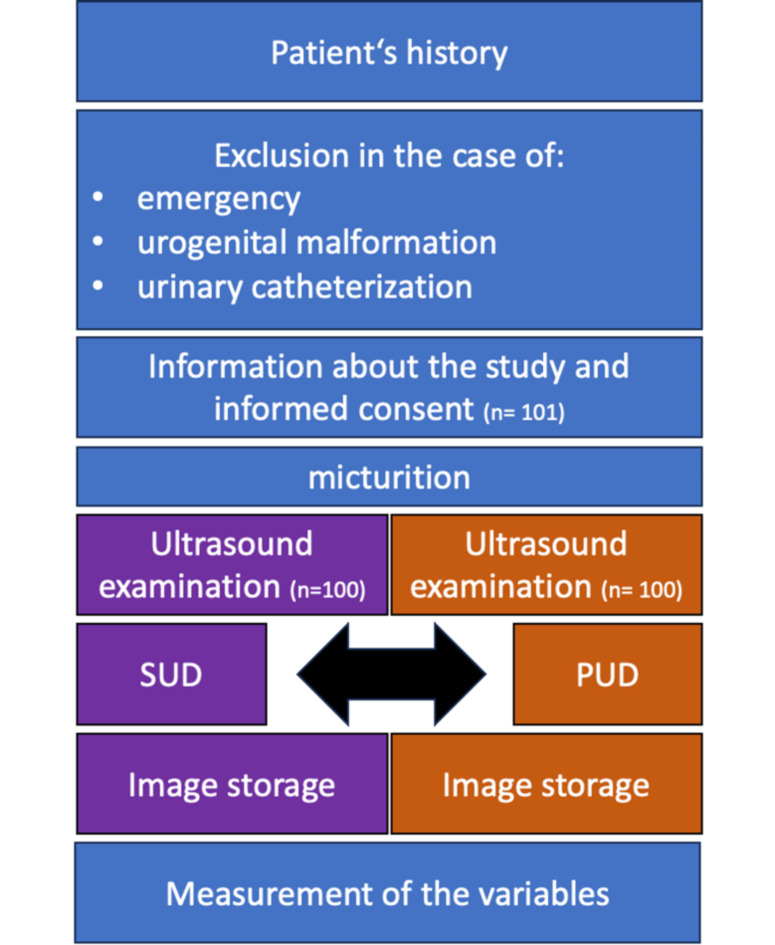
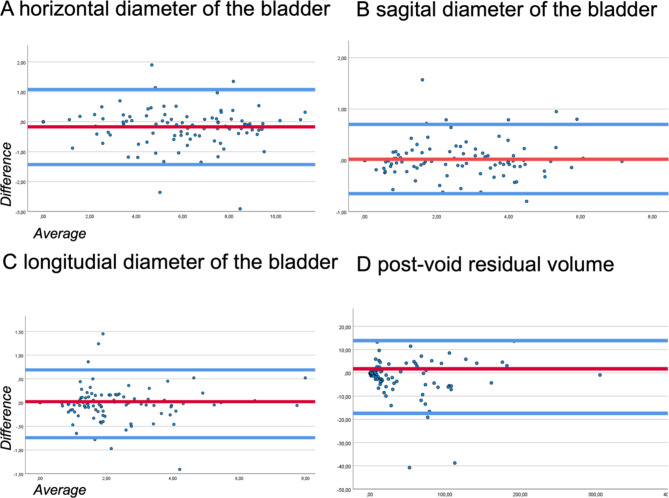
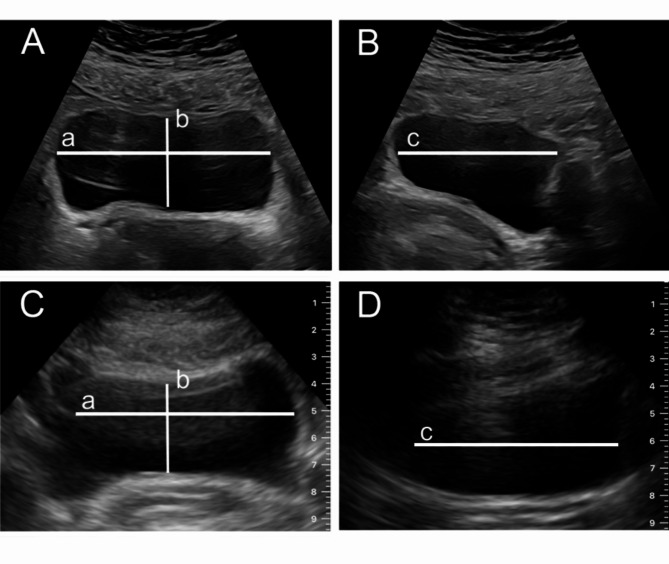
Postpartum urinary retention has a wide range of publicized incidences, likely caused by frequent misdiagnosis of this puerperal complication. Especially covert postpartum urinary retention has a high number of missed diagnoses due to the lack of symptoms and the time-extensive diagnostics via ultrasound, leading to no treatment and no appropriate follow-up. To simplify the diagnosis and establish a screening tool we analyzed the application of portable handheld-ultrasound devices (PUD) as used in Point-of-care diagnostics in comparison to established standard ultrasound devices (SUD). This prospective study aimed to evaluate the reliability of non-piezo, chip-based PUD in comparison to the measurement withSUD, containing a piezo transducer, as golden standard for the ultrasound diagnosis of postpartum urinary retention. Randomly, 100 participants between the first and seventh day after delivery in an obstetric ward underwent ultrasound examinations using a EPIQ 5 W (Philips) as SUD and a Butterfly iQ (Butterfly Network) as PUD to compare the accuracy in bladder size after micturition and the estimated post-void residual volume. Intraclass correlation coefficients, Bland-Altman plots, and Pearson correlation coefficients were used for analyzing the reliability and agreement between the measurements of these devices and were calculated for subgroups as body mass index, mode of delivery and timepoint of delivery. The results show a near-perfect agreement (0.994) and correlation (r = 0.982) for estimated post-void residual volume and for most measurements between the two types of ultrasound devices. The agreement rate for the diagnosis of covert postpartum urinary retention is 100%. Subgroup analyses lack a significant difference reflected by agreement and correlation rates. These findings affirm the high reliability of PUD for the diagnosis of postpartum urinary retention and supports their integration into daily clinical practice, thereby simplifying regular controls of the bladder by physicians during daily rounds on the ward. This technology may allow a higher diagnosis rate so that patient care can be optimized and the long-term impact on continence and quality of life can be studied and analysed.
产后尿潴留的发病率有多种公开报道,这可能是由于对这种产后并发症的频繁误诊所致。特别是隐匿性产后尿潴留,由于缺乏症状以及通过超声进行的耗时诊断,导致大量漏诊,进而得不到治疗和适当的随访。为了简化诊断并建立一种筛查工具,我们分析了便携式手持超声设备(PUD)在即时诊断中的应用,并与已确立的标准超声设备(SUD)进行了比较。这项前瞻性研究旨在评估与含有压电换能器的SUD测量相比,非压电、基于芯片的PUD在产后尿潴留超声诊断中的可靠性,其中SUD测量作为金标准。随机选取产科病房产后第1天至第7天的100名参与者,分别使用EPIQ 5 W(飞利浦)作为SUD和Butterfly iQ(Butterfly Network)作为PUD进行超声检查,以比较排尿后膀胱大小的准确性和估计的残余尿量。组内相关系数、Bland-Altman图和Pearson相关系数用于分析这些设备测量之间的可靠性和一致性,并针对体重指数、分娩方式和分娩时间点等亚组进行计算。结果显示,两种类型超声设备之间在估计的残余尿量以及大多数测量方面,一致性接近完美(0.994)且相关性良好(r = 0.982)。隐匿性产后尿潴留的诊断符合率为100%。亚组分析显示,一致性和相关性率未反映出显著差异。这些发现证实了PUD在诊断产后尿潴留方面的高可靠性,并支持将其纳入日常临床实践,从而简化医生在病房日常查房期间对膀胱的常规检查。这项技术可能会提高诊断率,从而优化患者护理,并对尿失禁和生活质量的长期影响进行研究和分析。