Oruni Ambrose, Tchouakui Magellan, Tagne Carlos S Djoko, Hearn Jack, Kayondo Jonathan, Wondji Charles S
Entomology Department, Uganda Virus Research Institute, P.O. BOX 49, Entebbe, Uganda.
Centre for Research in Infectious Diseases, LSTM-Research Unit, P.O BOX 3591, Yaoundé, Cameroon.
Sci Rep. 2024 Dec 30;14(1):32027. doi: 10.1038/s41598-024-83689-6.
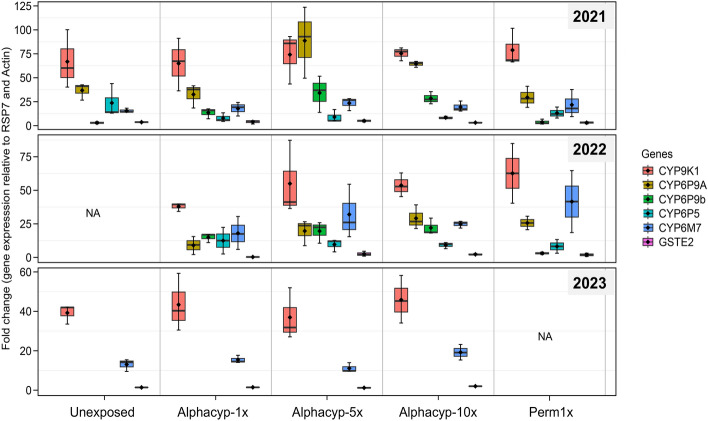
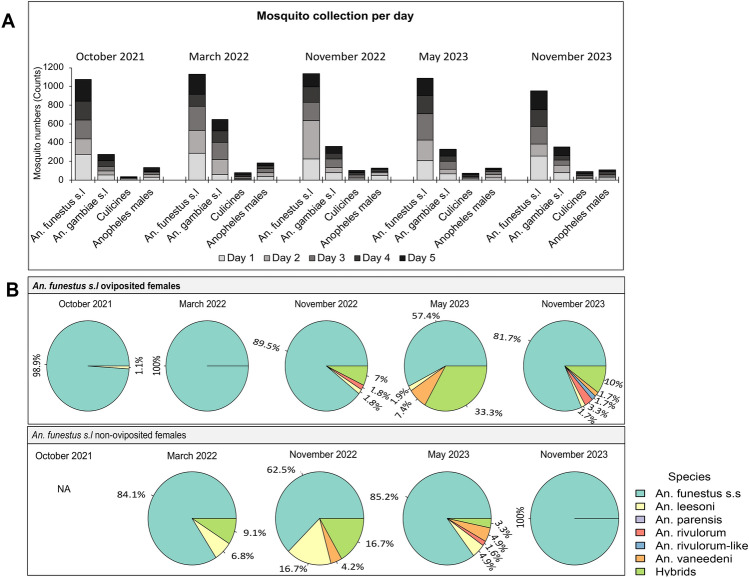
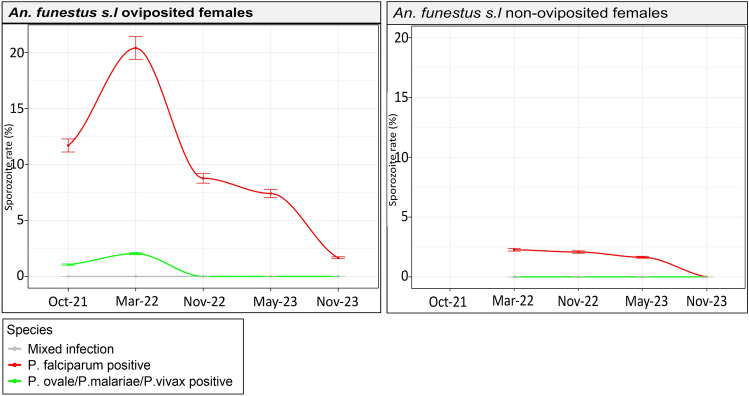
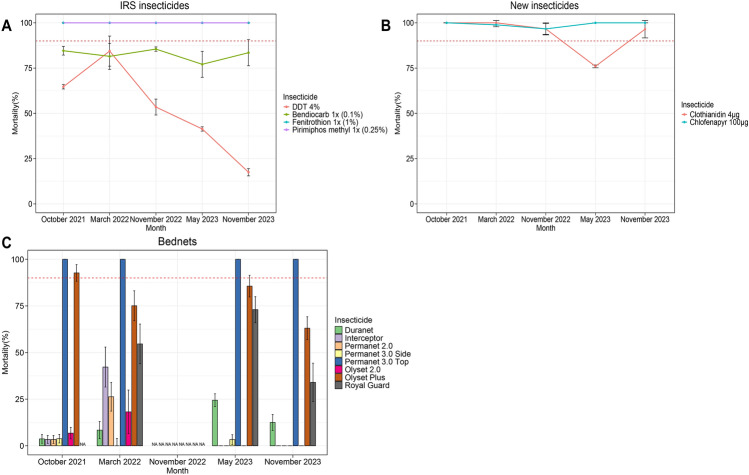
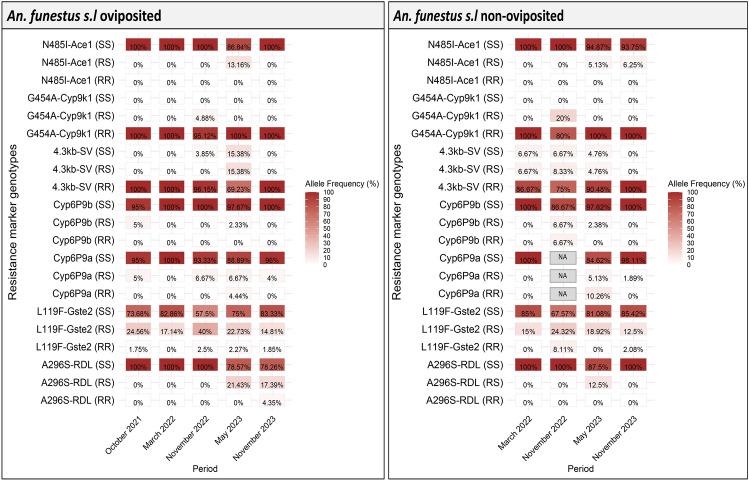
Insecticide resistance escalation is decreasing the efficacy of vector control tools. Monitoring vector resistance is paramount in order to understand its evolution and devise effective counter-solutions. In this study, we monitored insecticide resistance patterns, vector population bionomics and genetic variants associated with resistance over 3 years from 2021 to 2023 in Uganda. Anopheles funestus s.s was the predominant species in Mayuge but with evidence of hybridization with other species of the An. funestus group. Sporozoite infection rates were relatively very high with a peak of 20.41% in March 2022. Intense pyrethroid resistance was seen against pyrethroids up to 10-times the diagnostic concentration but partial recovery of susceptibility in PBO synergistic assays. Among bednets, only PBO-based nets (PermaNet 3.0 Top and Olyset Plus) and chlorfenapyr-based net (Interceptor G2) had high mortality rates. Mosquitoes were fully susceptible to chlorfenapyr and organophosphates, moderately resistant to clothianidin and resistant to carbamates. The allele frequency of key P450, CYP9K1, resistance marker was constantly very high but that for CYP6P9A/b were very low. Interestingly, we report the first detection of resistance alleles for Ace1 gene (RS = ~ 13%) and Rdl gene (RS = ~ 21%, RR = ~ 4%) in Uganda. The qRT-PCR revealed that Cytochrome P450s CYP9K1, CYP6P9A, CYP6P9b, CYP6P5 and CYP6M7 were consistently upregulated while a glutathione-S-transferase gene (GSTE2) showed low expression. Our study shows the complexity of insecticide resistance patterns and underlying mechanisms, hence constant and consistent spatial and temporal monitoring is crucial to rapidly detect changing resistance profiles which is key in informing deployment of counter interventions.
杀虫剂抗性增强正在降低病媒控制工具的效力。监测病媒抗性对于了解其演变并制定有效的应对措施至关重要。在本研究中,我们在2021年至2023年的3年时间里,对乌干达的杀虫剂抗性模式、病媒种群生物学特性以及与抗性相关的基因变异进行了监测。在马尤盖,嗜人按蚊指名亚种是主要物种,但有证据表明它与嗜人按蚊组的其他物种发生了杂交。子孢子感染率相对非常高,2022年3月达到峰值20.41%。对拟除虫菊酯类杀虫剂表现出强烈抗性,抗性高达诊断浓度的10倍,但在增效醚协同试验中敏感性有部分恢复。在蚊帐中,只有基于增效醚的蚊帐(长效蚊帐3.0顶级款和奥力赛Plus)和基于溴虫腈的蚊帐(Interceptor G2)具有高死亡率。蚊子对溴虫腈和有机磷完全敏感,对噻虫胺中度抗性,对氨基甲酸酯类抗性。关键的细胞色素P450、CYP9K1抗性标记的等位基因频率一直非常高,但CYP6P9A/b的等位基因频率非常低。有趣的是,我们首次在乌干达检测到Ace1基因(抗性频率=约13%)和Rdl基因(抗性频率=约21%,抗性比=约4%)的抗性等位基因。定量逆转录聚合酶链反应显示,细胞色素P450s CYP9K1、CYP6P9A、CYP6P9b、CYP6P5和CYP6M7持续上调,而谷胱甘肽-S-转移酶基因(GSTE2)表达较低。我们的研究表明了杀虫剂抗性模式和潜在机制的复杂性,因此持续一致的时空监测对于快速检测不断变化的抗性谱至关重要,这对于指导应对干预措施的部署至关重要。