Bang Jeseok, Lee Jonathan, Bradford Griffin, Kim Kwangmin, Hu Xinbo, Abraimov Dmytro, Jaroszynski Jan, Polyanskii Anatolii, Noguchi So, Hahn Seungyong, Larbalestier David C
National High Magnetic Field Laboratory, Florida State University, Tallahassee, FL, 32310, USA.
Graduate School of Information Science and Technology, Hokkaido University, Sapporo, Japan.
Sci Rep. 2024 Dec 30;14(1):31703. doi: 10.1038/s41598-024-81902-0.
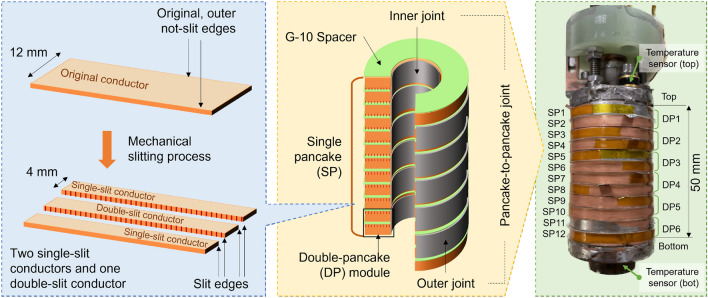
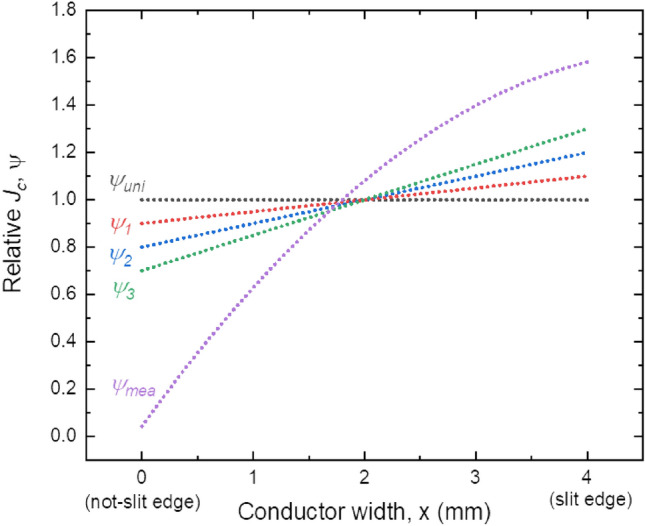
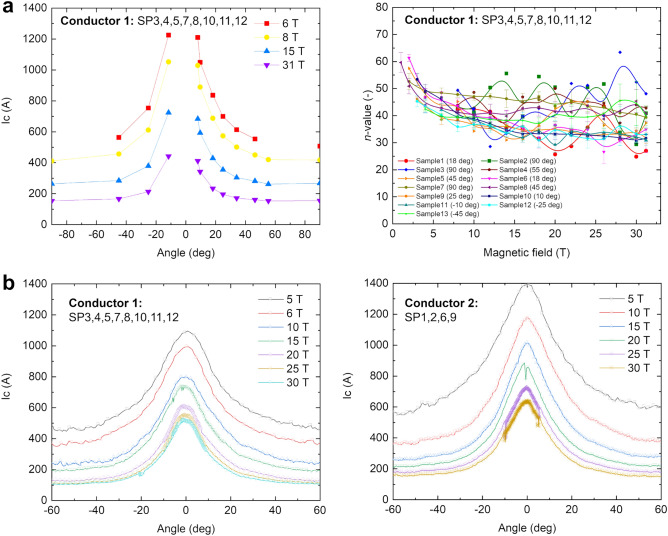
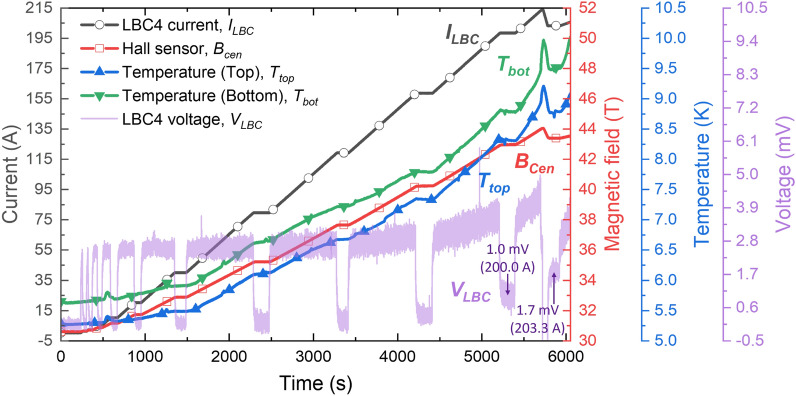
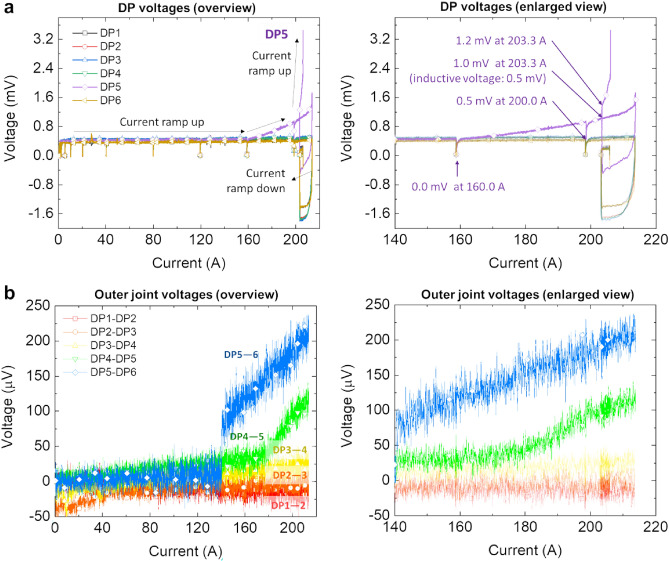
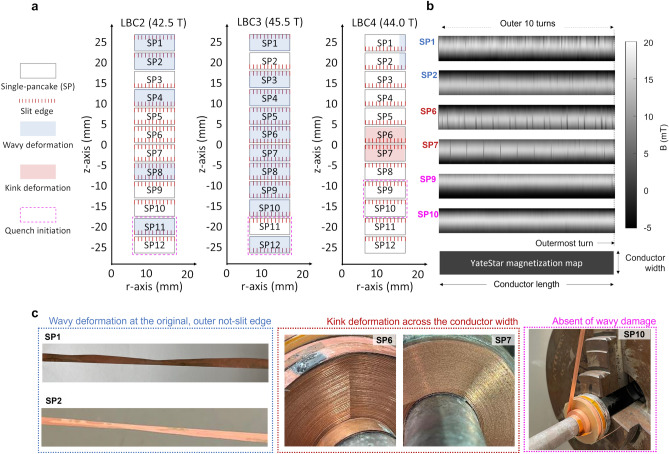
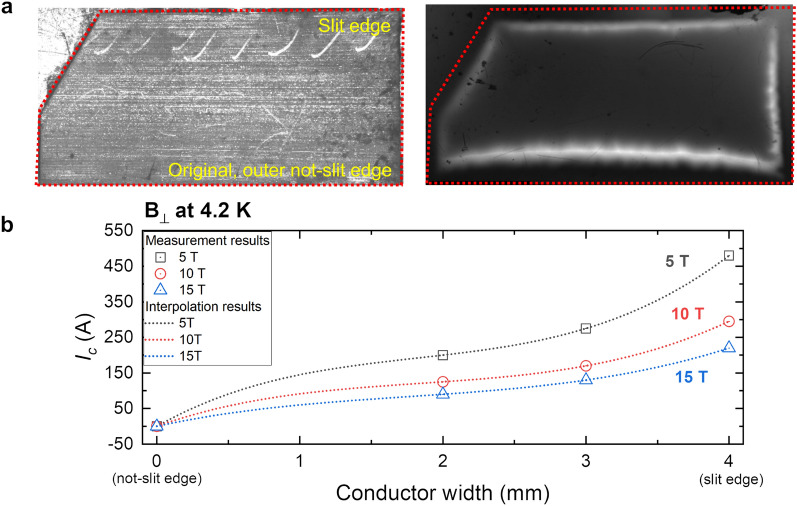
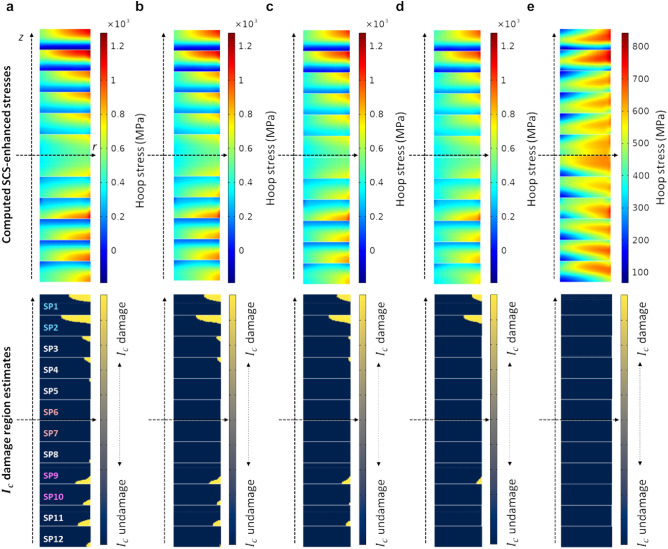
Plastic damage of REBCO (REBaCuO, where RE=rare earth) coated conductors by screening current stress (SCS) is a significant concern for ultra-high-field superconducting magnets. Indeed, the third Little Big Coil (LBC3), a REBCO magnet that generated a record, high field of 45.5 T, showed wavy plastic damage produced by excess SCS in all pancakes except two made with single-slit conductors having their slit edges pointing inward towards the magnet center. Reasons for this slit edge orientation-dependent damage mitigation having not yet been presented, we made it the central issue of this new Little Big Coil (LBC4). Accordingly, we constructed and tested LBC4 by replicating LBC3, except that only single-slit tapes were used and every slit edge pointed inward towards the magnet center. LBC4 reached 44.0 T without quench but with some dissipation. After a small lowering of the current without disappearance of the dissipation, the current was charged again, resulting in a quench at 43.5 T due to excess heating in one pancake-to-pancake joint. Indeed, LBC4 exhibited much less wavy conductor damage than LBC3, demonstrating significant SCS mitigation. Detailed post mortem showed a transverse variation of critical current density ([Formula: see text]) across the LBC4 conductor, [Formula: see text] being highest at the slit edge and lowest at the not-slit edge. Our computed screening current stresses were markedly lowered by this [Formula: see text] gradient. This paper shows the importance of considering such transverse [Formula: see text] variability, which has not previously been considered, in the precise stress analysis of ultra-high-field REBCO magnets.
钇钡铜氧(REBaCuO,其中RE = 稀土)涂层导体因屏蔽电流应力(SCS)导致的塑性损伤是超高场超导磁体的一个重大问题。事实上,第三个小大线圈(LBC3)是一个钇钡铜氧磁体,产生了创纪录的45.5 T高场,除了两个由单缝导体制成且缝边向内指向磁体中心的饼式线圈外,所有饼式线圈都显示出因过量SCS产生的波浪状塑性损伤。由于尚未给出这种缝边取向依赖的损伤减轻的原因,我们将其作为这个新的小大线圈(LBC4)的核心问题。因此,我们通过复制LBC3构建并测试了LBC4,不同之处在于仅使用单缝带材且每个缝边都向内指向磁体中心。LBC4在未失超的情况下达到了44.0 T,但有一些损耗。在电流略有降低但损耗未消失后,再次充电电流,由于一个饼式线圈到饼式线圈接头处的过热,在43.5 T时发生失超。实际上,LBC4表现出的导体波浪状损伤比LBC3少得多,表明SCS得到了显著减轻。详细的事后分析表明,LBC4导体的临界电流密度([公式:见原文])存在横向变化,[公式:见原文]在缝边处最高,在非缝边处最低。我们计算得到的屏蔽电流应力因这种[公式:见原文]梯度而显著降低。本文表明,在超高场钇钡铜氧磁体的精确应力分析中,考虑这种先前未被考虑的横向[公式:见原文]变化非常重要。