Yuan Jian, Qiu Ruowen, Wang Yuhan, Chen Zhen Ji, Sun Haojun, Dai Wei, Yao Yinghao, Zhuo Ran, Li Kai, Xing Shilai, Yu Xiaoguang, Qiao Liya, Qu Jia, Su Jianzhong
National Clinical Research Center for Ocular Diseases, Eye Hospital, Wenzhou Medical University, Wenzhou, 325027, China.
Oujiang Laboratory, Zhejiang Lab for Regenerative Medicine, Vision and Brain Health, Wenzhou, 325101, Zhejiang, China.
Commun Med (Lond). 2024 Dec 30;4(1):280. doi: 10.1038/s43856-024-00718-1.
High myopia (HM), characterized by a severe myopic refractive error, stands as a leading cause of visual impairment and blindness globally. HM is a multifactorial ocular disease that presents high genetic heterogeneity. Employing a genetic risk score (GRS) is useful for capturing genetic susceptibility to HM.
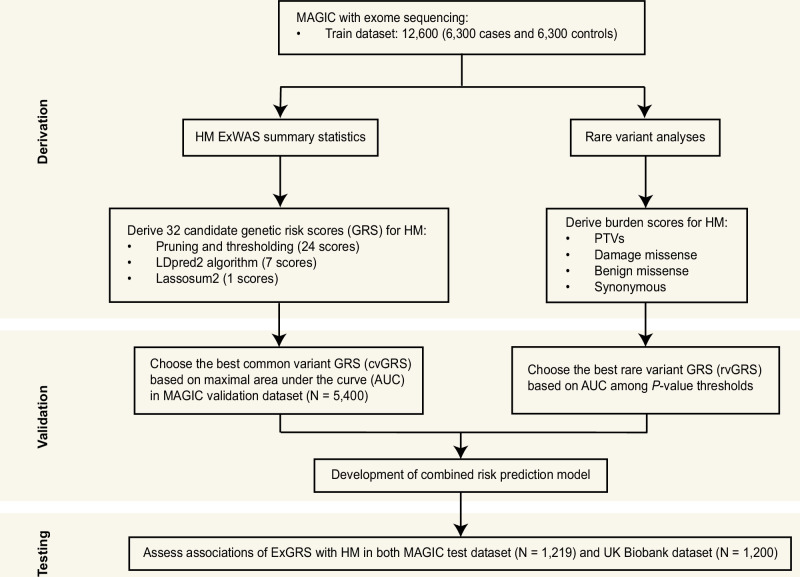
This study assesses the effectiveness of these strategies via incorporating rare variations into the GRS assessment. This study enrolled two independent cohorts: 12,600 unrelated individuals of Han Chinese ancestry from Myopia Associated Genetics and Intervention Consortium (MAGIC) and 8682 individuals of European ancestry from UK Biobank (UKB).
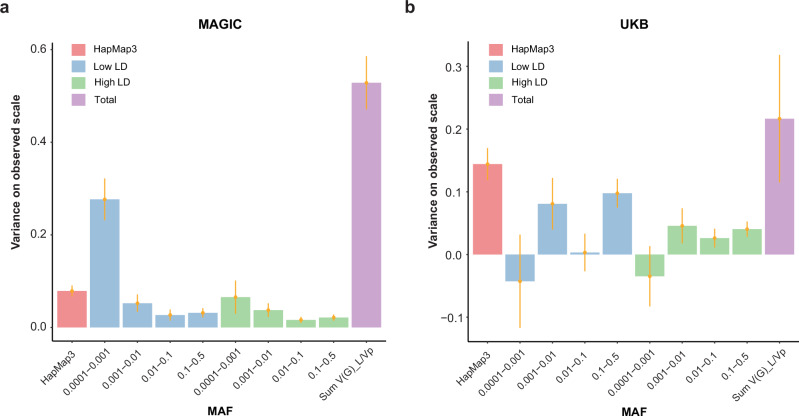
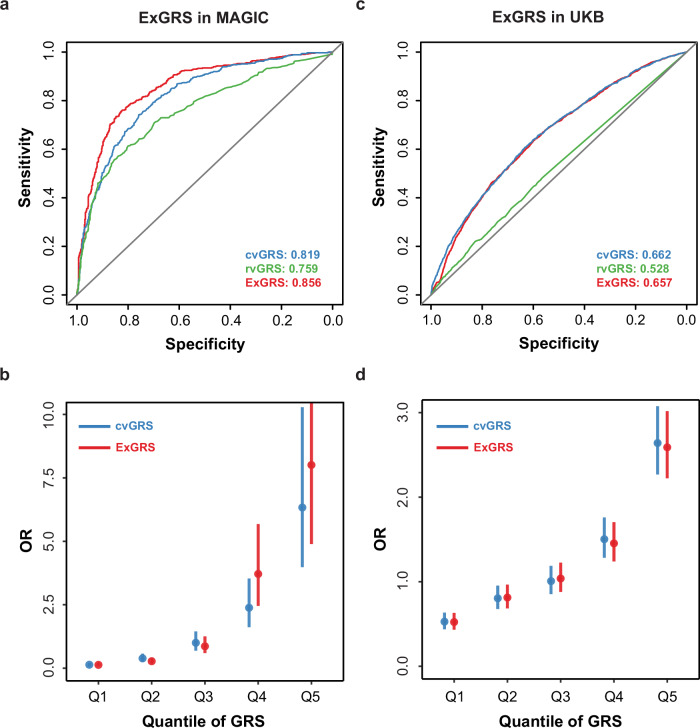
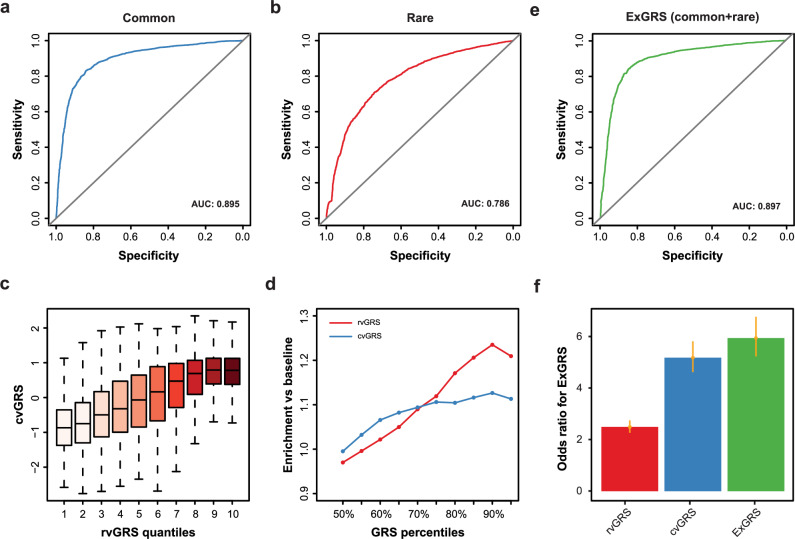
Here, we first estimate the heritability of HM resulting in 0.53 (standard error, 0.06) in the MAGIC cohort and 0.21 (standard error, 0.10) in the UKB cohort by using whole-exome sequencing (WES) data. We generate, optimize, and validate an exome-wide genetic risk score (ExGRS) for HM prediction by combining rare risk genotypes with common variant GRS (cvGRS). ExGRS improved the AUC from 0.819 (cvGRS) to 0.856 for 1219 Han Chinese individuals of an independent testing dataset. Individuals with a top 5% ExGRS confer a 15.57-times (95% CI, 5.70-59.48) higher risk for developing HM compared to the remaining 95% of individuals in MAGIC cohort.
Our study suggests that rare variants are a major source of the missing heritability of HM and that ExGRS provides enhanced accuracy for HM prediction in Han Chinese ancestry, shedding new light on research and clinical practice.
高度近视(HM)以严重的近视屈光不正为特征,是全球视力损害和失明的主要原因。高度近视是一种多因素眼病,具有高度的遗传异质性。采用遗传风险评分(GRS)有助于了解高度近视的遗传易感性。
本研究通过将罕见变异纳入GRS评估来评估这些策略的有效性。本研究纳入了两个独立队列:来自近视相关遗传学与干预联盟(MAGIC)的12600名无亲缘关系的汉族个体和来自英国生物银行(UKB)的8682名欧洲血统个体。
在此,我们首先利用全外显子组测序(WES)数据估计高度近视的遗传力,在MAGIC队列中为0.53(标准误,0.06),在UKB队列中为0.21(标准误,0.10)。我们通过将罕见风险基因型与常见变异GRS(cvGRS)相结合,生成、优化并验证了用于高度近视预测的全外显子组遗传风险评分(ExGRS)。对于一个独立测试数据集的1219名汉族个体,ExGRS将AUC从0.819(cvGRS)提高到0.856。在MAGIC队列中,ExGRS排名前5%的个体患高度近视的风险是其余95%个体的15.57倍(95%CI,5.70-59.48)。
我们的研究表明,罕见变异是高度近视遗传力缺失的主要来源,ExGRS提高了汉族个体高度近视预测的准确性,为研究和临床实践提供了新的思路。