Mizugaki Hinano, Nagane Masaki, Sato-Akaba Hideo, Kmiec Maciej, Kuppusamy Periannan, Yasui Hironobu, Inanami Osamu, Murakami Hironobu, Aihara Naoyuki, Kamiie Junichi, Mizunoya Wataru, Yasuda Ibuki, Fukuyama Tomoki, Naya Yuko, Yamashita Tadashi
School of Veterinary Medicine, Azabu University, Sagamihara, Japan.
Center for Human and Animal Symbiosis Science, Azabu University, Sagamihara, Japan.
FEBS J. 2025 Mar;292(5):1086-1105. doi: 10.1111/febs.17379. Epub 2024 Dec 30.
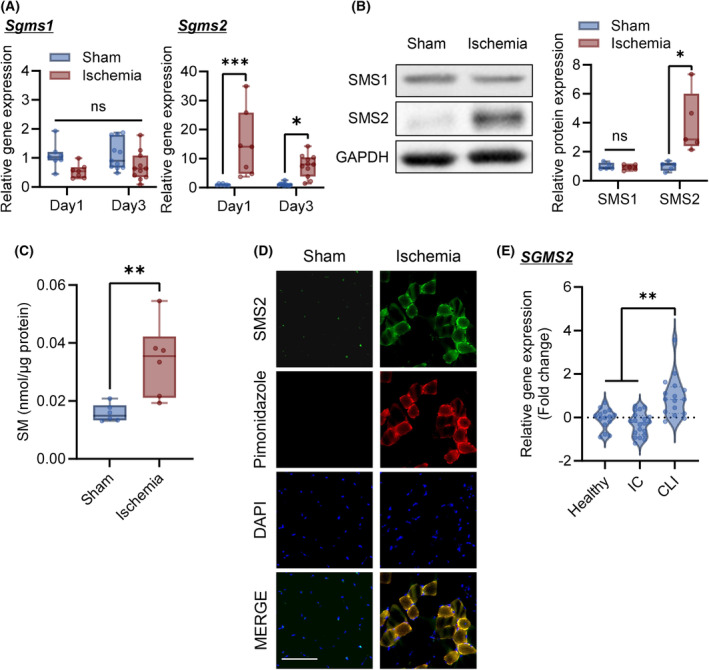
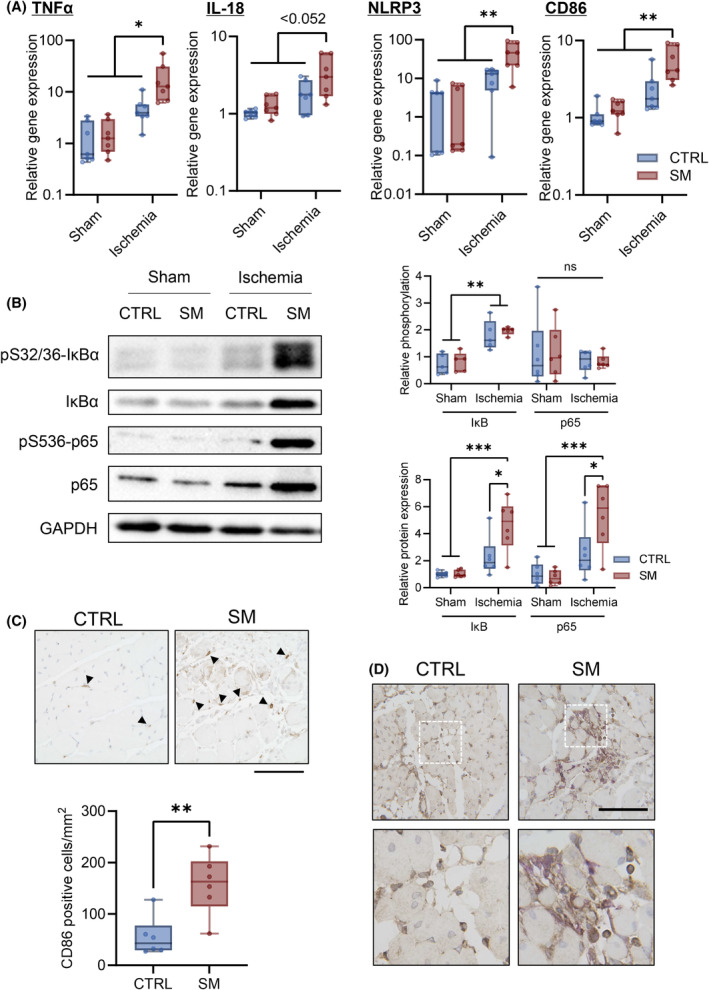
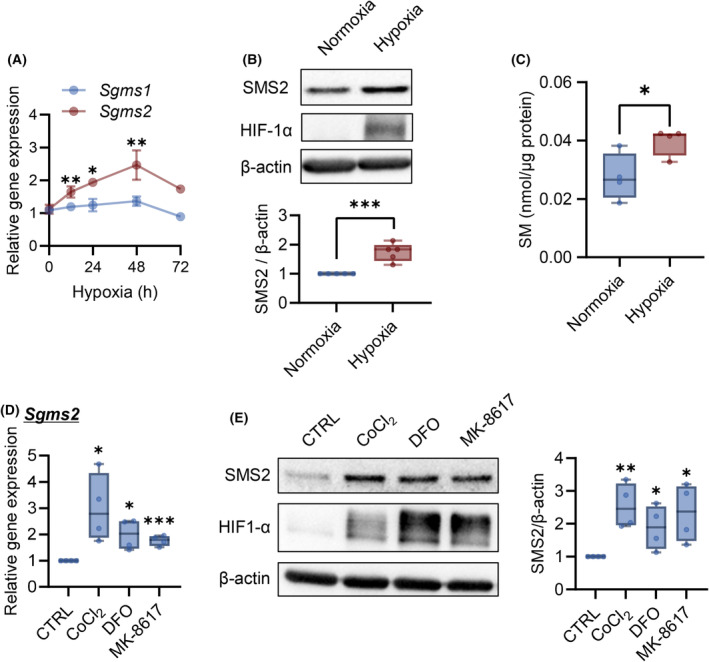
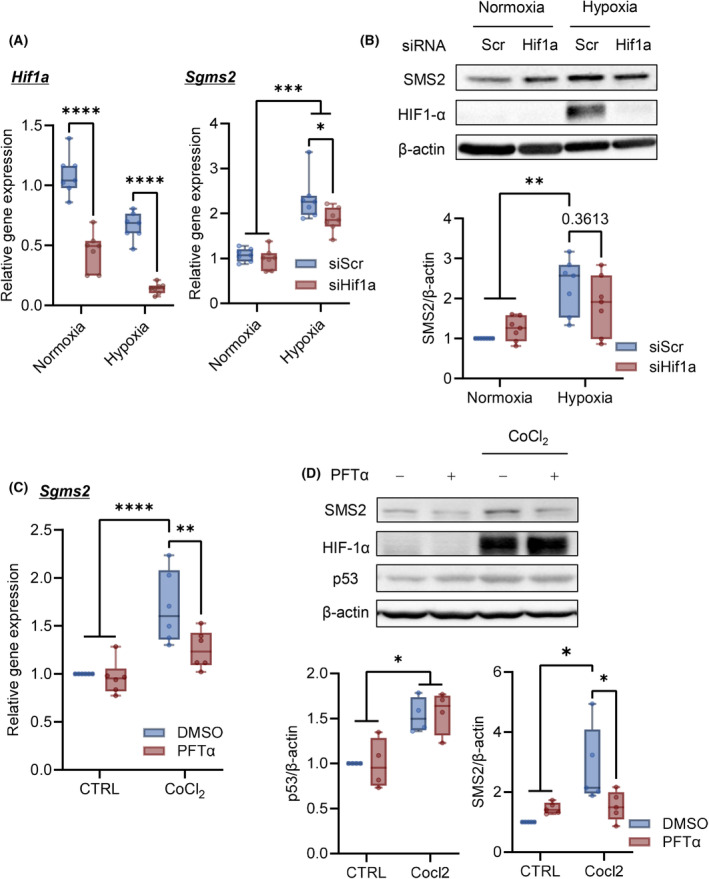
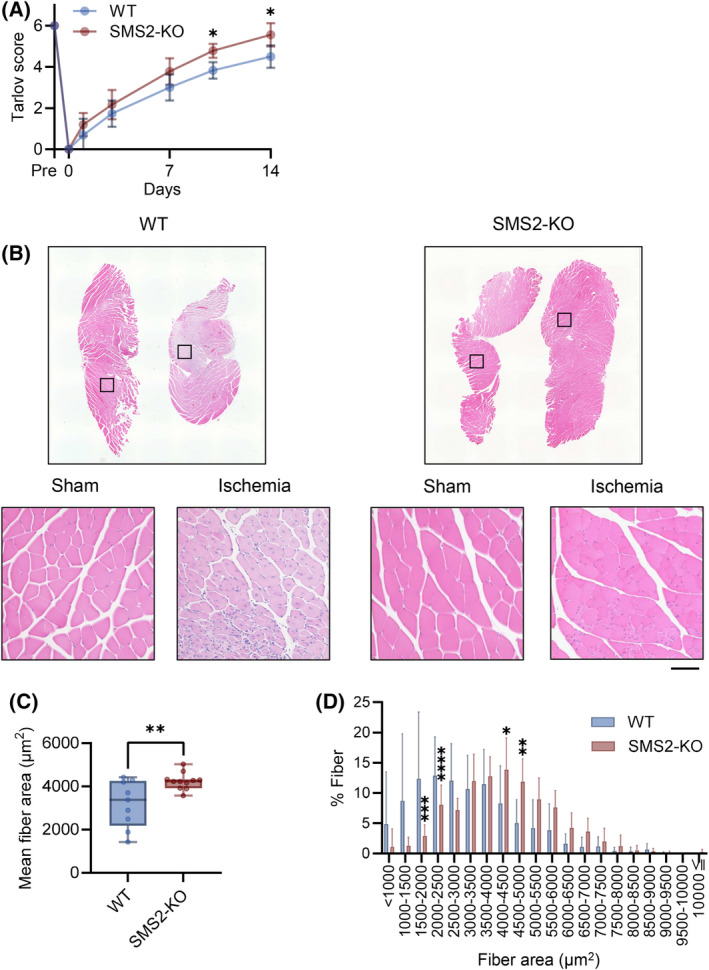
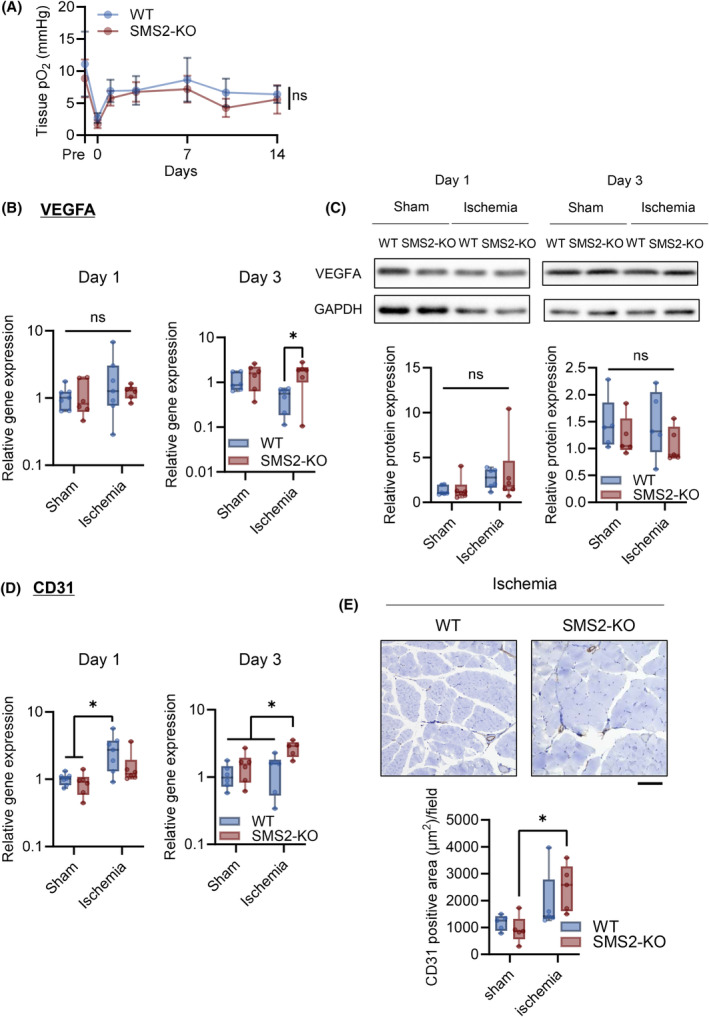
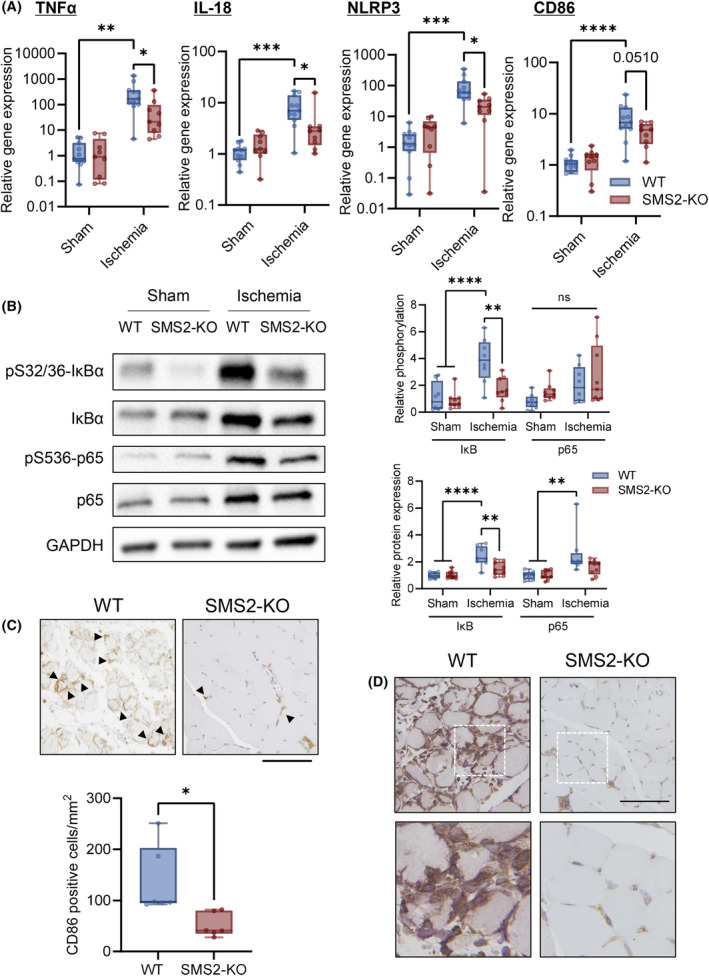
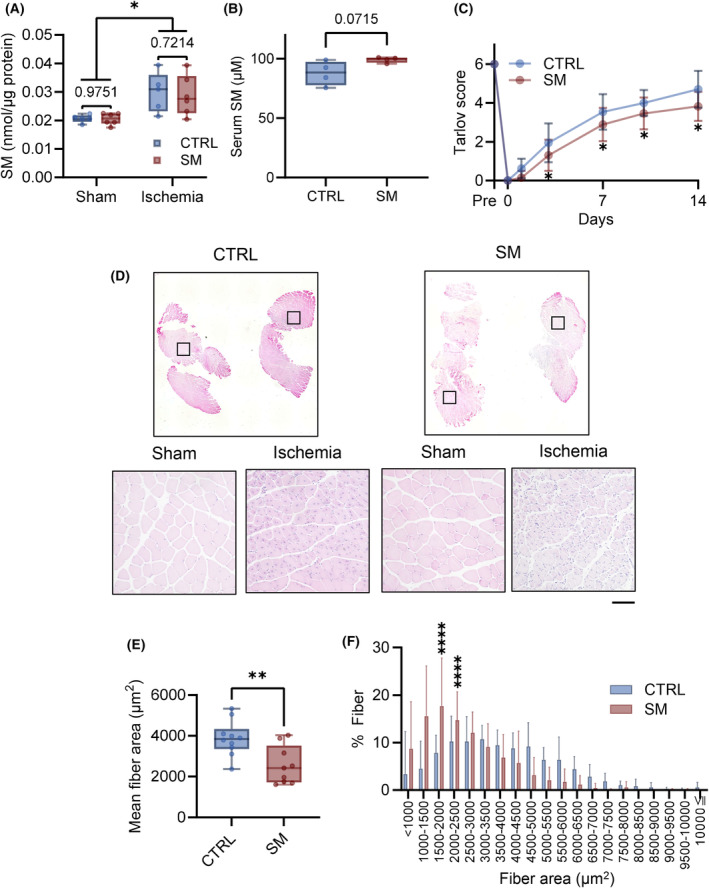
Critical limb ischemia (CLI) is the most advanced stage of peripheral arterial disease, posing a high risk of mortality. Sphingomyelin, a sphingolipid synthesized by sphingomyelin synthases (SMSs) 1 and 2, plays an essential role in signal transduction as a component of lipid rafts. However, the role of sphingomyelin in the inflammation of ischemic skeletal muscles remains unclear. In this study, we analyzed the roles of sphingomyelin and SMSs in CLI-induced myopathy using a mouse hindlimb ischemia model. We observed that hypoxia after CLI triggered an increase in SMS2 levels, thereby elevating sphingomyelin concentrations in ischemic skeletal muscles. The expression of SMS2 and sphingomyelin was induced by hypoxia in C2C12 myotubes and regulated by the prolyl hydroxylase domain enzyme. Additionally, SMS2 deficiency suppressed skeletal muscle inflammation after CLI, attenuated the phosphorylation of inhibitor of κBα (IκBα), and reduced the nuclear translocation of nuclear factor κB (NFκB) p65. Meanwhile, the administration of sphingomyelin hampered skeletal muscle inflammation by inhibiting IκBα phosphorylation and NFκB p65 nuclear translocation and extending inflammation post-CLI. Our results suggest that hypoxia-induced enhancement in SMS2 levels and the consequent increase in sphingomyelin expression levels promote inflammation in ischemic muscle tissues via the NFκB pathway and propose sphingomyelin as a potential therapeutic target in patients with CLI and other hypoxia-related inflammatory diseases.
严重肢体缺血(CLI)是外周动脉疾病的最晚期阶段,具有很高的死亡风险。鞘磷脂是一种由鞘磷脂合成酶(SMSs)1和2合成的鞘脂,作为脂筏的组成部分在信号转导中起重要作用。然而,鞘磷脂在缺血性骨骼肌炎症中的作用仍不清楚。在本研究中,我们使用小鼠后肢缺血模型分析了鞘磷脂和SMSs在CLI诱导的肌病中的作用。我们观察到CLI后的缺氧触发了SMS2水平的升高,从而提高了缺血性骨骼肌中鞘磷脂的浓度。SMS2和鞘磷脂的表达在C2C12肌管中由缺氧诱导,并受脯氨酰羟化酶结构域酶调节。此外,SMS2缺乏抑制了CLI后的骨骼肌炎症,减弱了κBα抑制因子(IκBα)的磷酸化,并减少了核因子κB(NFκB)p65的核转位。同时,鞘磷脂的给药通过抑制IκBα磷酸化和NFκB p65核转位以及延长CLI后的炎症来阻碍骨骼肌炎症。我们的结果表明,缺氧诱导的SMS2水平升高以及随之而来的鞘磷脂表达水平增加通过NFκB途径促进缺血性肌肉组织中的炎症,并提出鞘磷脂作为CLI患者和其他缺氧相关炎症性疾病的潜在治疗靶点。