Denny Alanna, Ndemera Isaach, Chirwa Kingston, Wu Joseph Tsung Shu, Chirambo Griphin Baxter, Yosefe Simeon, Chilima Ben, Kagoli Matthew, Lee Hsin-Yi, Yu Kwong Leung Joseph, O'Donoghue John
Research Department, Luke International, Mzuzu, Malawi.
School of Public Health, Department of Medicine & Health, University College Cork, Cork, Ireland.
JMIR Res Protoc. 2024 Dec 31;13:e58389. doi: 10.2196/58389.
The COVID-19 pandemic has highlighted the importance of strengthening national monitoring systems to safeguard a globally connected society, especially those in low- and middle-income countries. Africa's rapid adoption of digital technological interventions created a new frontier of digital advancement during crises or pandemics. The use of digital tools for disease surveillance can assist with rapid outbreak identification and response, handling duties such as diagnosis, testing, contact tracing, and risk communication. Malawi was one of the first countries in the region to launch a government-led coordinated effort to harmonize and streamline the necessary COVID-19 digital health implementation through an integrated system architecture.
The aim of this study is to seek expert consensus using the Delphi methodology to examine Malawi's COVID-19 digital surveillance response strategy and to assess the digital tools using the World Health Organization mHealth (mobile health) Assessment and Planning for Scale (MAPS) toolkit.
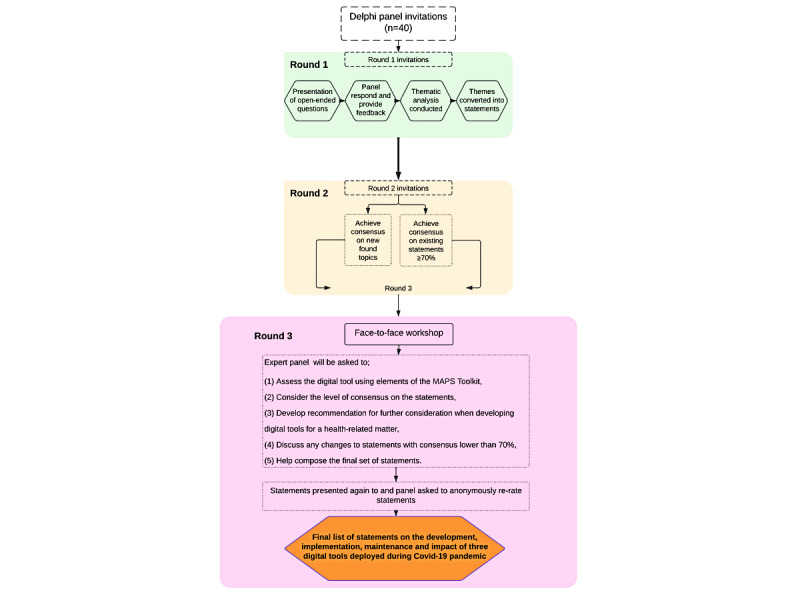
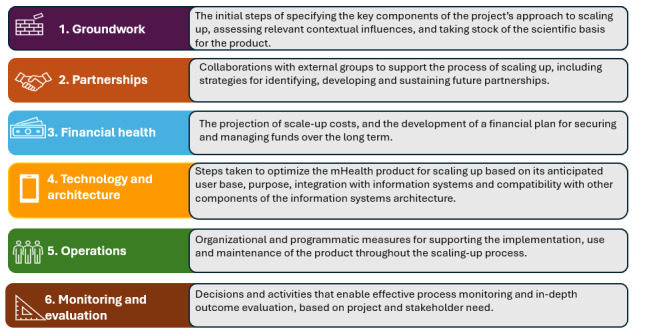
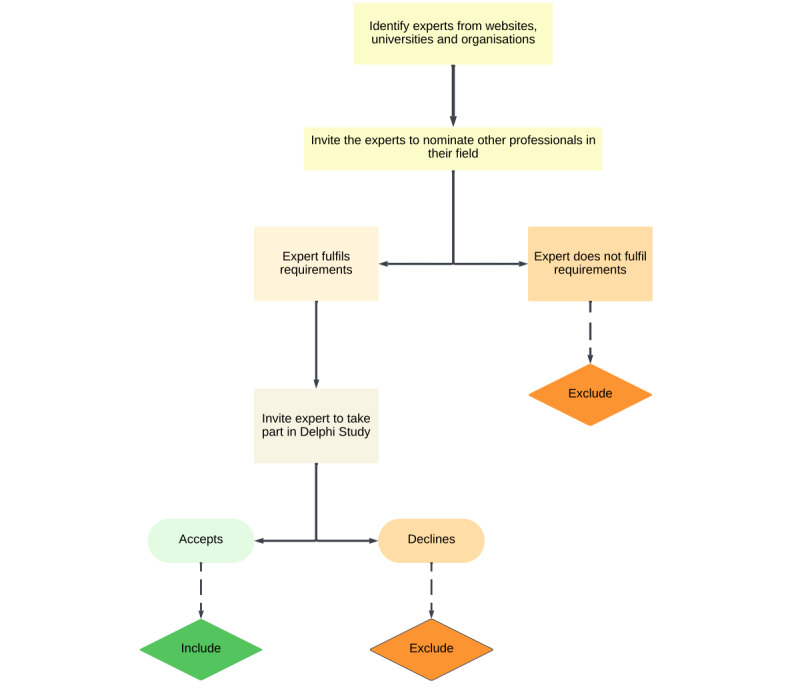
This protocol follows the Guidance on Conducting and REporting DElphi Studies. Participants must have first-hand experience on the design, implementation or maintenance with COVID-19 digital surveillance systems. There will be no restrictions on the level of expertise or years of experience. The panel will consist of approximately 40 participants. We will use a modified Delphi process whereby rounds 1 and 2 will be hosted online by Qualtrics and round 3 will encompass a face-to-face workshop held in Malawi. Consensus will be defined as ≥70% of participants strongly disagree, disagree, or somewhat disagree, or strongly agree, agree, or somewhat agree. During round 3, the face-to-face workshop, participants will be asked to complete, the MAPS toolkit assessment on the digital tool on which they are experts. The MAPS toolkit will enable the panel members to assess the digital tools from a sustainable perspective from six distinct, yet complementary axes: (1) groundwork, (2) partnerships, (3) financial health, (4) technology and architecture, (5) operations, and (6) monitoring and evaluation.
The ability of a country to collate, diagnose, monitor, and analyze data forms the cornerstone of an efficient surveillance system, allowing countries to plan and implement appropriate control actions. Malawi was one of the first countries in the African region to launch a government-led coordinated effort to harmonize and streamline the necessary COVID-19 digital health implementation through an integrated system architecture.
We anticipate findings from this Delphi study will provide insights into how and why Malawi was successful in deploying digital surveillance systems. In addition, findings should produce recommendations and guidance for the rapid development, implementation, maintenance, and impact of digital surveillance tools during a health crisis.
INTERNATIONAL REGISTERED REPORT IDENTIFIER (IRRID): DERR1-10.2196/58389.
新冠疫情凸显了加强国家监测系统以保障全球互联社会安全的重要性,尤其是在低收入和中等收入国家。非洲迅速采用数字技术干预措施,在危机或疫情期间开创了数字发展的新前沿。利用数字工具进行疾病监测有助于快速识别疫情并做出应对,承担诊断、检测、接触者追踪和风险沟通等职责。马拉维是该地区最早发起政府主导的协调努力的国家之一,通过综合系统架构来统一和简化必要的新冠数字健康实施工作。
本研究旨在运用德尔菲法寻求专家共识,以审视马拉维的新冠数字监测应对策略,并使用世界卫生组织移动健康评估与规模规划(MAPS)工具包评估数字工具。
本方案遵循《德尔菲研究实施与报告指南》。参与者必须在新冠数字监测系统的设计、实施或维护方面有第一手经验。对专业水平或工作年限没有限制。专家小组将由约40名参与者组成。我们将采用改良的德尔菲流程,其中第1轮和第2轮将由Qualtrics在线主持,第3轮将包括在马拉维举行的面对面研讨会。共识将定义为≥70%的参与者强烈反对、反对、有点反对,或强烈同意、同意、有点同意。在第3轮面对面研讨会上,将要求参与者完成对其作为专家的数字工具的MAPS工具包评估。MAPS工具包将使专家小组成员能够从六个不同但互补的维度,从可持续性角度评估数字工具:(1)基础工作,(2)伙伴关系,(3)财务状况,(4)技术与架构,(5)运营,以及(6)监测与评估。
一个国家整理、诊断、监测和分析数据的能力构成了高效监测系统的基石,使各国能够规划和实施适当的控制行动。马拉维是非洲地区最早发起政府主导的协调努力的国家之一,通过综合系统架构来统一和简化必要的新冠数字健康实施工作。
我们预计这项德尔菲研究的结果将深入了解马拉维如何以及为何成功部署数字监测系统。此外,研究结果应为健康危机期间数字监测工具的快速开发、实施、维护和影响提供建议和指导。
国际注册报告识别码(IRRID):DERR1-10.2196/58389。