Matsui Masahiro, Fukuda Akira, Onishi Saori, Ushiro Kosuke, Nishikawa Tomohiro, Asai Akira, Kim Soo Ki, Nishikawa Hiroki
Second Department of Internal Medicine, Osaka Medical and Pharmaceutical University, Takatsuki, Japan.
Osaka Medical and Pharmaceutical University Health Science Clinic, Takatsuki, Japan.
In Vivo. 2025 Jan-Feb;39(1):381-389. doi: 10.21873/invivo.13839.
BACKGROUND/AIM: To elucidate the relationship between metabolic syndrome (Mets) and somatic composition [fat mass, fat-free (FF) mass, and fat to fat-free (F-FF) ratio] among health checkup recipients (7,776 males and 10,121 females).
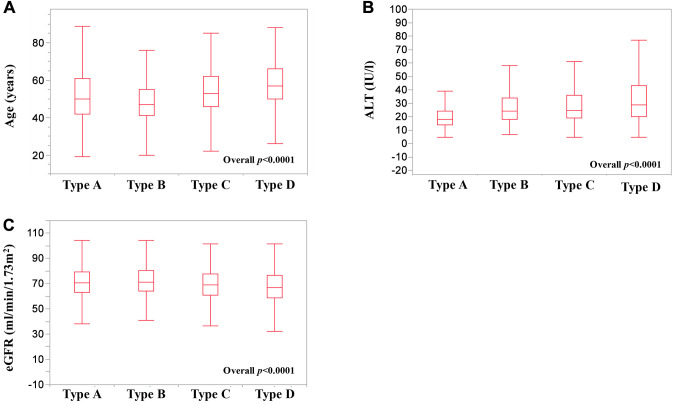
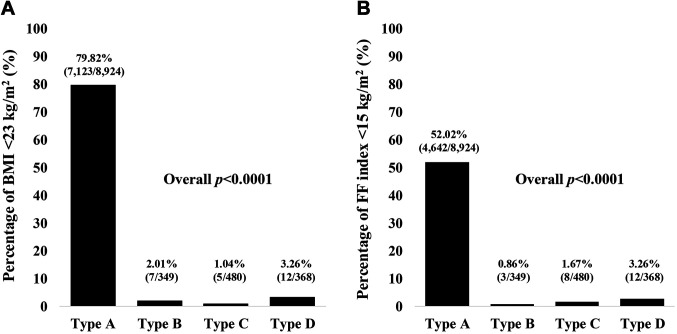
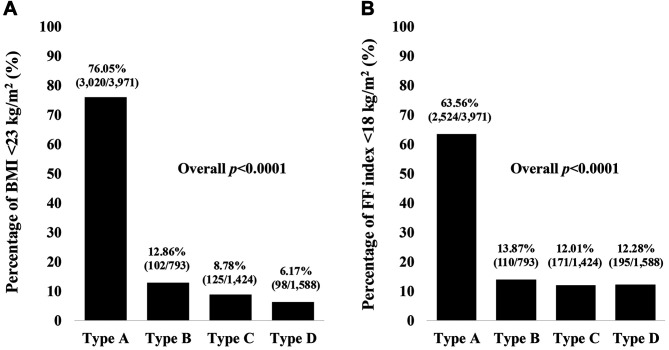
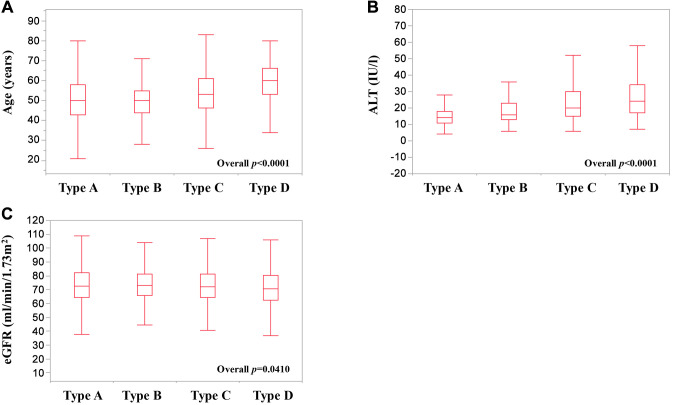
We classified study subjects into four types considering Japanese criteria for Mets; Type A is for males with waist circumference (WC) <85 cm and females with WC <90 cm, Type B is for males with WC ≥85 cm and females with WC ≥90 cm, but without any metabolic abnormalities, Type C is for males with WC ≥85 cm and females with WC ≥90 cm and one metabolic disorder (pre-Mets), and Type D is Mets. We compared baseline characteristics among types of A, B, C, and D.
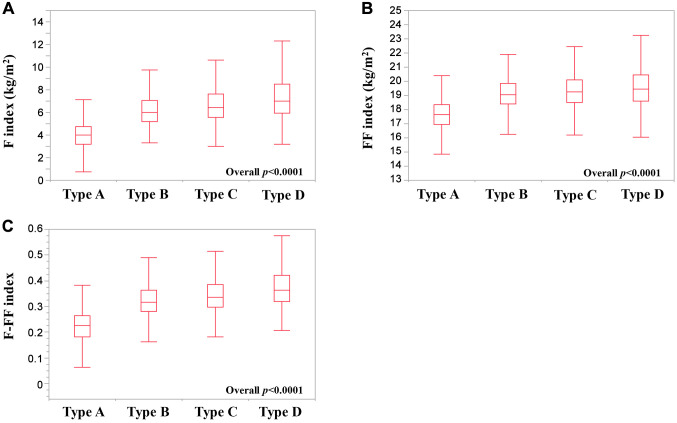
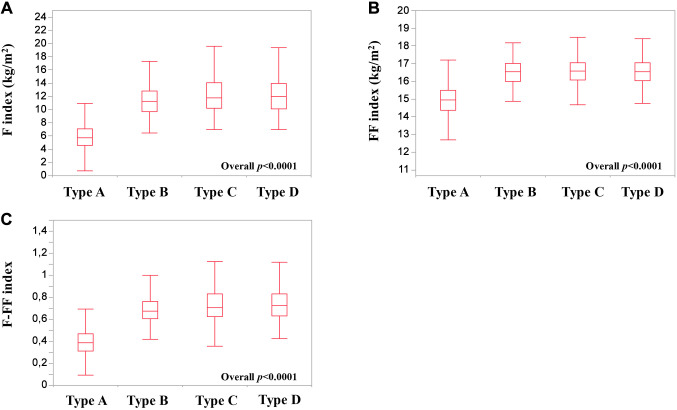
F index, FF index, and F-FF ratio showed an increasing trend with increasing risk factors for Mets in both sexes.
This study demonstrates a clear correlation between somatic composition and the severity of metabolic syndrome (Mets). As Mets risk factors increase, fat mass, fat-free mass, and the fat-to-fat-free ratio also rise, indicating that body composition shifts with disease progression. These findings emphasize the need for early intervention, such as exercise and diet, to manage somatic composition imbalances and reduce complications like insulin resistance.
背景/目的:阐明健康体检者(7776名男性和10121名女性)中代谢综合征(Mets)与身体组成[脂肪量、去脂(FF)量以及脂肪与去脂比(F-FF比)]之间的关系。
根据日本代谢综合征标准,我们将研究对象分为四种类型;A型为腰围(WC)<85 cm的男性和WC<90 cm的女性,B型为WC≥85 cm的男性和WC≥90 cm的女性,但无任何代谢异常,C型为WC≥85 cm的男性和WC≥90 cm的女性且有一种代谢紊乱(代谢综合征前期),D型为代谢综合征患者。我们比较了A、B、C和D型之间的基线特征。
F指数、FF指数和F-FF比在男女两性中均呈现出随着代谢综合征危险因素增加而上升的趋势。
本研究表明身体组成与代谢综合征(Mets)的严重程度之间存在明显的相关性。随着代谢综合征危险因素增加,脂肪量、去脂量以及脂肪与去脂比也会升高,这表明身体组成会随着疾病进展而发生变化。这些发现强调了进行早期干预(如运动和饮食)以管理身体组成失衡并减少胰岛素抵抗等并发症的必要性。