Feng Tingwei, Mi Mingdi, Li Danyang, Wang Buyao, Liu Xufeng
Department of Military Medical Psychology, Fourth Military Medical University, Xi'an, China.
Weinan Vocational and Technical College Student Office, Weinan, China.
Front Neurosci. 2024 Dec 17;18:1499084. doi: 10.3389/fnins.2024.1499084. eCollection 2024.
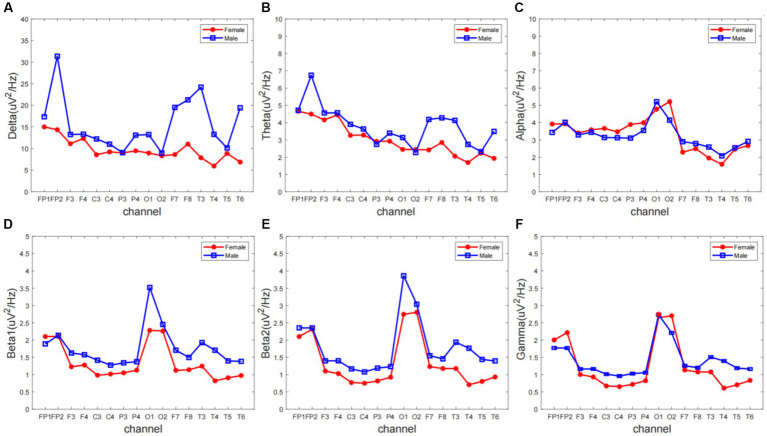
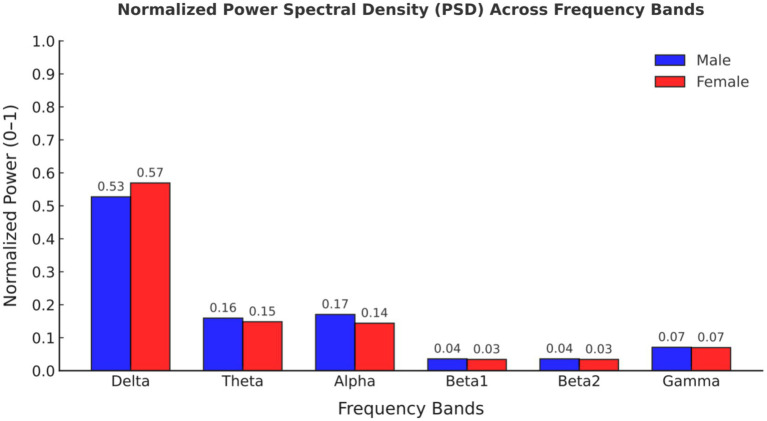
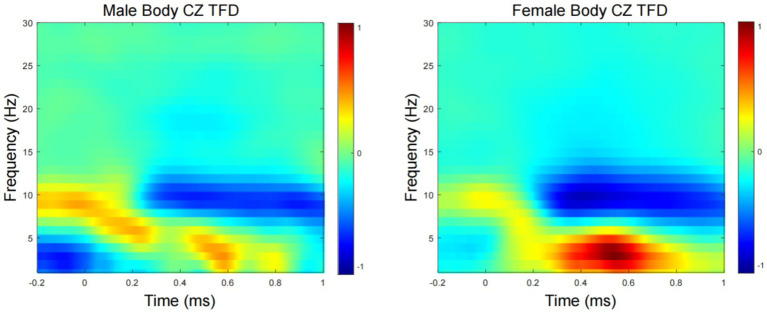
This study aimed to explore the neural mechanisms underlying gender differences in recognizing emotional expressions conveyed through body language. Utilizing electroencephalogram (EEG) recordings, we examined the impact of gender on neural responses through time-frequency analysis and network analysis to uncover gender disparities in bodily emotion recognition.
The study included 34 participants, consisting of 18 males and 16 females. A 2 × 2 mixed design was employed, with gender (male and female) and bodily emotion (happy and sad) as the independent variables. Both behavioral and EEG data were collected simultaneously.
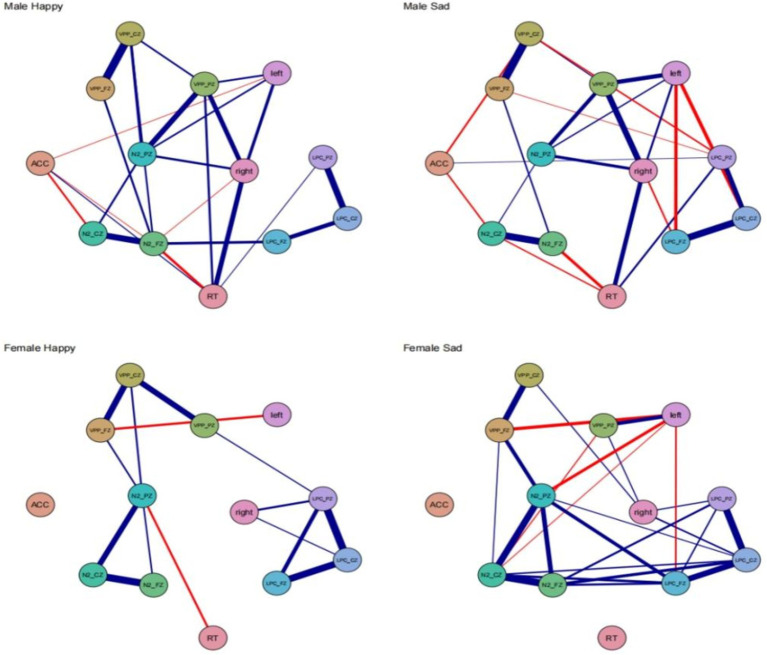
Males demonstrated more stable brain activity patterns when recognizing different bodily emotions, while females showed more intricate and highly interconnected brain activity networks, especially when identifying negative emotions like sadness. Differences based on gender were also observed in the significance of brain regions; males had greater importance in central brain areas, whereas females exhibited higher significance in the parietal lobe.
Gender differences do influence the recognition of bodily emotions to some extent. The primary aim of this study was to explore the neural mechanisms underlying gender differences in bodily emotion recognition, with a particular focus on time-frequency analysis and network analysis based on electroencephalogram (EEG) recordings. By elucidating the role of gender in cognitive development, this study contributes to early detection and intervention.
本研究旨在探索通过肢体语言传达的情绪表达识别中性别差异背后的神经机制。利用脑电图(EEG)记录,我们通过时频分析和网络分析研究性别对神经反应的影响,以揭示身体情绪识别中的性别差异。
该研究包括34名参与者,其中18名男性和16名女性。采用2×2混合设计,将性别(男性和女性)和身体情绪(快乐和悲伤)作为自变量。同时收集行为和EEG数据。
男性在识别不同身体情绪时表现出更稳定的脑活动模式,而女性则表现出更复杂且高度互联的脑活动网络,尤其是在识别悲伤等负面情绪时。在脑区的重要性方面也观察到基于性别的差异;男性在脑中央区域更为重要,而女性在顶叶表现出更高的重要性。
性别差异在一定程度上确实会影响身体情绪的识别。本研究的主要目的是探索身体情绪识别中性别差异背后的神经机制,特别关注基于脑电图(EEG)记录的时频分析和网络分析。通过阐明性别在认知发展中的作用,本研究有助于早期发现和干预。