Zhang Shufan, Han Zhenxiang, Cao Ying, Wu Weicheng, Liu Yuanzeng, Yang Shilin, Feng Xiaochao, Yu Chun, Zhu Zhu, Dong Qiang, Han Xiang
Department of Neurology, Huashan Hospital, Fudan University, Shanghai, China.
Department of Neurology and Neurological Rehabilitation, Shanghai Seventh People's Hospital, Shanghai University of Traditional Chinese Medicine, Shanghai, China.
Front Neurol. 2024 Dec 18;15:1420278. doi: 10.3389/fneur.2024.1420278. eCollection 2024.
Given the lack of models for carotid artery dissections (CAD), we aim to investigate effects of beta-aminopropionitrile (BAPN) combined with physical damage on the arterial walls of rats, and to establish a high-incidence and low-mortality CAD model.
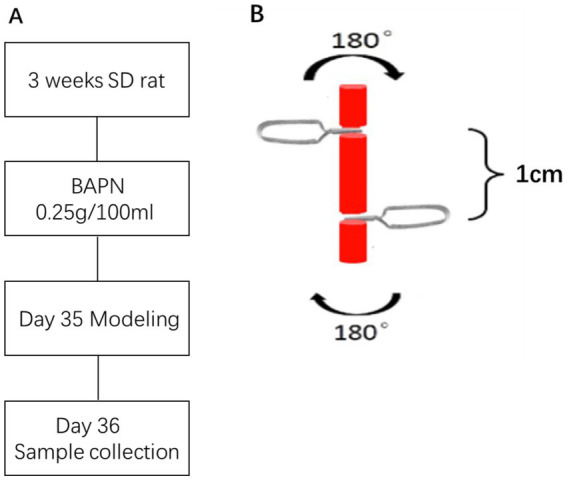
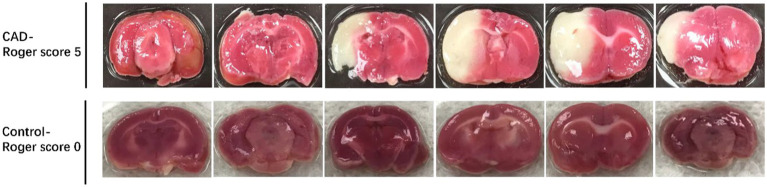
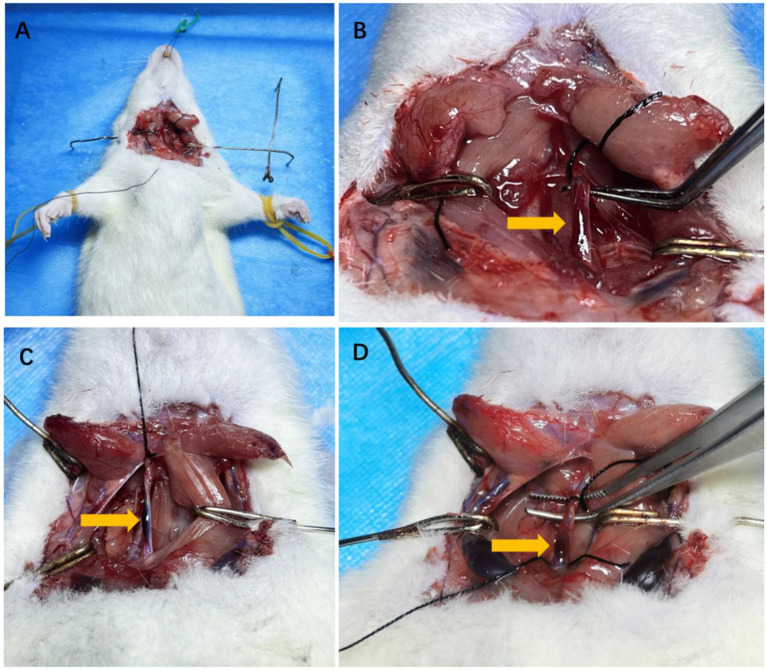
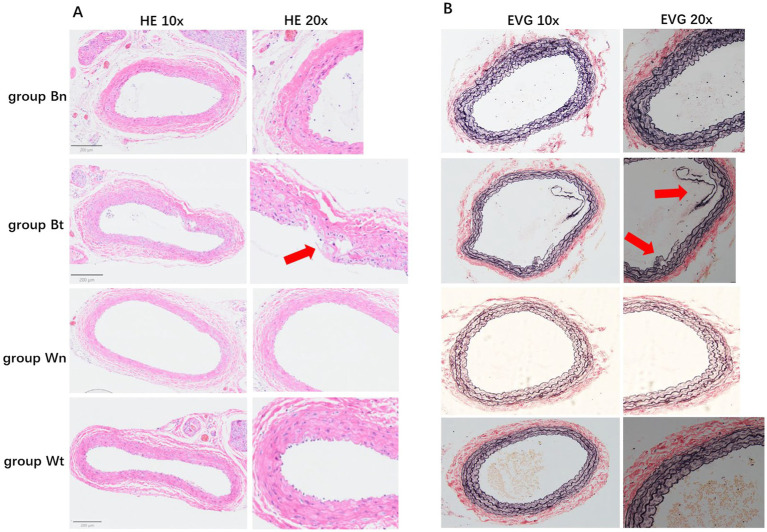
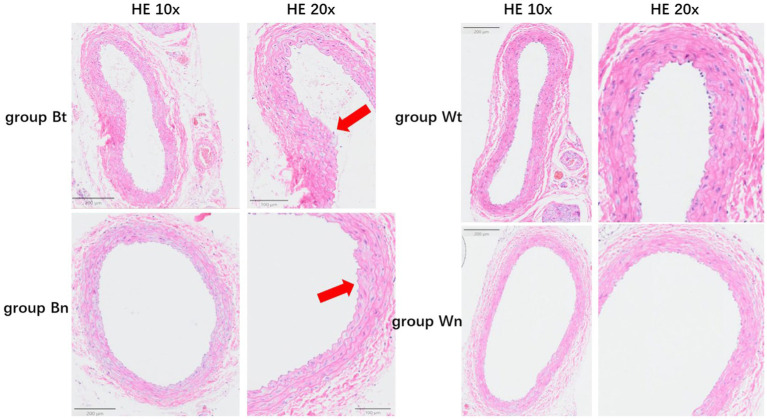
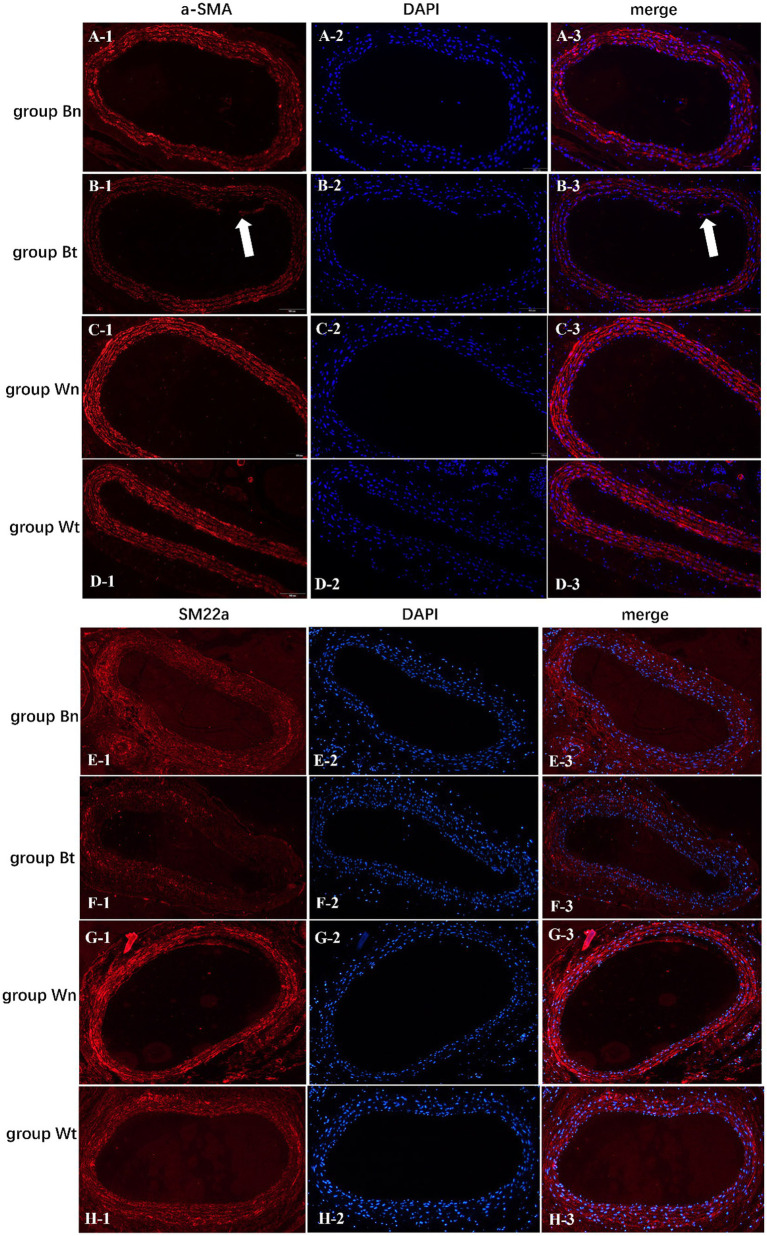
Sixteen SPF SD rats (3-week-old) were divided into two groups. Group B was given 0.25% BAPN solution and group W was given water. Then we established an animal model of CAD by carotid artery torsion. One of the two carotid arteries in each rat was randomly selected for torsion. We got four groups of blood vessels following above-mentioned methods: BAPN plus torsion group (group Bt), BAPN plus non-torsion group (group Bn), water plus torsion group (group Wt), and water plus non-torsion group (group Wn). The hematoxylin and eosin (HE) staining and Verhoeff's Van Gieson (EVG) staining were performed to observe structures of arteries. Immunofluorescence staining was used to detect structural proteins in vessels. We used triphenyltetrazolium chloride (TTC) staining and neurological function assessment to detect the infarct area of brain and neurological deficits in rats with carotid dissection to verify the validity of the rat model.
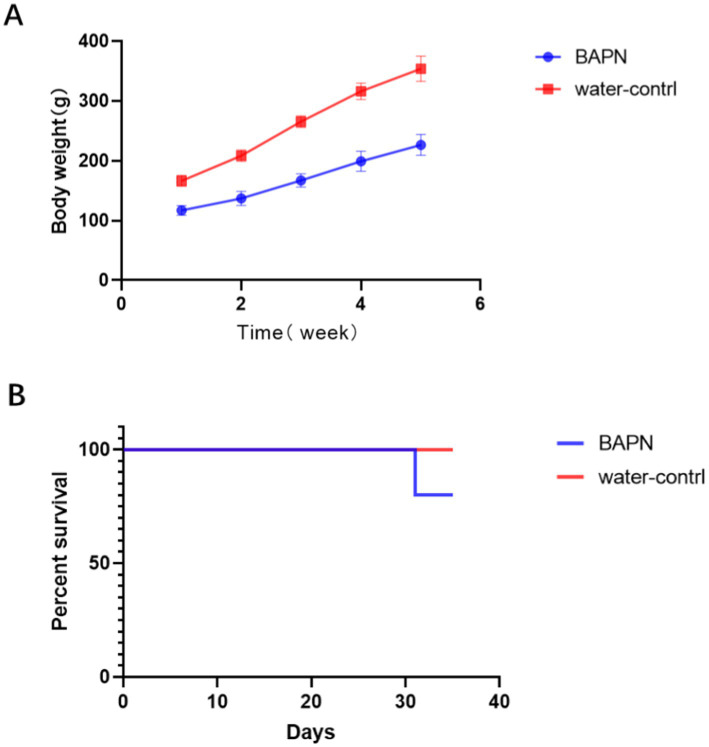
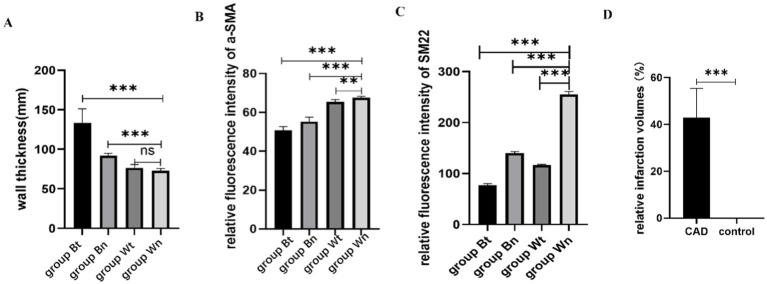
BAPN treatment significantly affected the weight gain of rats, but had little effect on survival during the first 5 weeks. The group Bt had the highest incidence of CAD among all groups ( = 0.014). HE staining of carotid artery tissue sections showed that the vascular walls were the thickest in group Bt ( < 0.001). EVG staining showed the arrangement of elastic fibers was the most irregular in group Bt. Immunofluorescence staining revealed that the expression of a-SMA and SM22a were decreased remarkably in group Bt ( < 0.001). Both motor and sensory deficits were more severe in CAD group than control group ( = 0.0004; = 0.0036). The relative infarction volumes of CAD group rats were significantly larger than control group ( < 0.001).
The animal model of CAD can be feasible to establish by mechanical torsion combined with BAPN free drinking. With this method, the animal mortality was low and the model formation rate was high. This model will enable further studies on CAD.
鉴于缺乏颈动脉夹层(CAD)模型,我们旨在研究β-氨基丙腈(BAPN)联合物理损伤对大鼠动脉壁的影响,并建立一种高发病率、低死亡率的CAD模型。
将16只3周龄的SPF级SD大鼠分为两组。B组给予0.25% BAPN溶液,W组给予水。然后通过颈动脉扭转建立CAD动物模型。每只大鼠的两条颈动脉中随机选择一条进行扭转。按照上述方法得到四组血管:BAPN加扭转组(Bt组)、BAPN加非扭转组(Bn组)、水加扭转组(Wt组)和水加非扭转组(Wn组)。进行苏木精-伊红(HE)染色和魏格特弹性纤维(EVG)染色以观察动脉结构。采用免疫荧光染色检测血管中的结构蛋白。我们使用氯化三苯基四氮唑(TTC)染色和神经功能评估来检测颈动脉夹层大鼠的脑梗死面积和神经功能缺损,以验证大鼠模型的有效性。
BAPN处理显著影响大鼠体重增加,但对前5周的存活率影响较小。Bt组在所有组中CAD发病率最高(P = 0.014)。颈动脉组织切片的HE染色显示,Bt组血管壁最厚(P < 0.001)。EVG染色显示,Bt组弹性纤维排列最不规则。免疫荧光染色显示,Bt组α-SMA和SM22a的表达显著降低(P < 0.001)。CAD组的运动和感觉功能缺损均比对照组更严重(P = 0.0004;P = 0.0036)。CAD组大鼠的相对梗死体积显著大于对照组(P < 0.001)。
通过机械扭转联合自由饮用BAPN建立CAD动物模型是可行的。用这种方法,动物死亡率低,模型形成率高。该模型将有助于对CAD进行进一步研究。