Fu Xuekun, Huang Jie, Chen Xinxin, Xie Duoli, Chen Hongzhen, Liang Zhijian, Wang Zhuqian, Liang Yiying, Lu Aiping, Liang Chao
Department of Systems Biology, School of Life Sciences, Southern University of Science and Technology, Shenzhen 518055, China.
Institute of Integrated Bioinfomedicine and Translational Science (IBTS), School of Chinese Medicine, Hong Kong Baptist University, Hong Kong SAR 999077, China.
Theranostics. 2025 Jan 1;15(1):103-121. doi: 10.7150/thno.99588. eCollection 2025.
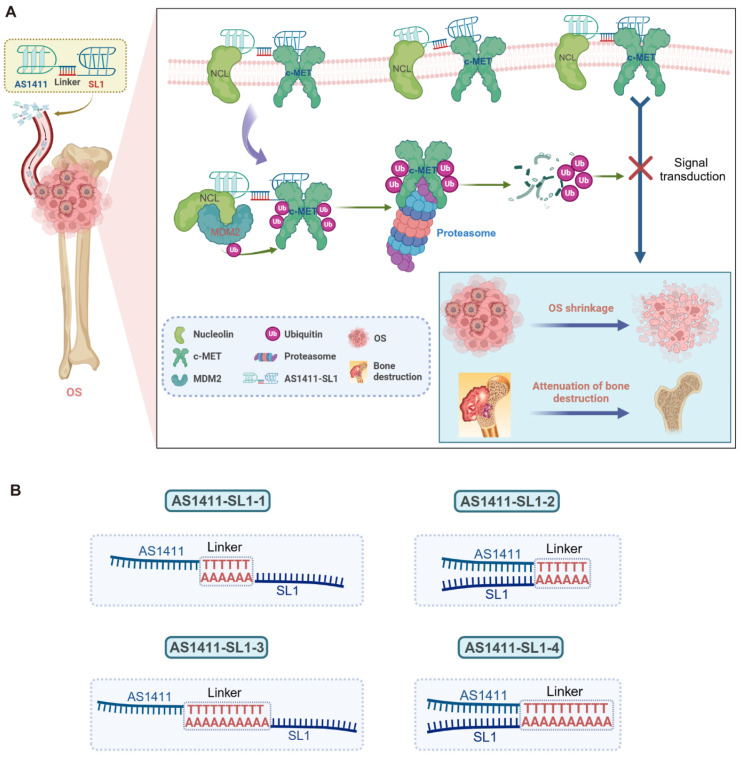
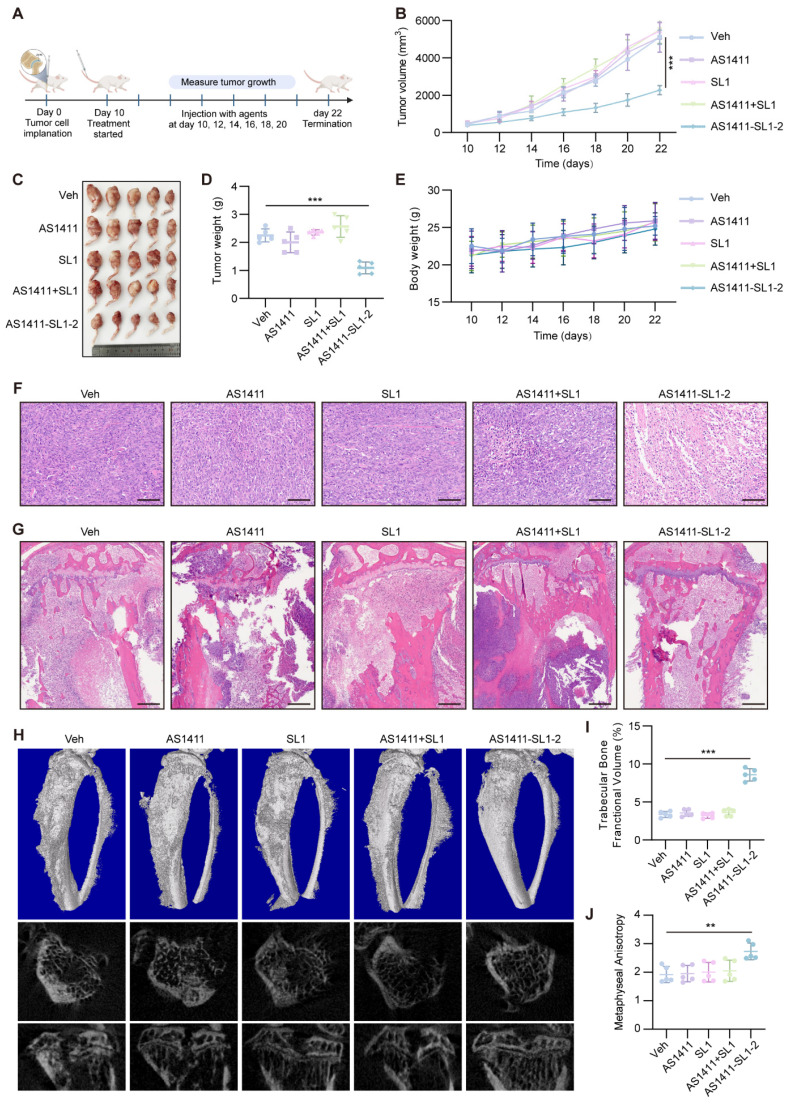
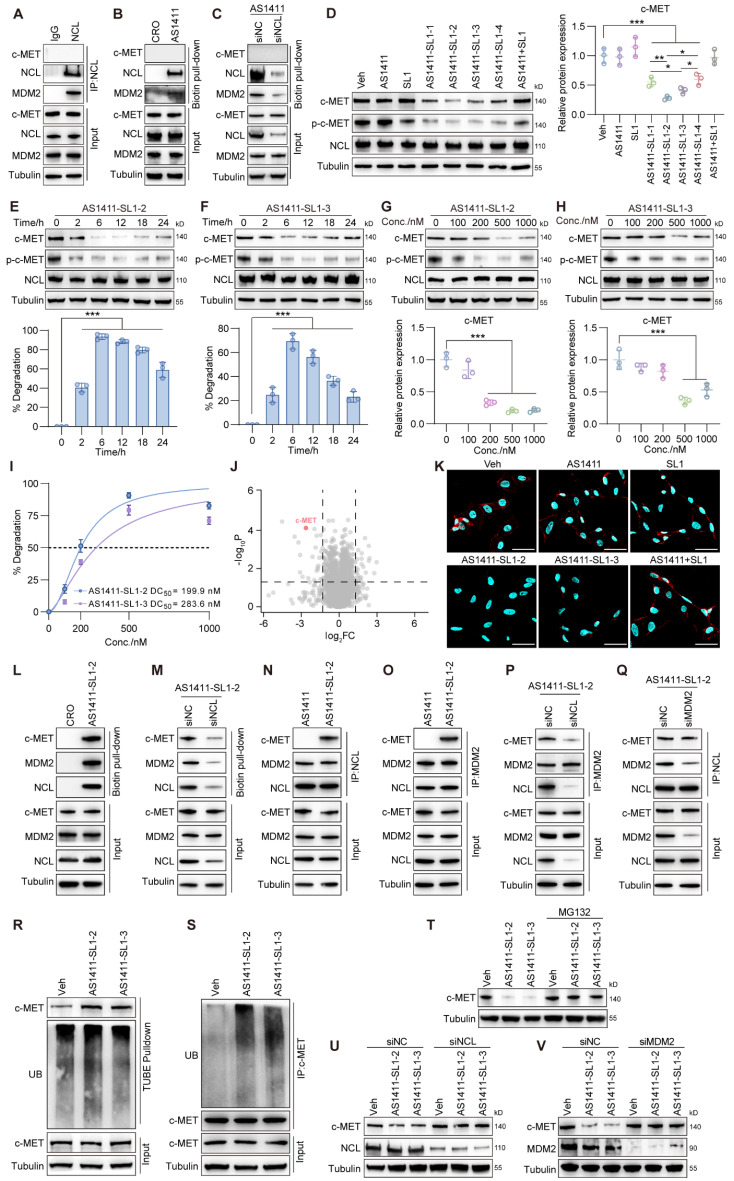
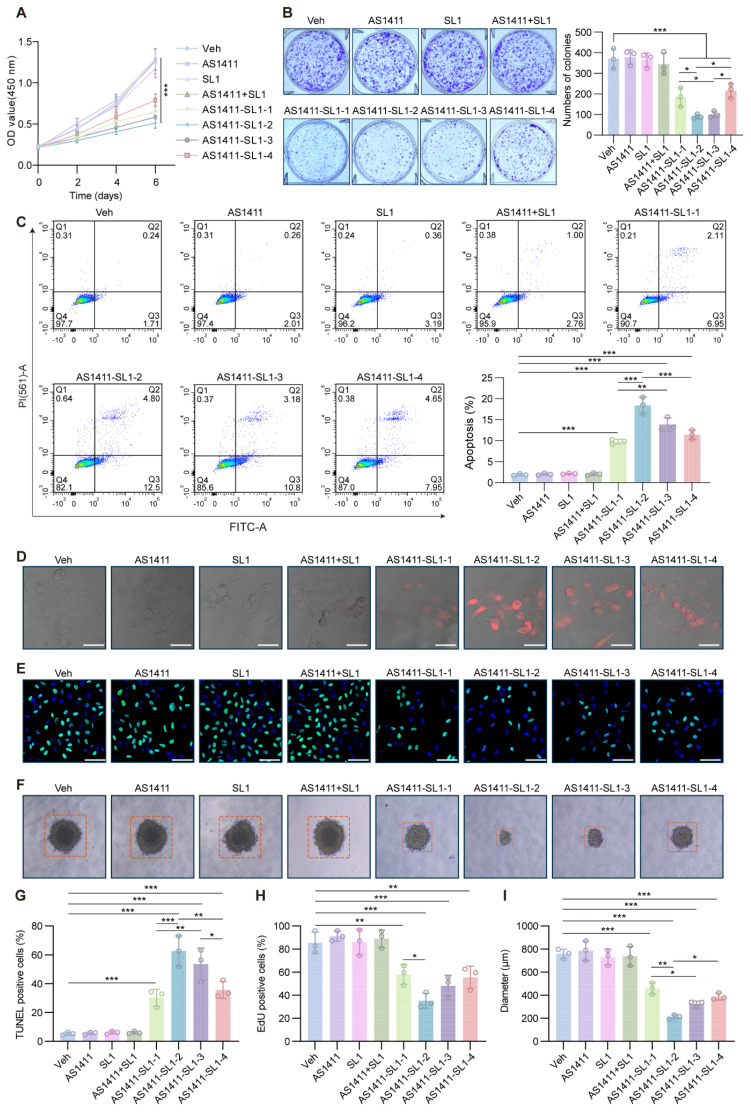
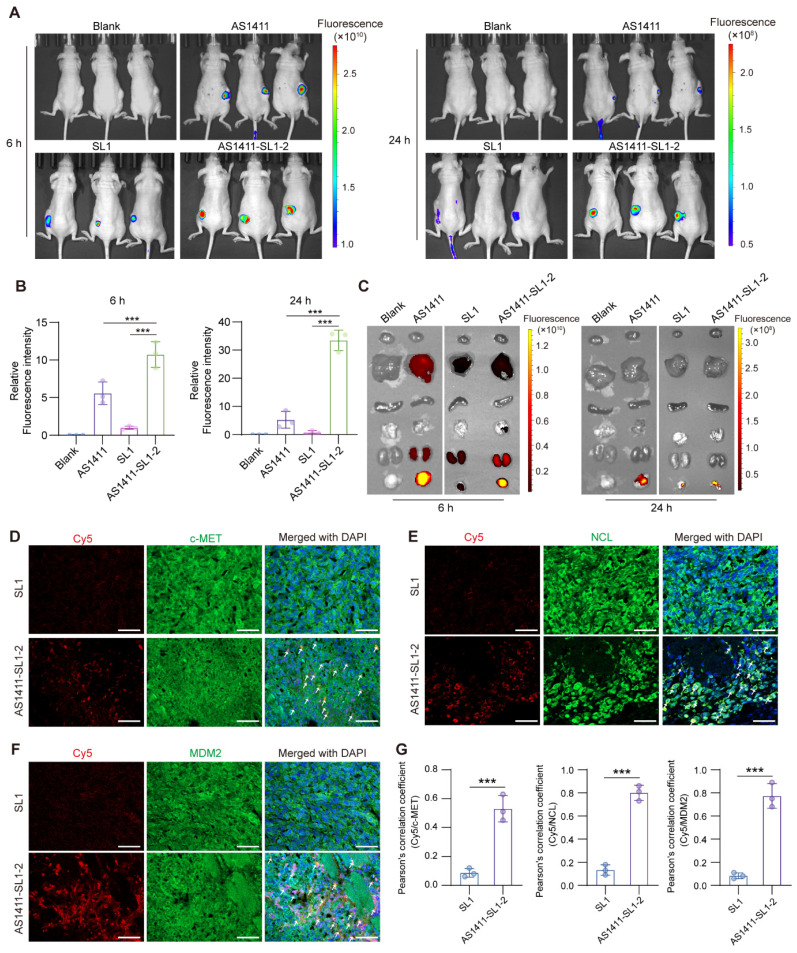
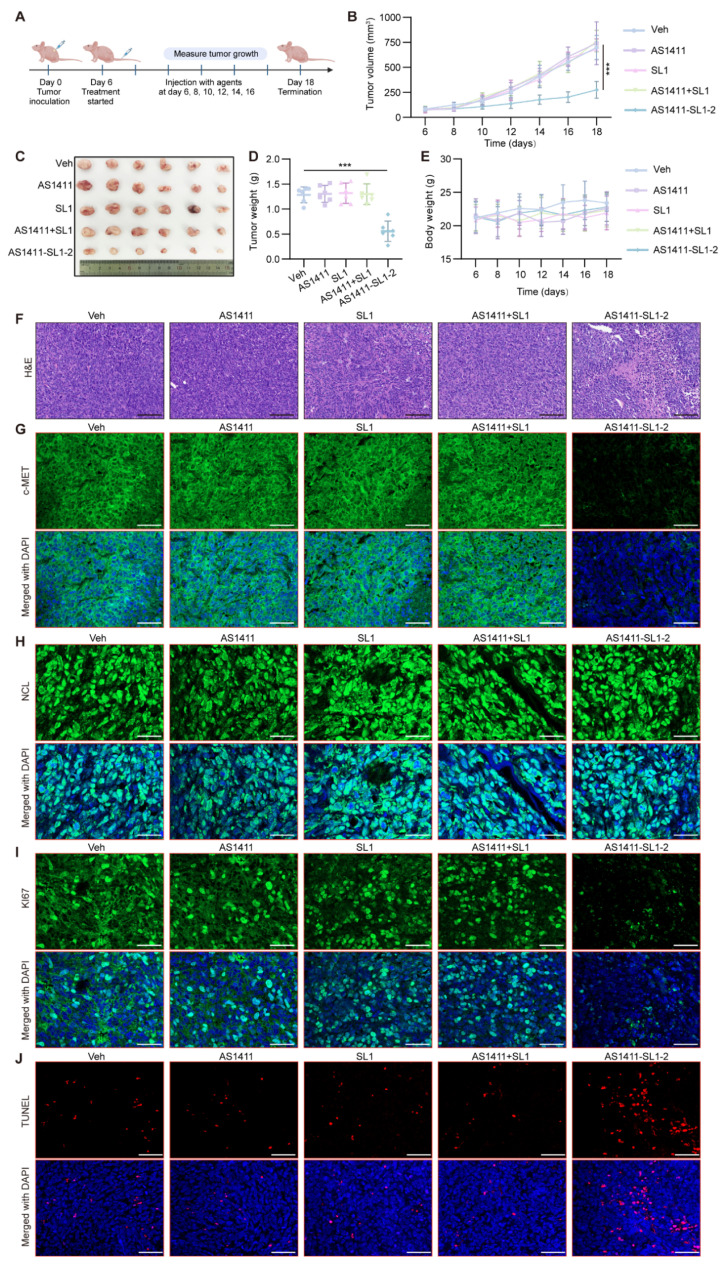
Osteosarcoma (OS) is the most common bone malignancy. c-MET is recognized as a therapeutic target. However, traditional c-MET inhibitors show compromised efficacy due to the acquired resistance and side effects. PROTACs targeting c-MET have displayed improved antitumor efficacy by overcoming drug resistance, whereas safety concern caused by lack of tumor-targeting ability is still a pending issue. AS1411 is an aptamer that recognizes and penetrates tumors by targeting nucleolin (NCL) overexpressed on the surface of tumor cells. Since NCL interacts with an E3 ligase MDM2 intracellularly, we repurposed AS1411 as an MDM2 recruiter by employing NCL as a bridge. We select the ssDNA c-MET aptamer SL1 as the c-MET ligand to design dual aptamer-functionalized PROTACs, as SL1 can be easily conjugated to AS1411 through base-pair complementarity using a nucleic acid linker. Four AS1411-SL1 chimeras are generated by linking AS1411 to either the 5' or 3' terminus of SL1 via two different lengths of nucleic acid linkers. The therapeutic efficacy of these PROTACs is evaluated through both and experiments. The PROTACs enable the ubiquitination and degradation of c-MET. The PROTACs effectively inhibit growth, enhance apoptosis, and overcome drug resistance of OS cells . The PROTACs demonstrate tumor-targeting ability and facilitate the OS treatment with no detectable toxicity. This study suggests that the AS1411-SL1 chimeras could be promising c-MET degraders for targeted therapy of OS.
骨肉瘤(OS)是最常见的骨恶性肿瘤。c-MET被认为是一个治疗靶点。然而,传统的c-MET抑制剂由于获得性耐药和副作用而疗效受损。靶向c-MET的PROTACs通过克服耐药性显示出提高的抗肿瘤疗效,而缺乏肿瘤靶向能力引起的安全性问题仍然是一个悬而未决的问题。AS1411是一种适体,通过靶向肿瘤细胞表面过表达的核仁素(NCL)来识别并穿透肿瘤。由于NCL在细胞内与E3连接酶MDM2相互作用,我们通过利用NCL作为桥梁将AS1411重新用作MDM2招募剂。我们选择单链DNA c-MET适体SL1作为c-MET配体来设计双适体功能化的PROTACs,因为SL1可以通过核酸接头利用碱基对互补性轻松地与AS1411偶联。通过两种不同长度的核酸接头将AS1411连接到SL1的5'或3'末端,生成了四种AS1411-SL1嵌合体。通过体外和体内实验评估了这些PROTACs的治疗效果。这些PROTACs能够使c-MET发生泛素化和降解。这些PROTACs有效抑制骨肉瘤细胞的生长、增强凋亡并克服耐药性。这些PROTACs表现出肿瘤靶向能力,并在无可检测毒性的情况下促进骨肉瘤的治疗。这项研究表明,AS1411-SL1嵌合体可能是用于骨肉瘤靶向治疗的有前景的c-MET降解剂。