• 文献检索
  • 文档翻译
  • 深度研究
  • 学术资讯
  • Suppr Zotero 插件Zotero 插件
  • 邀请有礼
  • 套餐&价格
  • 历史记录
应用&插件
Suppr Zotero 插件Zotero 插件浏览器插件Mac 客户端Windows 客户端微信小程序
定价
高级版会员购买积分包购买API积分包
服务
文献检索文档翻译深度研究API 文档MCP 服务
关于我们
关于 Suppr公司介绍联系我们用户协议隐私条款
关注我们

Suppr 超能文献

核心技术专利:CN118964589B侵权必究
粤ICP备2023148730 号-1Suppr @ 2026

文献检索

告别复杂PubMed语法,用中文像聊天一样搜索,搜遍4000万医学文献。AI智能推荐,让科研检索更轻松。

立即免费搜索

文件翻译

保留排版,准确专业,支持PDF/Word/PPT等文件格式,支持 12+语言互译。

免费翻译文档

深度研究

AI帮你快速写综述,25分钟生成高质量综述,智能提取关键信息,辅助科研写作。

立即免费体验

通过表观基因组编辑对组织蛋白酶D进行靶向去甲基化可挽救阿尔茨海默病小鼠模型中的病理状况。

Targeted demethylation of cathepsin D via epigenome editing rescues pathology in Alzheimer's disease mouse model.

作者信息

Park Moonsu, Ryu Hongji, Heo Suyeon, Kim Boyoung, Park Junhang, Lim Key-Hwan, Han Sang-Bae, Park Hanseul

机构信息

Laboratory of Molecular Genetics, College of Pharmacy, Chungbuk National University, Cheongju, 28160, Republic of Korea.

College of Pharmacy, Chungbuk National University, Cheongju, 28160, Republic of Korea.

出版信息

Theranostics. 2025 Jan 1;15(2):428-438. doi: 10.7150/thno.103455. eCollection 2025.

DOI:10.7150/thno.103455
PMID:39744681
原文链接:https://pmc.ncbi.nlm.nih.gov/articles/PMC11671390/
Abstract

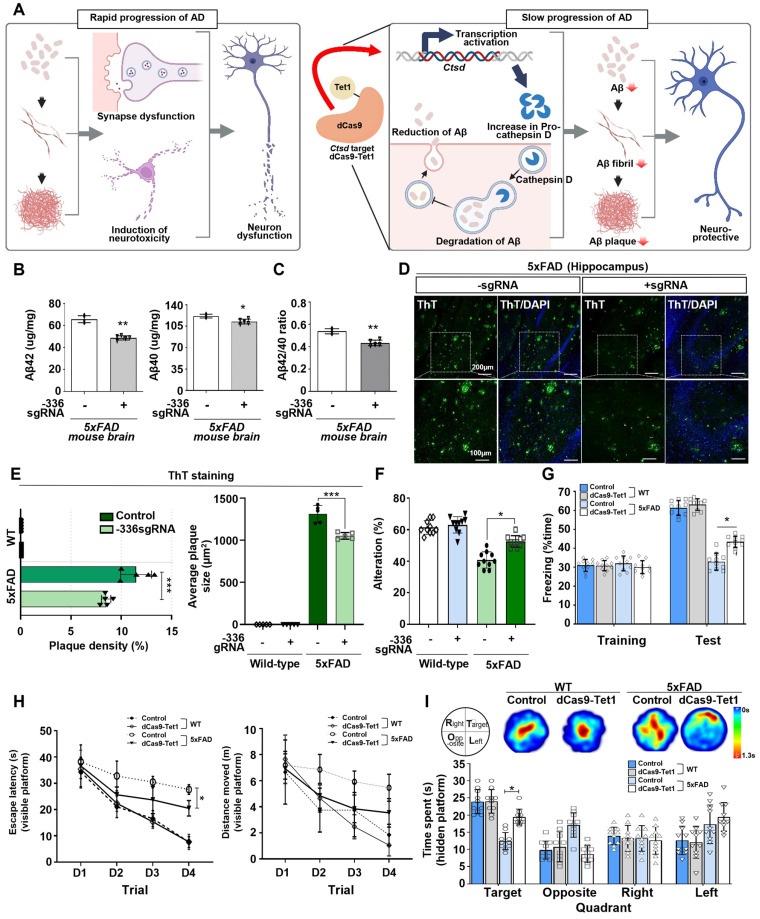
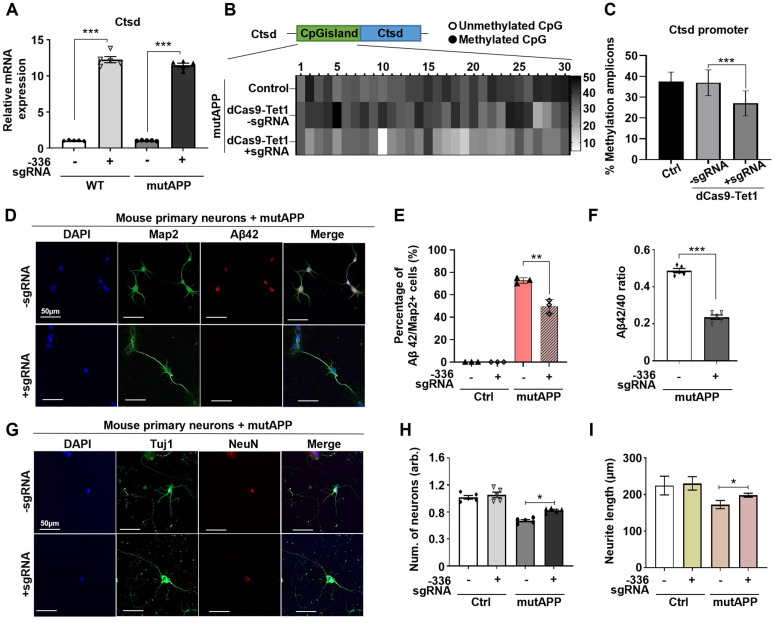
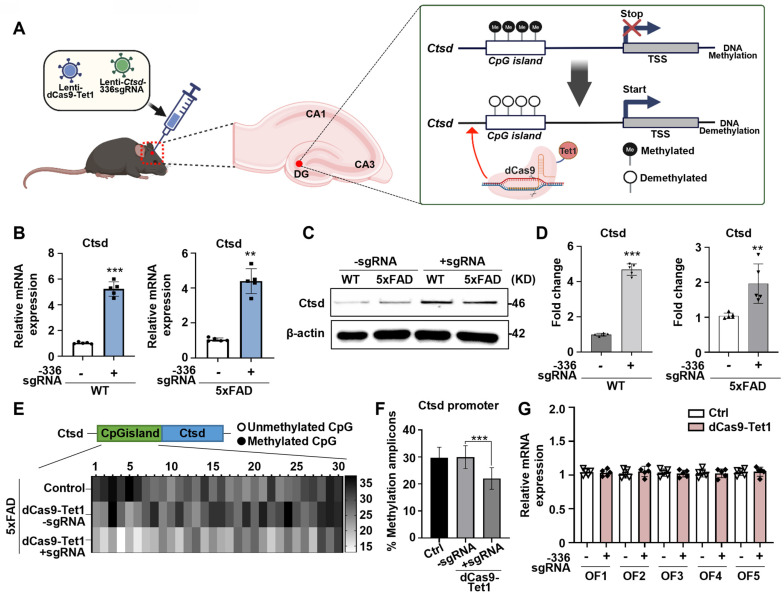
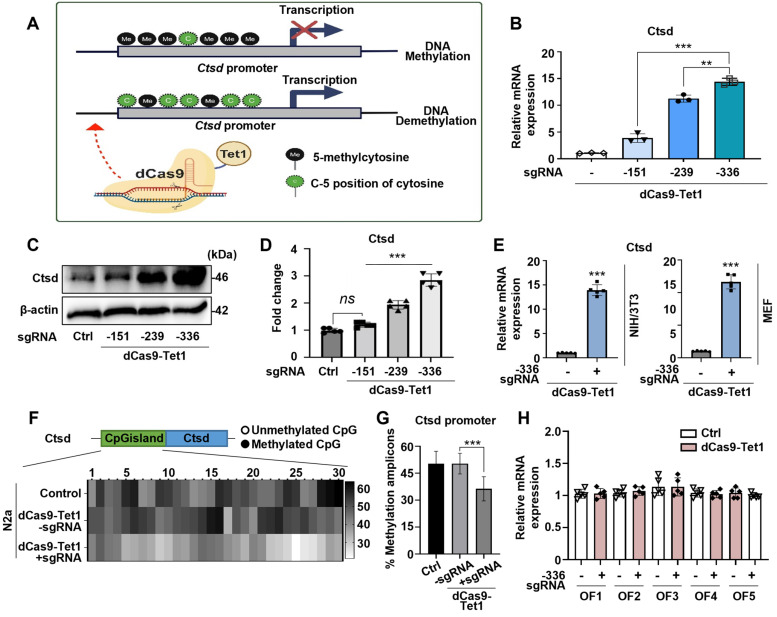
Cathepsin D (Ctsd) has emerged as a promising therapeutic target for Alzheimer's disease (AD) due to its role in degrading intracellular amyloid beta (Aβ). Enhancing Ctsd activity could reduce Aβ42 accumulation and restore the Aβ42/40 ratio, offering a potential AD treatment strategy. This study explored Ctsd demethylation in AD mouse models using dCas9-Tet1-mediated epigenome editing. We identified dCas9-Tet1 as an effective tool for demethylating the endogenous Ctsd gene in primary neurons and brains. Treatment with Ctsd-targeted dCas9-Tet1 in primary neurons overexpressing mutant APP (mutAPP) reduced Aβ peptide levels and the Aβ42/40 ratio. Additionally, demethylation of Ctsd via dCas9-Tet1 in 5xFAD mice significantly altered Aβ levels and alleviated cognitive and behavioral deficits. These findings offer valuable insights into developing epigenome editing-based gene therapy strategies for AD.

摘要

组织蛋白酶D(Ctsd)因其在降解细胞内β淀粉样蛋白(Aβ)中的作用,已成为治疗阿尔茨海默病(AD)的一个有前景的治疗靶点。增强Ctsd活性可减少Aβ42积累并恢复Aβ42/40比值,提供了一种潜在的AD治疗策略。本研究利用dCas9-Tet1介导的表观基因组编辑,在AD小鼠模型中探索Ctsd去甲基化。我们确定dCas9-Tet1是一种在原代神经元和大脑中使内源性Ctsd基因去甲基化的有效工具。在过表达突变型APP(mutAPP)的原代神经元中,用靶向Ctsd的dCas9-Tet1处理可降低Aβ肽水平和Aβ42/40比值。此外,在5xFAD小鼠中通过dCas9-Tet1使Ctsd去甲基化,显著改变了Aβ水平,并减轻了认知和行为缺陷。这些发现为开发基于表观基因组编辑的AD基因治疗策略提供了有价值的见解。
https://cdn.ncbi.nlm.nih.gov/pmc/blobs/6e9b/11671390/971f8e35a90c/thnov15p0428g004.jpg
https://cdn.ncbi.nlm.nih.gov/pmc/blobs/6e9b/11671390/f09c364bb7d4/thnov15p0428g001.jpg
https://cdn.ncbi.nlm.nih.gov/pmc/blobs/6e9b/11671390/1515c5e088a5/thnov15p0428g002.jpg
https://cdn.ncbi.nlm.nih.gov/pmc/blobs/6e9b/11671390/b7d955f7aaf7/thnov15p0428g003.jpg
https://cdn.ncbi.nlm.nih.gov/pmc/blobs/6e9b/11671390/971f8e35a90c/thnov15p0428g004.jpg
https://cdn.ncbi.nlm.nih.gov/pmc/blobs/6e9b/11671390/f09c364bb7d4/thnov15p0428g001.jpg
https://cdn.ncbi.nlm.nih.gov/pmc/blobs/6e9b/11671390/1515c5e088a5/thnov15p0428g002.jpg
https://cdn.ncbi.nlm.nih.gov/pmc/blobs/6e9b/11671390/b7d955f7aaf7/thnov15p0428g003.jpg
https://cdn.ncbi.nlm.nih.gov/pmc/blobs/6e9b/11671390/971f8e35a90c/thnov15p0428g004.jpg

相似文献

1
Targeted demethylation of cathepsin D via epigenome editing rescues pathology in Alzheimer's disease mouse model.通过表观基因组编辑对组织蛋白酶D进行靶向去甲基化可挽救阿尔茨海默病小鼠模型中的病理状况。
Theranostics. 2025 Jan 1;15(2):428-438. doi: 10.7150/thno.103455. eCollection 2025.
2
Haplodeficiency of Cathepsin D does not affect cerebral amyloidosis and autophagy in APP/PS1 transgenic mice.组织蛋白酶D单倍体不足不影响APP/PS1转基因小鼠的脑淀粉样变性和自噬。
J Neurochem. 2017 Jul;142(2):297-304. doi: 10.1111/jnc.14048. Epub 2017 May 26.
3
Cathepsin D: Analysis of its potential role as an amyloid beta degrading protease.组织蛋白酶D:分析其作为β-淀粉样蛋白降解蛋白酶的潜在作用。
Neurobiol Dis. 2022 Dec;175:105919. doi: 10.1016/j.nbd.2022.105919. Epub 2022 Nov 5.
4
CRISPR/dCas9-Dnmt3a-mediated targeted DNA methylation of APP rescues brain pathology in a mouse model of Alzheimer's disease.CRISPR/dCas9-Dnmt3a 介导的 APP 靶向 DNA 甲基化可挽救阿尔茨海默病小鼠模型的脑病理。
Transl Neurodegener. 2022 Sep 15;11(1):41. doi: 10.1186/s40035-022-00314-0.
5
Engineered exosomes with a photoinducible protein delivery system enable CRISPR-Cas-based epigenome editing in Alzheimer's disease.工程化的外泌体具有光诱导蛋白递药系统,可实现阿尔茨海默病基于 CRISPR-Cas 的表观基因组编辑。
Sci Transl Med. 2024 Aug 7;16(759):eadi4830. doi: 10.1126/scitranslmed.adi4830.
6
Genetic associations between cathepsin D exon 2 C-->T polymorphism and Alzheimer's disease, and pathological correlations with genotype.组织蛋白酶D外显子2 C→T多态性与阿尔茨海默病之间的遗传关联以及与基因型的病理相关性。
J Neurol Neurosurg Psychiatry. 2006 Apr;77(4):515-7. doi: 10.1136/jnnp.2005.063917.
7
In vivo neuronal gene editing via CRISPR-Cas9 amphiphilic nanocomplexes alleviates deficits in mouse models of Alzheimer's disease.通过 CRISPR-Cas9 两亲性纳米复合物在体神经元基因编辑可缓解阿尔茨海默病小鼠模型的缺陷。
Nat Neurosci. 2019 Apr;22(4):524-528. doi: 10.1038/s41593-019-0352-0. Epub 2019 Mar 11.
8
Genetic inhibition of phosphorylation of the translation initiation factor eIF2α does not block Aβ-dependent elevation of BACE1 and APP levels or reduce amyloid pathology in a mouse model of Alzheimer's disease.在阿尔茨海默病小鼠模型中,对翻译起始因子eIF2α磷酸化的基因抑制并不能阻止β淀粉样前体蛋白裂解酶1(BACE1)和淀粉样前体蛋白(APP)水平的β淀粉样蛋白(Aβ)依赖性升高,也不能减轻淀粉样病理改变。
PLoS One. 2014 Jul 3;9(7):e101643. doi: 10.1371/journal.pone.0101643. eCollection 2014.
9
CRISPR/Cas9 editing of APP C-terminus attenuates β-cleavage and promotes α-cleavage.CRISPR/Cas9 编辑 APP C 端可减弱 β 切割并促进 α 切割。
Nat Commun. 2019 Jan 3;10(1):53. doi: 10.1038/s41467-018-07971-8.
10
Abeta deposition and related pathology in an APP x PS1 transgenic mouse model of Alzheimer's disease.阿尔茨海默病APP x PS1转基因小鼠模型中的淀粉样β蛋白沉积及相关病理学
Histol Histopathol. 2008 Jan;23(1):67-76. doi: 10.14670/HH-23.67.

引用本文的文献

1
Gene Editing: An Effective Tool for the Future Treatment of Kidney Disease.基因编辑:未来治疗肾脏疾病的有效工具。
J Inflamm Res. 2025 Mar 17;18:4001-4018. doi: 10.2147/JIR.S506760. eCollection 2025.

本文引用的文献

1
Prominent tauopathy and intracellular β-amyloid accumulation triggered by genetic deletion of cathepsin D: implications for Alzheimer disease pathogenesis.遗传缺失组织蛋白酶 D 引发显著的 tau 病和细胞内 β-淀粉样蛋白积累:对阿尔茨海默病发病机制的影响。
Alzheimers Res Ther. 2024 Apr 4;16(1):70. doi: 10.1186/s13195-024-01443-6.
2
High-throughput evaluation of genetic variants with prime editing sensor libraries.利用碱基编辑传感器文库对基因变异进行高通量评估。
Nat Biotechnol. 2024 Mar 12. doi: 10.1038/s41587-024-02172-9.
3
Cathepsin D overexpression in the nervous system rescues lethality and A42 accumulation of cathepsin D systemic knockout .
组织蛋白酶D在神经系统中的过表达可挽救组织蛋白酶D全身敲除小鼠的致死性及Aβ42蓄积。
Acta Pharm Sin B. 2023 Oct;13(10):4172-4184. doi: 10.1016/j.apsb.2023.07.015. Epub 2023 Jul 20.
4
As a Potential Therapeutic Target, C1q Induces Synapse Loss Via Inflammasome-activating Apoptotic and Mitochondria Impairment Mechanisms in Alzheimer's Disease.作为一种潜在的治疗靶点,补体C1q通过炎性小体激活的凋亡和线粒体损伤机制诱导阿尔茨海默病中的突触丧失。
J Neuroimmune Pharmacol. 2023 Sep;18(3):267-284. doi: 10.1007/s11481-023-10076-9. Epub 2023 Jun 29.
5
Disruption of axonal transport in neurodegeneration.神经退行性疾病中轴突运输的中断。
J Clin Invest. 2023 Jun 1;133(11):e168554. doi: 10.1172/JCI168554.
6
A Dual-Function "TRE-Lox" System for Genetic Deletion or Reversible, Titratable, and Near-Complete Downregulation of Cathepsin D.一种双功能“TRE-Lox”系统,用于基因缺失或可逆、滴定和近乎完全下调组织蛋白酶 D。
Int J Mol Sci. 2023 Apr 4;24(7):6745. doi: 10.3390/ijms24076745.
7
Alzheimer's Disease: An Updated Overview of Its Genetics.阿尔茨海默病:遗传学的最新综述。
Int J Mol Sci. 2023 Feb 13;24(4):3754. doi: 10.3390/ijms24043754.
8
CRISPR/Cas9 therapeutics: progress and prospects.CRISPR/Cas9 疗法:进展与展望。
Signal Transduct Target Ther. 2023 Jan 16;8(1):36. doi: 10.1038/s41392-023-01309-7.
9
Cathepsin D: Analysis of its potential role as an amyloid beta degrading protease.组织蛋白酶D:分析其作为β-淀粉样蛋白降解蛋白酶的潜在作用。
Neurobiol Dis. 2022 Dec;175:105919. doi: 10.1016/j.nbd.2022.105919. Epub 2022 Nov 5.
10
CRISPR/dCas9-Dnmt3a-mediated targeted DNA methylation of APP rescues brain pathology in a mouse model of Alzheimer's disease.CRISPR/dCas9-Dnmt3a 介导的 APP 靶向 DNA 甲基化可挽救阿尔茨海默病小鼠模型的脑病理。
Transl Neurodegener. 2022 Sep 15;11(1):41. doi: 10.1186/s40035-022-00314-0.