Mi Chenjia, Gee Gavin C, Lander Chance W, Shin Donghoon, Atteberry Matthew L, Akhmedov Novruz G, Hidayatova Lamia, DiCenso Jesse D, Yip Wai Tak, Chen Bin, Shao Yihan, Dong Yitong
Department of Chemistry and Biochemistry, The University of Oklahoma, Norman, OK, 73019, USA.
Department of Chemistry, Northwestern University, Evanston, IL, 60208, USA.
Nat Commun. 2025 Jan 2;16(1):204. doi: 10.1038/s41467-024-55619-7.
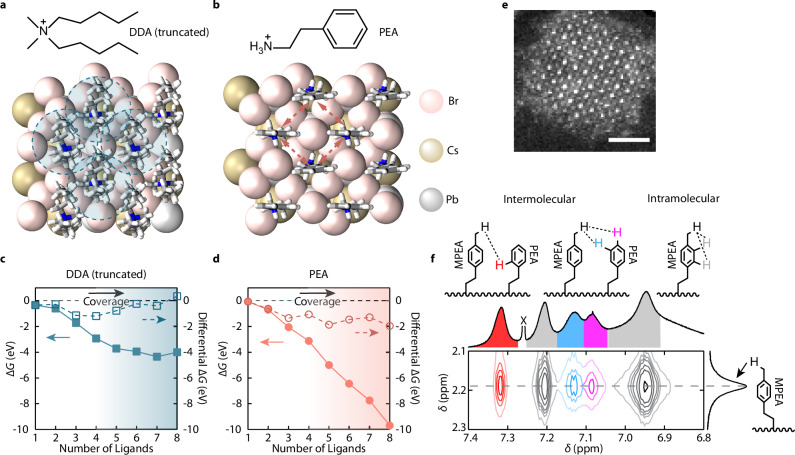
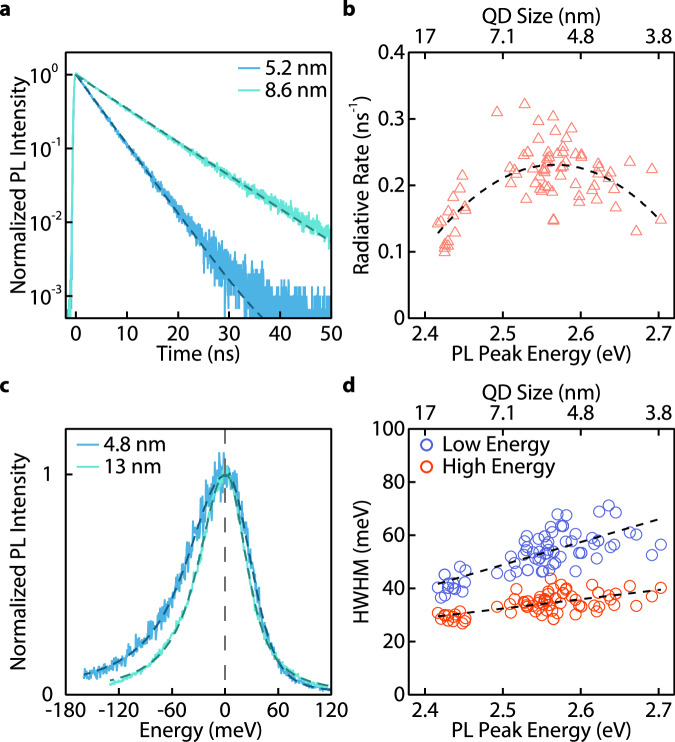
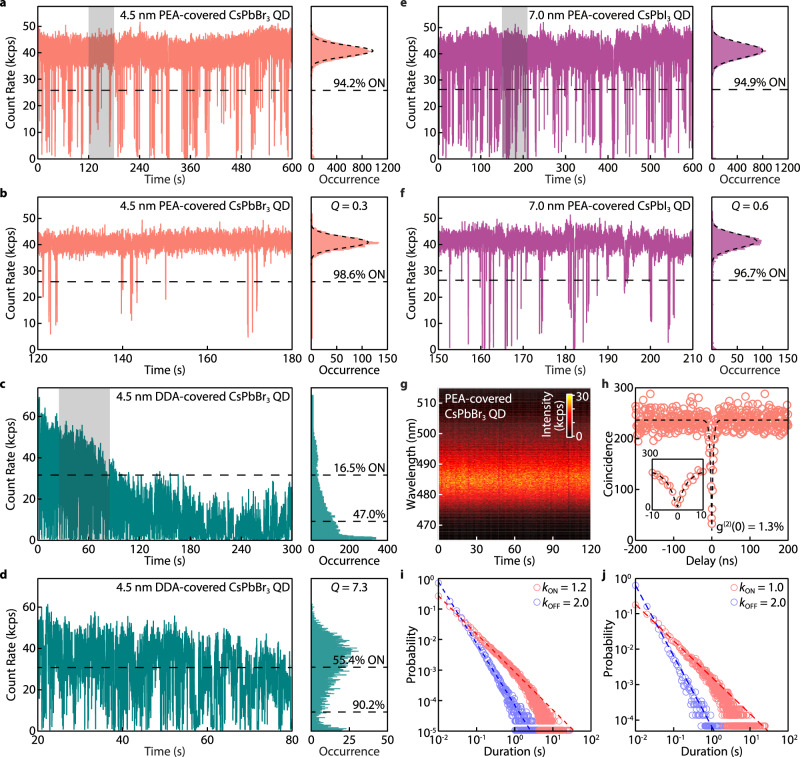
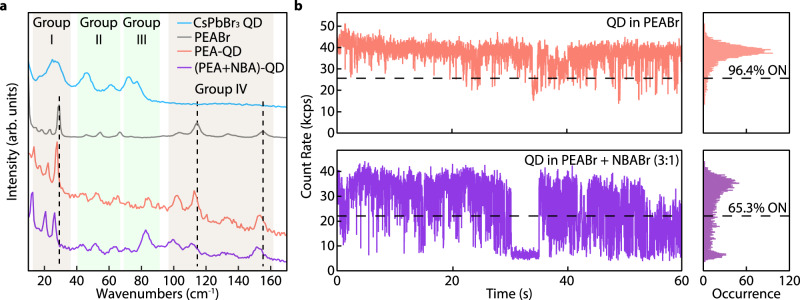
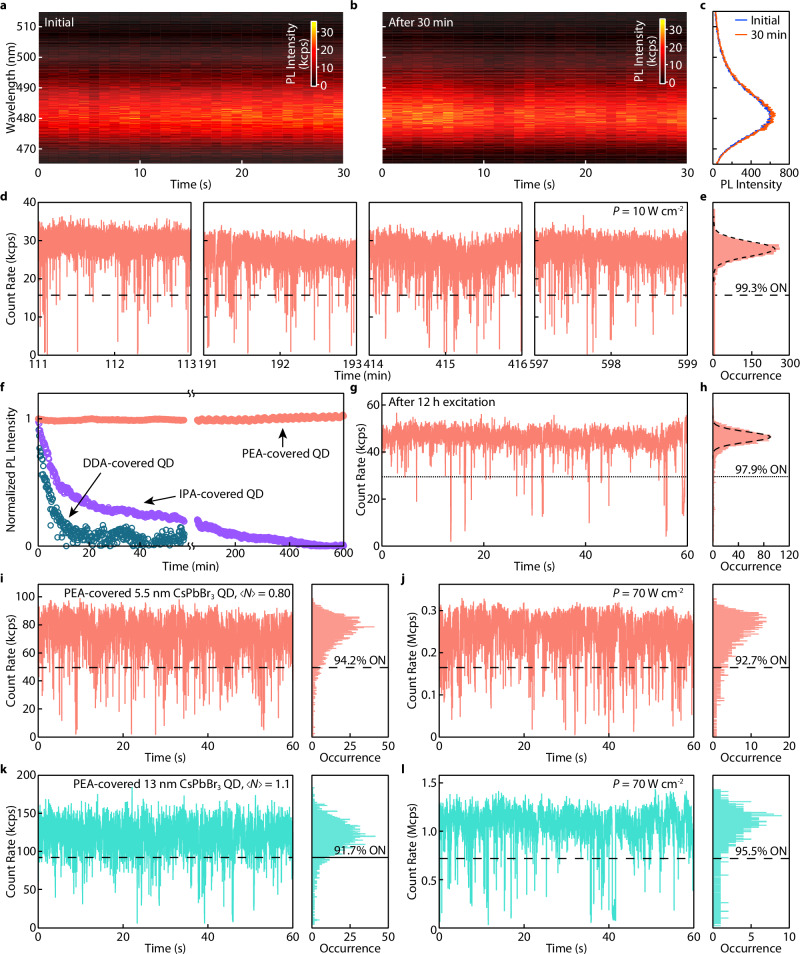
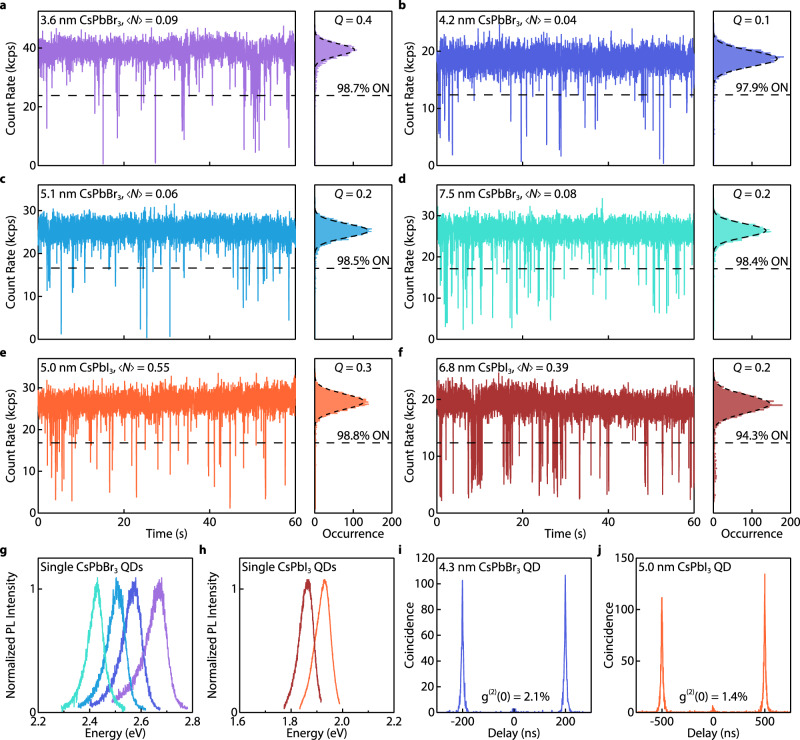
Surface defect-induced photoluminescence blinking and photodarkening are ubiquitous in lead halide perovskite quantum dots. Despite efforts to stabilize the surface by chemically engineering ligand binding moieties, blinking accompanied by photodegradation still poses barriers to implementing perovskite quantum dots in quantum emitters. To date, ligand tail engineering in the solid state has rarely been explored for perovskite quantum dots. We posit that attractive intermolecular interactions between low-steric ligand tails, such as π-π stacking, can promote the formation of a nearly epitaxial ligand layer that significantly reduces the quantum dot surface energy. Here, we show that single CsPbBr quantum dots covered by stacked phenethylammonium ligands exhibit nearly non-blinking single photon emission with high purity (~ 98%) and extraordinary photostability (12 hours continuous operation and saturated excitations), allowing the determination of size-dependent exciton radiative rates and emission line widths of CsPbBr quantum dots at the single particle level.
表面缺陷诱导的光致发光闪烁和光暗化在卤化铅钙钛矿量子点中普遍存在。尽管人们努力通过化学工程设计配体结合部分来稳定表面,但伴随光降解的闪烁仍然是在量子发射器中应用钙钛矿量子点的障碍。迄今为止,很少有人探索固态下钙钛矿量子点的配体尾部工程。我们认为,低空间位阻配体尾部之间有吸引力的分子间相互作用,如π-π堆积,可以促进形成几乎外延的配体层,从而显著降低量子点表面能。在这里,我们表明,被堆叠的苯乙铵配体覆盖的单个CsPbBr量子点表现出几乎不闪烁的单光子发射,具有高纯度(约98%)和非凡的光稳定性(连续运行12小时和饱和激发),这使得能够在单粒子水平上确定CsPbBr量子点的尺寸依赖性激子辐射率和发射线宽。