Nakamoto Hiroki, Shichi Shunsuke, Shirakawa Chisato, Suzuki Takuto, Kitamura Hidemitsu, Taketomi Akinobu
Department of Gastroenterological Surgery I, Hokkaido University Graduate School of Medicine, N15 W7 Kita-Ku, Sapporo, Hokkaido, 060-8638, Japan.
Department of Biomedical Engineering, Faculty of Life Sciences, Toyo University, Saitama, Japan.
Sci Rep. 2025 Jan 2;15(1):555. doi: 10.1038/s41598-024-84403-2.
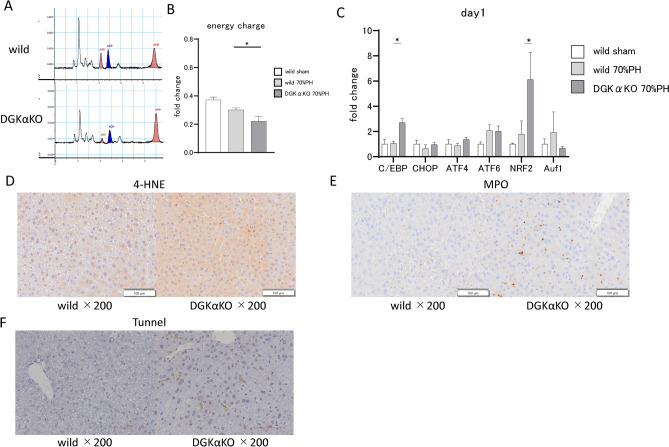
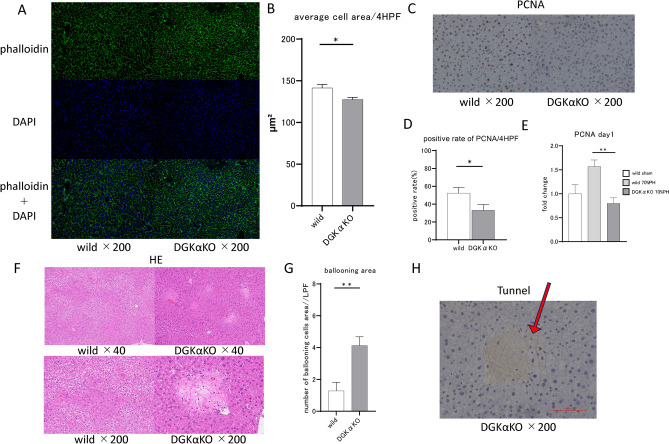
Diacylglycerol kinases (DGKs) phosphorylate diacylglycerol to generate phosphatidic acid, which plays important roles in intracellular signal transduction. DGKα is reportedly associated with progression of tumors, including hepatocellular carcinomas, but its relationship with liver regeneration has not been examined. The purpose of this research is to elucidate the role of DGKα in liver regeneration. Here, we provide a detailed examination of C57BL/6 wild-type and DGKα knockout (KO) mice subjected to 70% partial hepatectomy (70% PH) modeling, including survival rates, hematological marker and gene expression levels, and histological analyses of factors related to liver regeneration. Following 70% PH, DGKα KO mice produce higher levels of hepatobiliary enzymes and have a higher incidence of jaundice compared with wild-type mice, with a death rate of ~ 40%. Furthermore, they exhibit impaired glycogen and lipid consumption, low liver energy charge, and hepatocyte hypertrophy disorder, accompanied by significantly reduced liver expression of proliferating cell nuclear antigen and cyclin D. We conclude that DGKα is a key molecule in the post-PH liver regeneration process and may have potential as a therapeutic target for the acceleration of liver regeneration.
二酰基甘油激酶(DGKs)将二酰基甘油磷酸化生成磷脂酸,磷脂酸在细胞内信号转导中发挥重要作用。据报道,DGKα与包括肝细胞癌在内的肿瘤进展有关,但其与肝脏再生的关系尚未得到研究。本研究的目的是阐明DGKα在肝脏再生中的作用。在此,我们对接受70%部分肝切除术(70% PH)建模的C57BL/6野生型和DGKα基因敲除(KO)小鼠进行了详细检查,包括存活率、血液学标志物和基因表达水平,以及对与肝脏再生相关因素的组织学分析。在70% PH后,与野生型小鼠相比,DGKα KO小鼠产生更高水平的肝胆酶,黄疸发生率更高,死亡率约为40%。此外,它们表现出糖原和脂质消耗受损、肝脏能量电荷低以及肝细胞肥大紊乱,同时增殖细胞核抗原和细胞周期蛋白D的肝脏表达显著降低。我们得出结论,DGKα是PH后肝脏再生过程中的关键分子,可能具有作为加速肝脏再生治疗靶点的潜力。