Porcellini Giuseppe, Brigo Alberto, Novi Michele, De Santis Elisa, Di Giacomo Silvia, Giorgini Andrea, Micheloni Gian Mario, Bonfatti Rocco, Donà Alessandro, Tarallo Luigi
University of Modena and Reggio Emilia, Modena, Italy.
Ospedale San Pietro Igneo Fucecchio, Firenze, Italy.
J Orthop Traumatol. 2025 Jan 2;26(1):1. doi: 10.1186/s10195-024-00813-y.
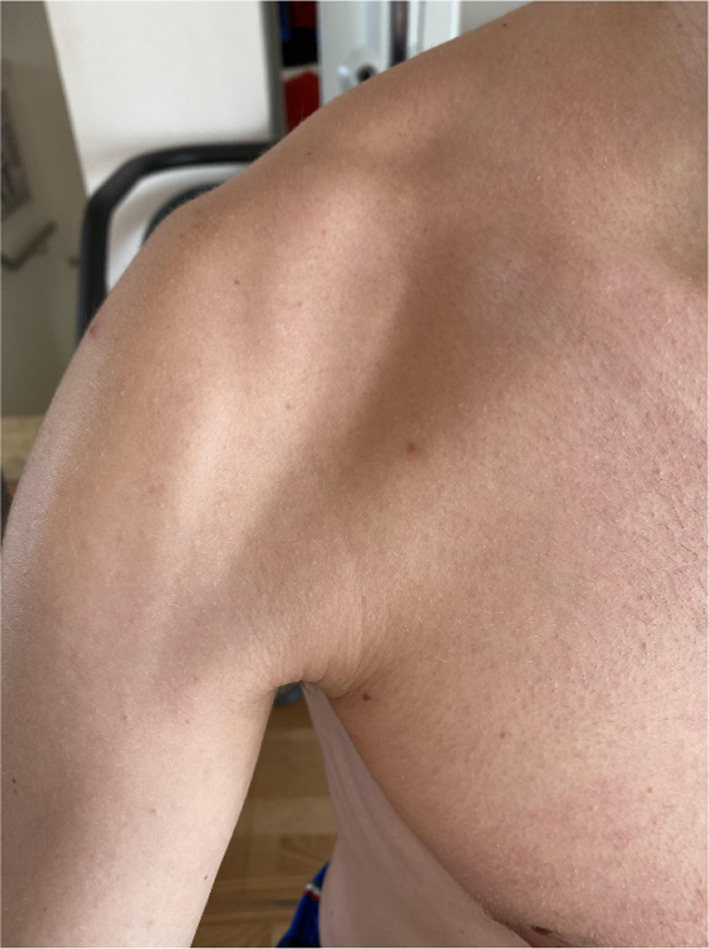
Quadrilateral space syndrome is a painful disorder of the shoulder caused by static or dynamic entrapment of the axillary nerve and the posterior humeral circumflex artery. It was first described in 1983; however, it is an uncommon syndrome that initially presents with nonspecific shoulder pain or selective deltoid atrophy, and diagnosis is often delayed owing to its rarity. Young athletes of overhead sports are more commonly affected by this syndrome. Symptoms of quadrilateral space syndrome include silent deltoid atrophy, persistent posterior shoulder pain, paresthesias, and tenderness over the quadrilateral space. Vascular symptoms may involve thrombosis and embolisms of the upper limb. Instrumental tests and imaging are not always conclusive, leading to frequent misdiagnosis of the syndrome.
The aim of this study is to present a case series of four patients diagnosed with neurogenic quadrilateral space syndrome, describe different clinical presentations, and suggest tips for diagnosing this syndrome. All patients underwent a detailed medical history collection, were interviewed about the sports and hobbies they engaged in, and received a comprehensive clinical examination of the neck and shoulder. Patients also underwent diagnostic exams such as magnetic resonance imaging (MRI) and electromyography. An ultrasound-guided injection of local anesthetic was performed into the quadrilateral space.
All patients affected by neurogenic quadrilateral space syndrome underwent conservative treatment, which included a rehabilitation program. Only one out of four patients experienced complete resolution of symptoms and did not require surgical decompression.
To properly treat this rare syndrome, we propose classifying it as either "dynamic" or "static," on the basis of the clinical history, MRI findings, and physical examination. The study includes a rehabilitation program that was effective for one patient, demonstrating that surgical decompression may be avoidable if the cases are promptly diagnosed and classified. Level of evidence IV according to "The Oxford 2011 Levels of Evidence".
四边孔综合征是一种肩部疼痛性疾病,由腋神经和旋肱后动脉的静态或动态卡压引起。它于1983年首次被描述;然而,这是一种罕见的综合征,最初表现为非特异性肩部疼痛或选择性三角肌萎缩,由于其罕见性,诊断往往延迟。从事过头运动的年轻运动员更易受此综合征影响。四边孔综合征的症状包括隐匿性三角肌萎缩、肩部后部持续疼痛、感觉异常以及四边孔处压痛。血管症状可能涉及上肢血栓形成和栓塞。器械检查和影像学检查并不总是能得出明确结论,导致该综合征常被误诊。
本研究旨在呈现一组4例被诊断为神经源性四边孔综合征的病例系列,描述不同的临床表现,并提出该综合征的诊断要点。所有患者均接受了详细的病史采集,询问了他们从事的运动和爱好,并接受了颈部和肩部的全面临床检查。患者还接受了磁共振成像(MRI)和肌电图等诊断检查。在超声引导下向四边孔注射局部麻醉剂。
所有受神经源性四边孔综合征影响的患者均接受了保守治疗,包括康复计划。4例患者中只有1例症状完全缓解,无需手术减压。
为了正确治疗这种罕见综合征,我们建议根据临床病史、MRI表现和体格检查将其分为“动态”或“静态”。该研究包括一项对1例患者有效的康复计划,表明如果能及时诊断和分类病例,手术减压可能是可避免的。根据“2011年牛津证据水平”,证据水平为IV级。