Badewy Rana, Aldossri Musfer
Dental Public Health, Faculty of Dentistry, University of Toronto, Toronto, Ontario, Canada.
Department of Periodontics and Community Dentistry, King Saud University, College of Dentistry, Riyadh, Saudi Arabia.
J Public Health Dent. 2025 Mar;85(1):92-101. doi: 10.1111/jphd.12657. Epub 2025 Jan 2.
There has been an increasing interest in addressing the equity issue of accessing dental care for low-income elderly. This study aimed to estimate the marginal effects (ME) of dental insurance coverage for seniors on dental care utilization and oral health status outcomes. We also estimated the ME of dental insurance across income subgroups.
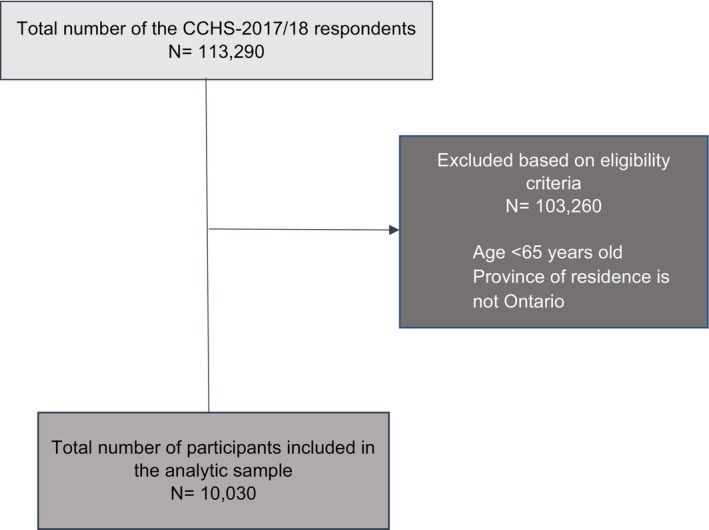
Data was sourced from the 2017/18 Canadian Community Health Survey (CCHS)-Annual component. The ME analysis included individuals aged ≥65 years residing in Ontario (n = 10,030). ME were derived from multivariate probit regression models for dental care utilization and oral health status outcomes.
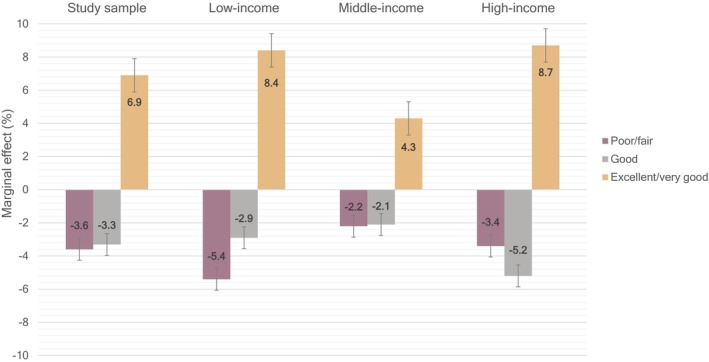
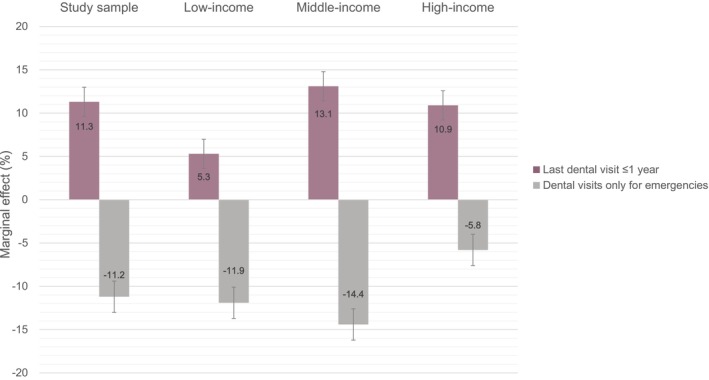
Dental insurance increased the likelihood of reporting excellent/very good oral health and never avoiding foods due to oral problems by 6.9% (ME:6.9, 95% CI: 5.4-8.3) and 3.5% (ME: 3.5, 95% CI: 1.9-5.1), respectively. Dental insurance increased the likelihood of dental visits within the past year by 11.3% (ME: 11.3, 95% CI: 9.8-12.8) and decreased the likelihood of dental visits only for emergencies by 11.2% (ME: -11.2, 95% CI: -12.5 to -9.9). Compared to low- and high-income groups, dental insurance had the highest ME for the middle-income groups for dental visits within the past year (ME middle: 13.1, 95% CI: 10.5-15.7) and dental visits only for emergencies (ME middle: -14.4, 95% CI: -16.0 to -12.8).
Dental insurance can improve the utilization of dental care and can help mitigate the negative effects of poor oral health in elderly populations.
人们越来越关注解决低收入老年人获得牙科护理的公平性问题。本研究旨在估计老年人牙科保险覆盖范围对牙科护理利用和口腔健康状况结果的边际效应(ME)。我们还估计了不同收入亚组的牙科保险边际效应。
数据来源于2017/18年加拿大社区健康调查(CCHS)年度部分。边际效应分析包括居住在安大略省的65岁及以上个体(n = 10,030)。边际效应来自牙科护理利用和口腔健康状况结果的多变量概率回归模型。
牙科保险使报告口腔健康极佳/非常好以及从未因口腔问题而避免食用某些食物的可能性分别增加了6.9%(边际效应:6.9,95%置信区间:5.4 - 8.3)和3.5%(边际效应:3.5,95%置信区间:1.9 - 5.1)。牙科保险使过去一年内看牙的可能性增加了11.3%(边际效应:11.3,95%置信区间:9.8 - 12.8),并使仅因紧急情况而看牙的可能性降低了11.2%(边际效应:-11.2,95%置信区间:-12.5至-9.9)。与低收入和高收入群体相比,牙科保险对过去一年内看牙的中等收入群体的边际效应最高(中等收入群体边际效应:13.1,95%置信区间:10.5 - 15.7),以及仅因紧急情况而看牙的边际效应(中等收入群体边际效应:-14.4,95%置信区间:-16.0至-12.8)。
牙科保险可以提高牙科护理的利用率,并有助于减轻老年人群口腔健康不良的负面影响。