Jeong Pil-Soo, Kang Hyo-Gu, Cha Dabin, Jeon Se-Been, Kim Min Ju, Song Bong-Seok, Sim Bo-Woong, Lee Sanghoon
Futuristic Animal Resource and Research Center, Korea Research Institute of Bioscience and Biotechnology, Cheongju, 28116, Republic of Korea.
Laboratory of Theriogenology, College of Veterinary Medicine, Chungnam National University, Daejeon, 34134, Republic of Korea.
Cell Commun Signal. 2025 Jan 2;23(1):1. doi: 10.1186/s12964-024-01996-x.
Although the Notch signaling pathway is known to play an important role in ovarian follicle development in mammals, whether it is involved in oocyte maturation remains unclear. Therefore, this study was performed to elucidate the existence and role of the Notch signaling pathway during oocyte maturation in a porcine model.
Reverse transcription-polymerase chain reaction (RT-PCR) and immunocytochemical assays were used to determine the existence of Notch signaling pathway-related transcripts and proteins in porcine cumulus-oocyte complexes (COCs). In vitro maturation (IVM) and parthenogenetic activation of oocytes were employed to examine the effects of Notch signaling inhibition on meiotic progression and embryogenesis of COCs using RO4929097 (RO), an inhibitor of γ secretase. Various staining methods (TUNEL, Phalloidin-TRITC, MitoTracker, JC-1, BODIPY FL ATP, ER-Tracker, Fluo-3, and Rhod-2) and immunocytochemical and quantitative PCR assays were used to identify the effects of Notch signaling inhibition on meiotic progression, embryogenesis, cell cycle progression, spindle assembly, chromosome alignment, mitochondrial and endoplasmic reticulum distribution, and downstream pathway targets in COCs.
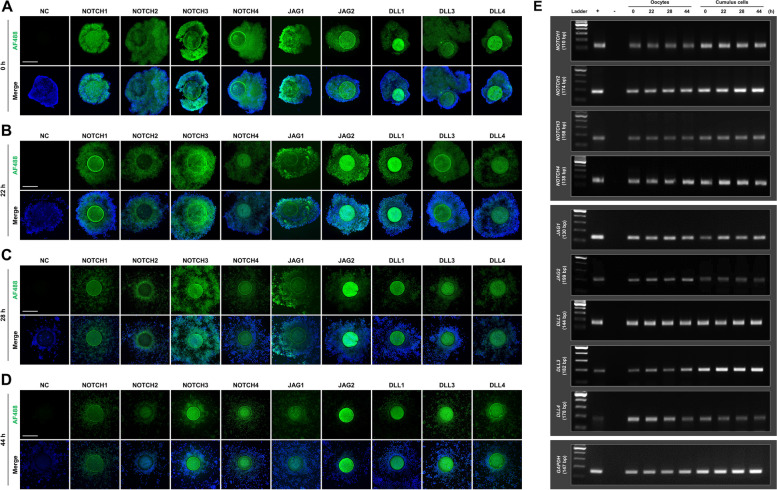
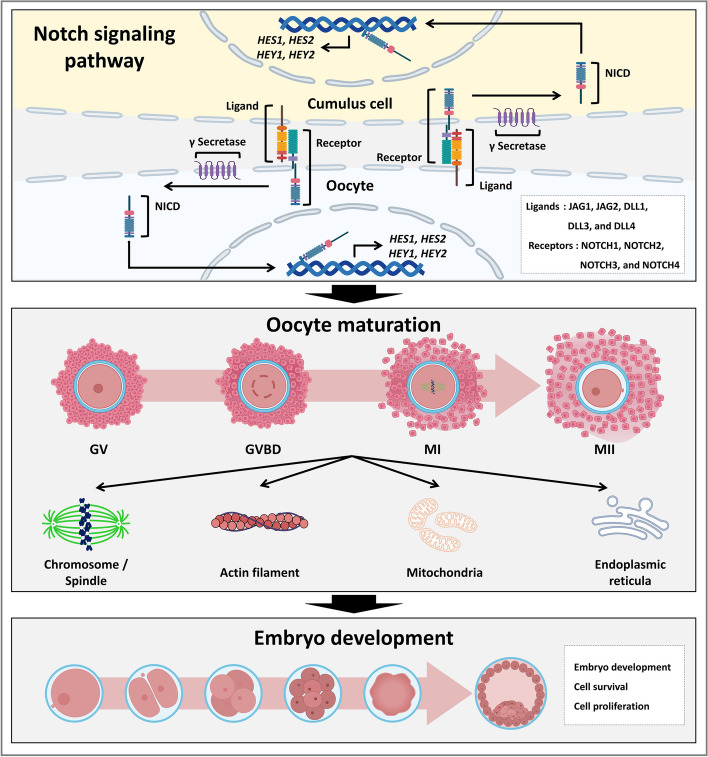
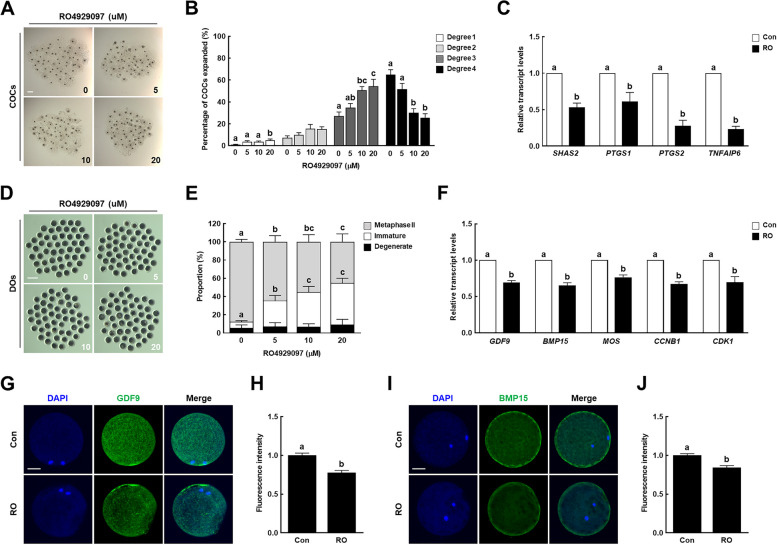
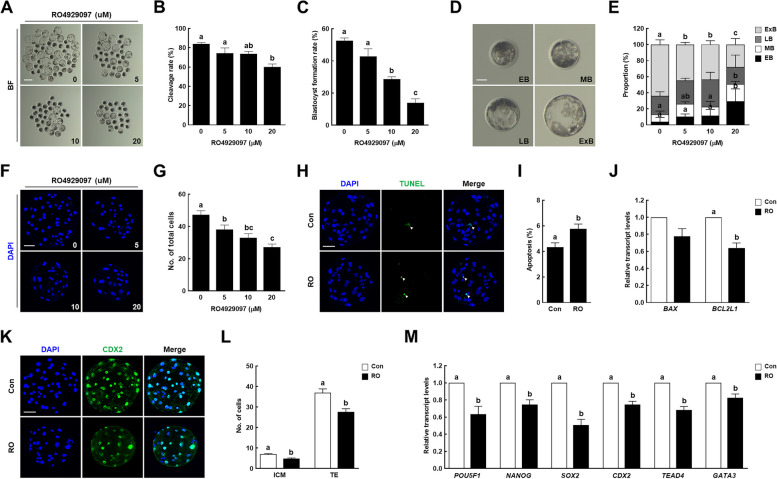
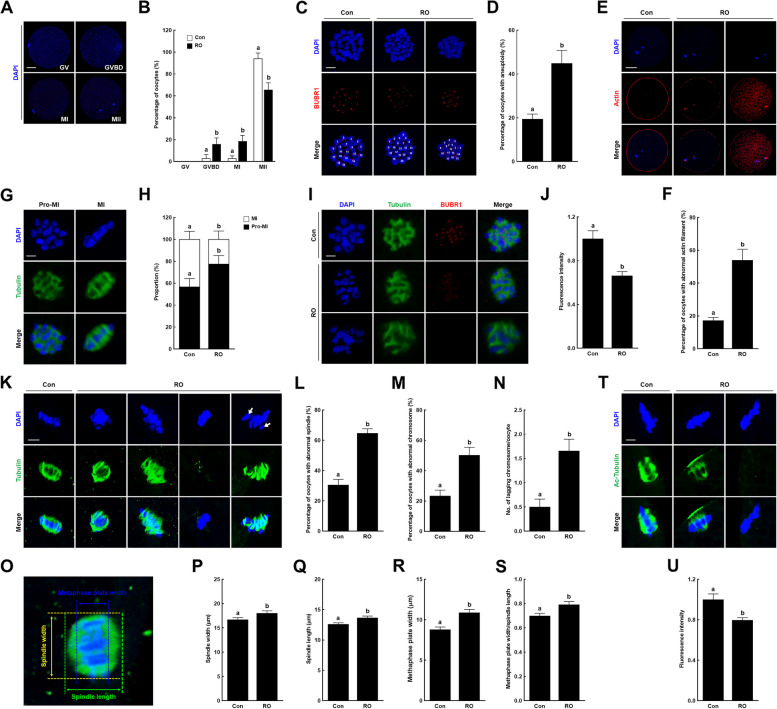
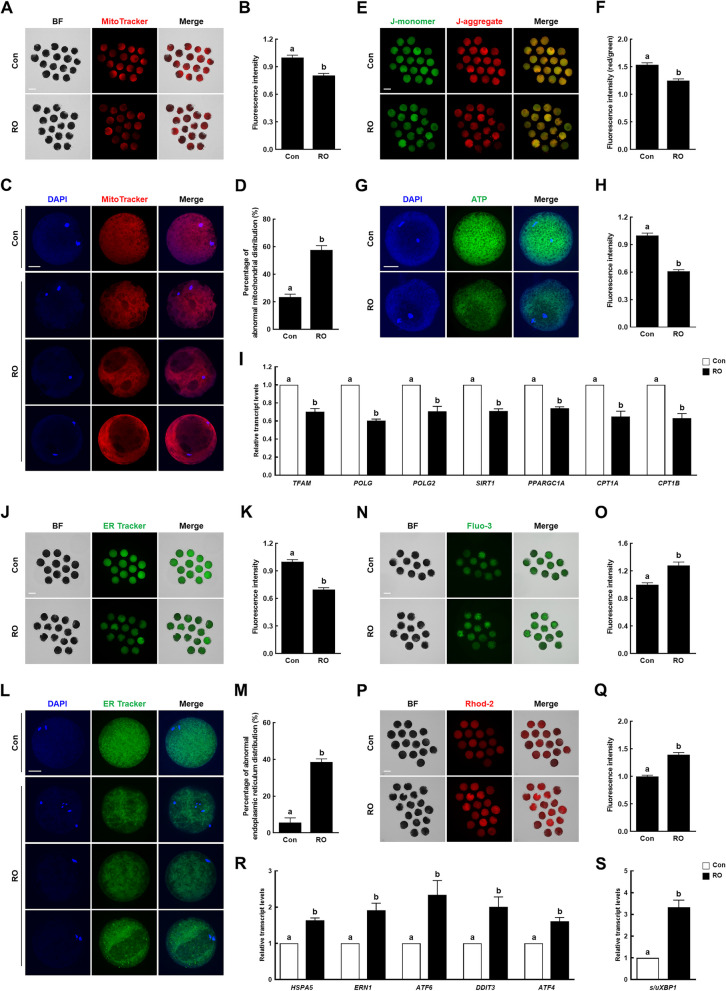
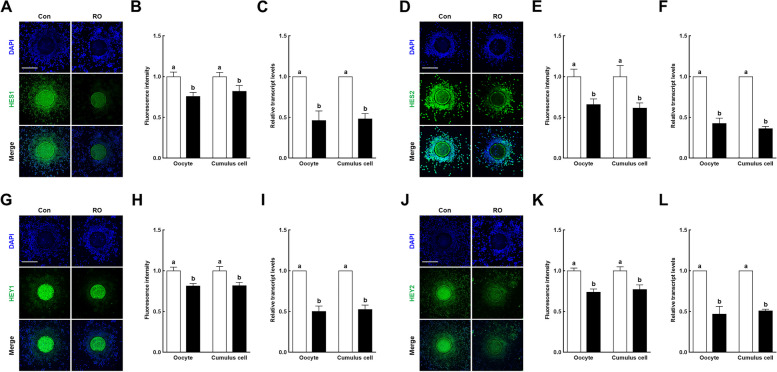
The RT-PCR and immunocytochemical analyses revealed the presence of Notch signaling-related receptors (NOTCH1-4) and ligands (JAG1 and 2 and DLL1, 3, and 4) at 0, 22, 28, and 44 h of IVM in the COCs. RO treatment during oocyte maturation markedly reduced meiotic maturation and embryogenesis, inhibiting the cell cycle progression, spindle assembly, and chromosome alignment processes that are important for meiotic maturation. Furthermore, RO significantly impaired the cellular distribution and functions of the mitochondria and endoplasmic reticula, which are important organelles for the cytoplasmic maturation of oocytes. Finally, the involvement of canonical Notch signaling in oocyte maturation was confirmed by the decreased expression of HES and HEY family transcripts and proteins in the RO-treated COCs.
It was first demonstrated that Notch signaling pathway-related transcripts and proteins were expressed during the meiotic maturation of porcine COCs. Furthermore, the inhibition of Notch signaling during IVM revealed the essential role of this signaling pathway during oocyte maturation in pigs.
尽管已知Notch信号通路在哺乳动物卵泡发育中起重要作用,但它是否参与卵母细胞成熟仍不清楚。因此,本研究旨在阐明猪模型中卵母细胞成熟过程中Notch信号通路的存在及作用。
采用逆转录-聚合酶链反应(RT-PCR)和免疫细胞化学分析来确定猪卵丘-卵母细胞复合体(COCs)中Notch信号通路相关转录本和蛋白的存在情况。利用卵母细胞的体外成熟(IVM)和孤雌激活,使用γ分泌酶抑制剂RO4929097(RO)来检测Notch信号抑制对COCs减数分裂进程和胚胎发育的影响。采用多种染色方法(TUNEL、鬼笔环肽-TRITC、MitoTracker、JC-1、BODIPY FL ATP、内质网追踪染料、Fluo-3和Rhod-2)以及免疫细胞化学和定量PCR分析,以鉴定Notch信号抑制对COCs减数分裂进程、胚胎发育、细胞周期进程、纺锤体组装、染色体排列、线粒体和内质网分布以及下游通路靶点的影响。
RT-PCR和免疫细胞化学分析显示,在COCs体外成熟的0、22、28和44小时,存在Notch信号相关受体(NOTCH1-4)和配体(JAG1和2以及DLL1、3和4)。卵母细胞成熟过程中RO处理显著降低了减数分裂成熟和胚胎发育,抑制了对减数分裂成熟至关重要的细胞周期进程、纺锤体组装和染色体排列过程。此外,RO显著损害了线粒体和内质网的细胞分布及功能,而线粒体和内质网是卵母细胞细胞质成熟的重要细胞器。最后,通过RO处理的COCs中HES和HEY家族转录本及蛋白表达的降低,证实了经典Notch信号参与卵母细胞成熟。
首次证明Notch信号通路相关转录本和蛋白在猪COCs减数分裂成熟过程中表达。此外,体外成熟过程中Notch信号的抑制揭示了该信号通路在猪卵母细胞成熟过程中的重要作用。