Kuo Po-Chin, Kuo Shu-Chun, Teng Yi-Shan, Lai Chun-Chieh
Department of Ophthalmology, National Cheng Kung University Hospital, College of Medicine, National Cheng Kung University, No. 138, Sheng Li Road, Tainan, 704, Taiwan.
Department of Ophthalmology, Chi Mei Medical Center, Tainan, Taiwan.
BMC Ophthalmol. 2025 Jan 2;25(1):2. doi: 10.1186/s12886-024-03824-9.
To investigate the association between obesity and orbital fat expansion in proptosis of thyroid eye disease.
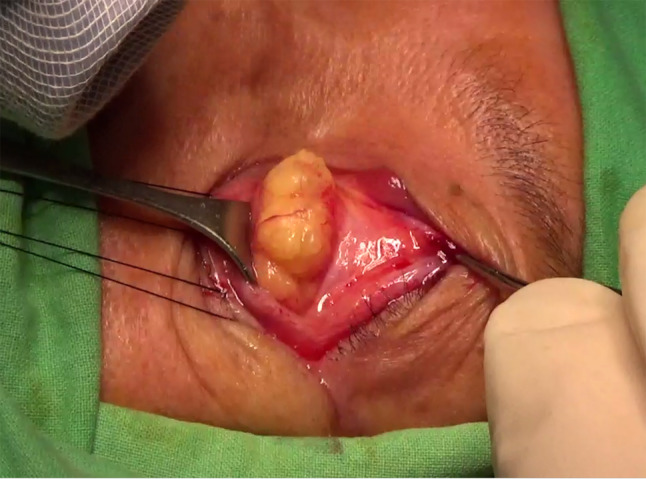
This observational study retrospectively enrolled 87 participants who received orbital fat decompression surgery for thyroid eye disease. Primary outcome measures included average body mass index (BMI) and the proportion of the study sample with overweight and obesity, compared with the general Taiwanese population. Secondary outcome measures included the association of obesity with proptosis severity, removed fat volume, and thyroid status.
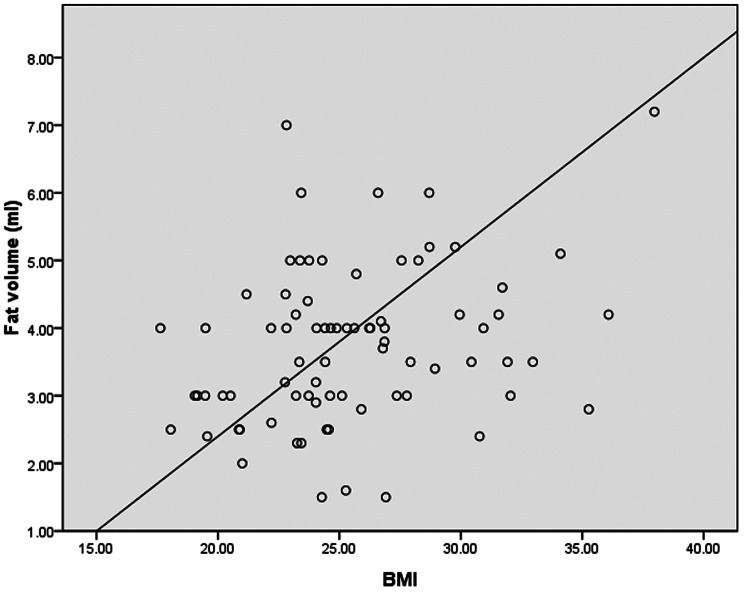
The average BMI (25.59 ± 4.36 kg/m) of the study sample was significantly higher than that in the general population of Taiwan (24.5 kg/m; P = 0.012). Participants with overweight (19.52 ± 3.52 mm) and obesity (21.25 ± 3.76 mm) exhibited significantly more severe proptosis than participants without overweight (18.05 ± 3.37 mm) and without obesity (18.09 ± 3.02 mm; P = 0.029 and P < 0.001, respectively). In addition, a significantly greater orbital fat volume was removed from the group with obesity (4.61 ± 1.17 ml) versus that without obesity (3.57 ± 1.12 ml; P = 0.021). A positive correlation between BMI and removed fat volume was noted (correlation coefficient = 0.291, P = 0.005). BMI was an independent factor predicting both proptosis severity (P < 0.001) and removed orbital fat volume (P = 0.02).
Obesity is associated with orbital fat expansion and consequently more severe proptosis in thyroid eye disease. Weight control may be a potential strategy to prevent thyroid-associated exophthalmos.
探讨肥胖与甲状腺眼病眼球突出时眶脂肪扩张之间的关联。
这项观察性研究回顾性纳入了87例因甲状腺眼病接受眶脂肪减压手术的参与者。主要观察指标包括平均体重指数(BMI)以及与台湾普通人群相比,研究样本中超重和肥胖者的比例。次要观察指标包括肥胖与眼球突出严重程度、去除的脂肪量以及甲状腺状态之间的关联。
研究样本的平均BMI(25.59±4.36kg/m²)显著高于台湾普通人群(24.5kg/m²;P = 0.012)。超重(19.52±3.52mm)和肥胖(21.25±3.76mm)的参与者比非超重(18.05±3.37mm)和非肥胖(18.09±3.02mm)的参与者表现出明显更严重的眼球突出(分别为P = 0.029和P < 0.001)。此外,肥胖组(4.61±1.17ml)去除的眶脂肪量明显多于非肥胖组(3.57±1.12ml;P = 0.021)。BMI与去除的脂肪量之间存在正相关(相关系数 = 0.291,P = 0.005)。BMI是预测眼球突出严重程度(P < 0.001)和去除的眶脂肪量(P = 0.02)的独立因素。
肥胖与眶脂肪扩张相关,因此在甲状腺眼病中会导致更严重的眼球突出。控制体重可能是预防甲状腺相关性突眼的一种潜在策略。