Augustine Sana, Patel Mitwa, Inban Pugazhendi, Synthia Sk Sadia Rahman, Asfeen Ummul Z, Yaqub Aliza, Mahmood Khan Aadil, Singh Mansi
Liaquat University of Medical and Health Sciences Hyderabad Pakistan.
David Tvildiani Medical University Tbilisi Georgia.
IJU Case Rep. 2024 Oct 22;8(1):19-23. doi: 10.1002/iju5.12796. eCollection 2025 Jan.
Renal artery pseudoaneurysm is a rare yet serious complication following percutaneous nephrolithotomy, especially in patients with solitary kidneys. Effective management is crucial to prevent further renal damage.
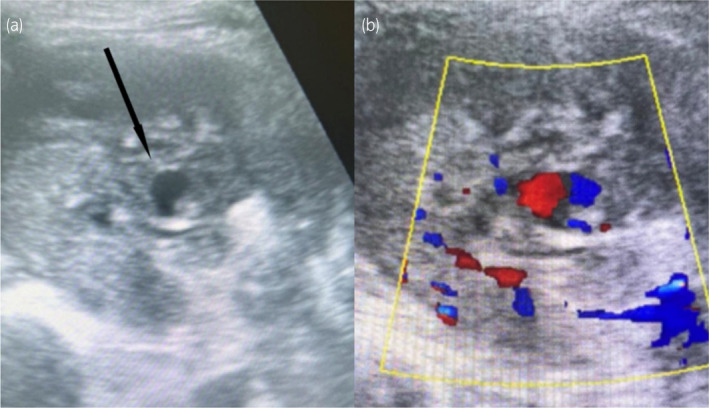
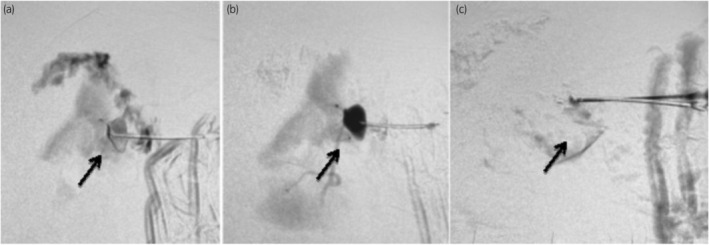
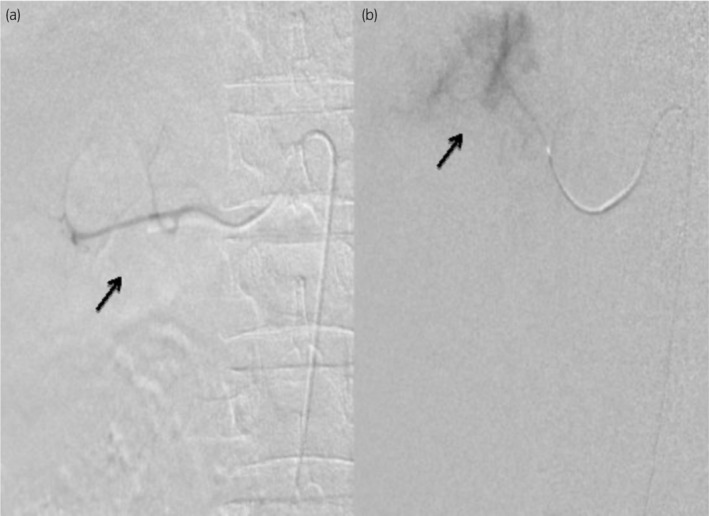
We report a case of a 41-year-old male with a solitary kidney who experienced gross hematuria and renal insufficiency 3 months after percutaneous nephrolithotomy. Due to the patient's renal insufficiency and the risks associated with arterial catheterization, ultrasound-guided embolization was chosen as the treatment approach. Initial angiographic attempts were impeded by renal vessel spasms, delaying intervention. However, successful direct percutaneous embolization was subsequently performed using ultrasound and digital subtraction angiography.
The patient's recovery was uneventful, and follow-up assessments showed no recurrence of renal artery pseudoaneurysm. This case highlights the effectiveness of ultrasound-guided embolization as a viable treatment option for post-percutaneous nephrolithotomy renal artery pseudoaneurysm, particularly in patients with solitary kidneys.
肾动脉假性动脉瘤是经皮肾镜取石术后一种罕见但严重的并发症,尤其是在孤立肾患者中。有效的治疗对于预防进一步的肾脏损害至关重要。
我们报告一例41岁的孤立肾男性患者,在经皮肾镜取石术后3个月出现肉眼血尿和肾功能不全。由于患者存在肾功能不全以及与动脉插管相关的风险,选择超声引导下栓塞作为治疗方法。最初的血管造影尝试因肾血管痉挛而受阻,延迟了干预。然而,随后使用超声和数字减影血管造影成功进行了直接经皮栓塞。
患者恢复顺利,随访评估显示肾动脉假性动脉瘤未复发。该病例突出了超声引导下栓塞作为经皮肾镜取石术后肾动脉假性动脉瘤可行治疗选择的有效性,特别是在孤立肾患者中。