Qiao Yun, Hui Kaiyuan, Hu Chenxi, Wang Mei, Sun Wen, Liu Liang, Dong Changhong, Jiang Xiaodong
Department of Oncology, Lianyungang Clinical College of Nanjing Medical University/The First People's Hospital of Lianyungang,The Affiliated Lianyungang Hospital of Xuzhou Medical University, Lianyungang, 222002, China.
Department of Precision Medicine Laboratory, Lianyungang Clinical College of Nanjing Medical University/The First People's Hospital of Lianyungang,The Affiliated Lianyungang Hospital of Xuzhou Medical University, Lianyungang, China.
Cancer Immunol Immunother. 2025 Jan 3;74(2):60. doi: 10.1007/s00262-024-03906-z.
Due to its strong immunogenicity and tumor specificity, neoplastic antigen has emerged as an immunotherapy target with wide therapeutic prospect and clinical application value. Anti-programmed death-1 (PD-1) antibodies reinvigorate T cell-mediated antitumor immunity. So, we conducted single-arm trial to assess the safety and efficacy of PD-1 blockade(Camrelizumab)-activated neoantigen specific cellular therapy (aNASCT) on advanced relapsed non-small lung cancer(NSCLC)(ClinicalTrials.gov NCT03205930).
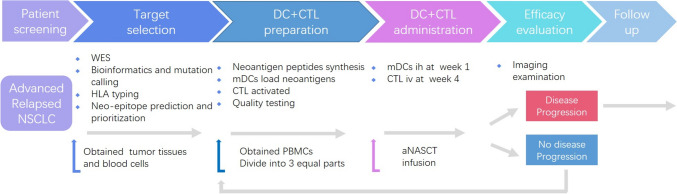
Neoantigenic peptides were designed and manufactured according to the whole exome sequencing and RNA sequencing of fresh biopsy tissues and peripheral blood as well as bioinformatics analysis. All participants received subcutaneous injection of mature dendritic cells(mDCs) loaded with neoantigens on day 8 and an intravenous infusion of PD-1 blockade-activated autologous cytotoxic T lymphocytes (CTLs) induced by mDCs on day 27 for a period defined as 28 days (4 weeks). Enrolled patients received at least three cycles of therapy. The safety and efficacy of the treatment were evaluated by evaluating adverse reactions, progression-free survival (PFS), overall survival (OS).
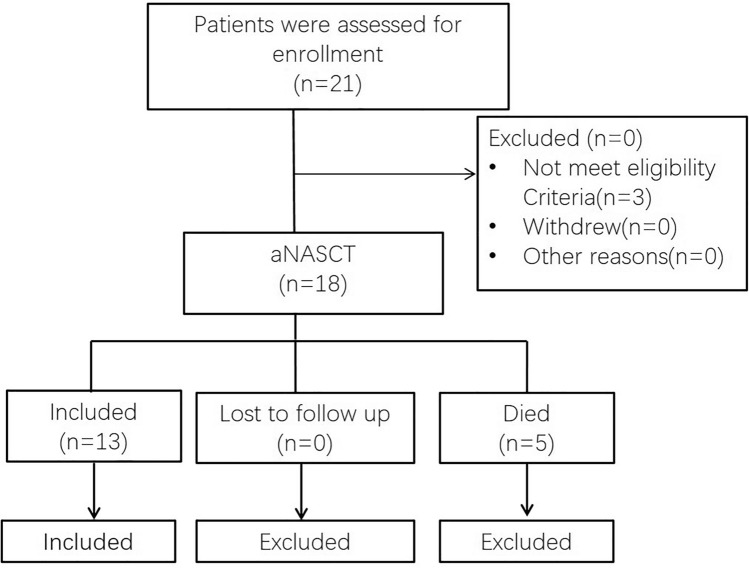
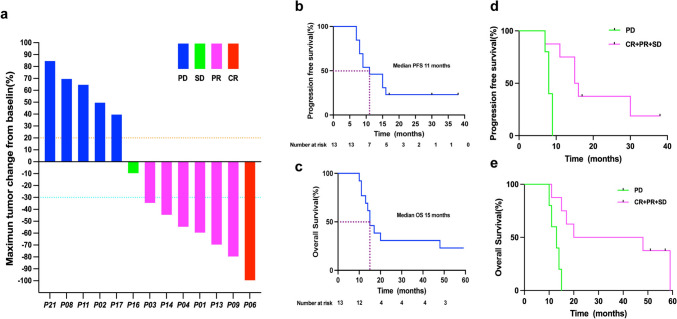
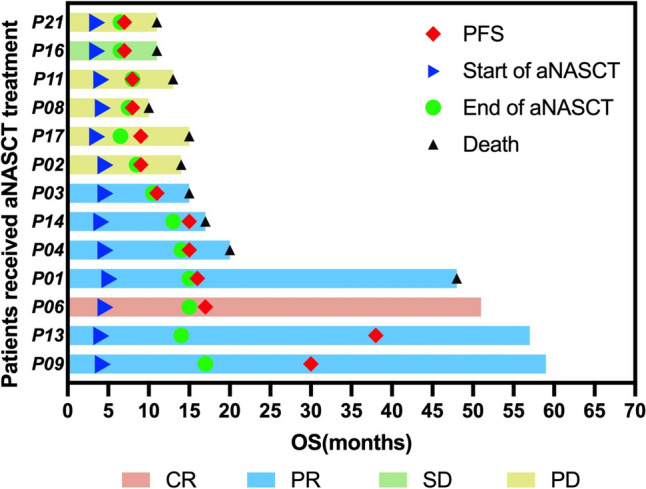
A total of 13 patients with advanced relapsed NSCLC were enrolled in this study. All 13 patients received at least three cycles of aNASCT treatment, of which two patients received at most 12 cycles of treatment. Treatment-related adverse events (AEs) occurred in 4/13 (30.8%)patients with transient fever below 38℃.The objective response rate (ORR) across the 13 enrolled patients was 7 of 13 (53.85%,95% CI 0.29-0.77).The disease control rate (DCR) was 8 of 13 (61.54%,95% CI 0.36-0.82). The median PFS was 11 months (95% CI 6.1-15.9), and the median OS was 15 months(95% CI 11.5-18.5).
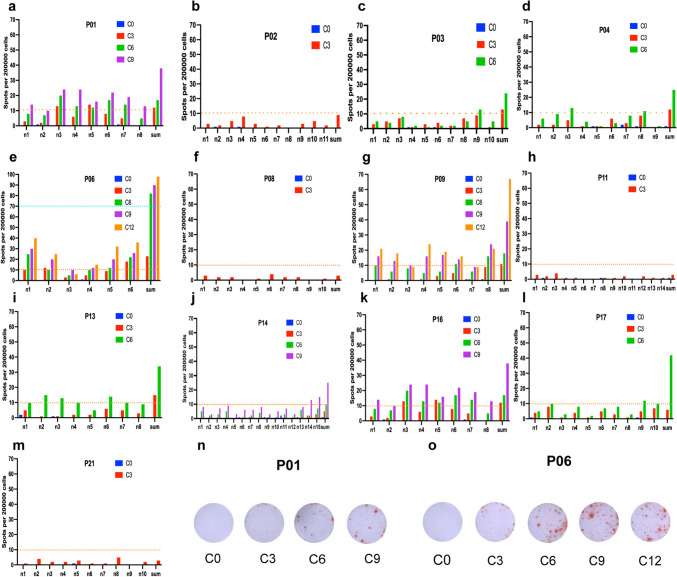
Our findings indicate that aMASCT therapy was safety and immunogenicity of patients with advanced relapsed NSCLC, suggesting its promising potential in cancer immunotherapy.
肿瘤抗原因其强大的免疫原性和肿瘤特异性,已成为具有广阔治疗前景和临床应用价值的免疫治疗靶点。抗程序性死亡蛋白1(PD-1)抗体可恢复T细胞介导的抗肿瘤免疫。因此,我们开展了一项单臂试验,以评估PD-1阻断剂(卡瑞利珠单抗)激活的新抗原特异性细胞疗法(aNASCT)治疗晚期复发非小细胞肺癌(NSCLC)的安全性和疗效(ClinicalTrials.gov标识符:NCT03205930)。
根据新鲜活检组织和外周血的全外显子测序、RNA测序以及生物信息学分析设计并制备新抗原肽。所有参与者在第8天接受皮下注射负载新抗原的成熟树突状细胞(mDCs),并在第27天接受静脉输注由mDCs诱导的PD-1阻断激活的自体细胞毒性T淋巴细胞(CTLs),为期28天(4周)。入组患者接受至少三个周期的治疗。通过评估不良反应、无进展生存期(PFS)、总生存期(OS)来评价治疗的安全性和疗效。
本研究共纳入13例晚期复发NSCLC患者。所有13例患者均接受了至少三个周期的aNASCT治疗,其中2例患者最多接受了12个周期的治疗。4/13(30.8%)的患者发生了与治疗相关的不良事件(AE),表现为短暂性发热,体温低于38℃。13例入组患者的客观缓解率(ORR)为7/13(53.85%,95%CI 0.29-0.77)。疾病控制率(DCR)为8/13(61.54%,95%CI 0.36-0.82)。中位PFS为11个月(95%CI 6.1-15.9),中位OS为15个月(95%CI 11.5-18.5)。
我们的研究结果表明,aMASCT疗法对晚期复发NSCLC患者具有安全性和免疫原性,提示其在癌症免疫治疗中具有广阔的应用前景。