Cao Li, Xu Hong-Jie, Yu Yi-Kang, Tang Huan-Huan, Fang Bo-Hao, Chen Ke
Department of Orthopedics and Traumatology, Linping District Integrated Traditional and Western Medicine Hospital, Hangzhou, 311199, China.
School of Pharmaceutical Sciences, Zhejiang Chinese Medical University, Hangzhou, 311403, China.
Chin J Traumatol. 2025 Mar;28(2):101-112. doi: 10.1016/j.cjtee.2024.07.013. Epub 2024 Dec 25.
Bone cement-reinforced fenestrated pedicle screws (FPSs) have been widely used in the internal fixation and repair of the spine with osteoporosis in recent years and show significant improvement in fixation strength and stability. However, compared with conventional reinforcement methods, the advantages of bone cement-reinforced FPSs remain undetermined. This article compares the effects of fenestrated and conventional pedicle screws (CPSs) combined with bone cement in the treatment of osteoporosis.
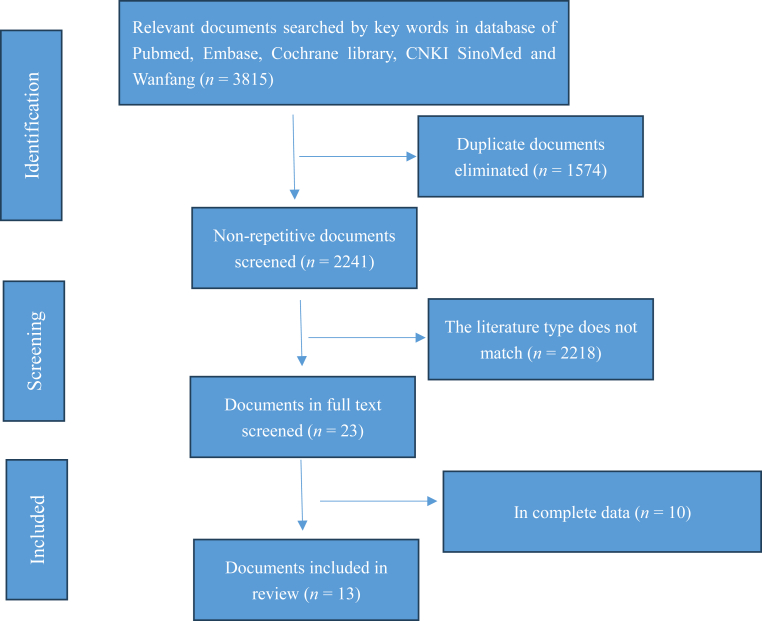
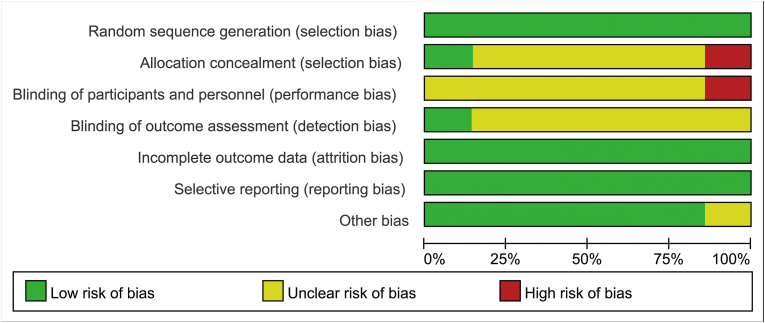
A clinical control study of FPSs and CPSs combined with bone cement reinforcement in osteoporotic vertebral internal fixation was performed using the database PubMed, Embase, Cochrane Library, CNKI, the Wanfang, and the China Biomedical Literature Service System. Two evaluators screened the relevant literature in strict accordance with the inclusion criteria (diagnosis of participants, type of clinical study, treatment with FPS and CPS, and outcome indicators) and exclusion criteria (duplicate literature and missing or incorrect data) and independently conducted data extraction and quality evaluation. Clinical control studies of direct comparison between FPS and CPS combined with bone cement reinforcement in patients who were definitively diagnosed with thoracolumbar fractures or spinal degenerative diseases were included. Quality evaluation was conducted using the Cochrane risk bias evaluation tool for randomized controlled studies and using the Newcastle-Ottawa scale for retrospective case-control studies. RevMan software (version 5.3) was used for the meta-analysis to compare the clinical efficacy, radiological results, and related complications of the 2 methods.
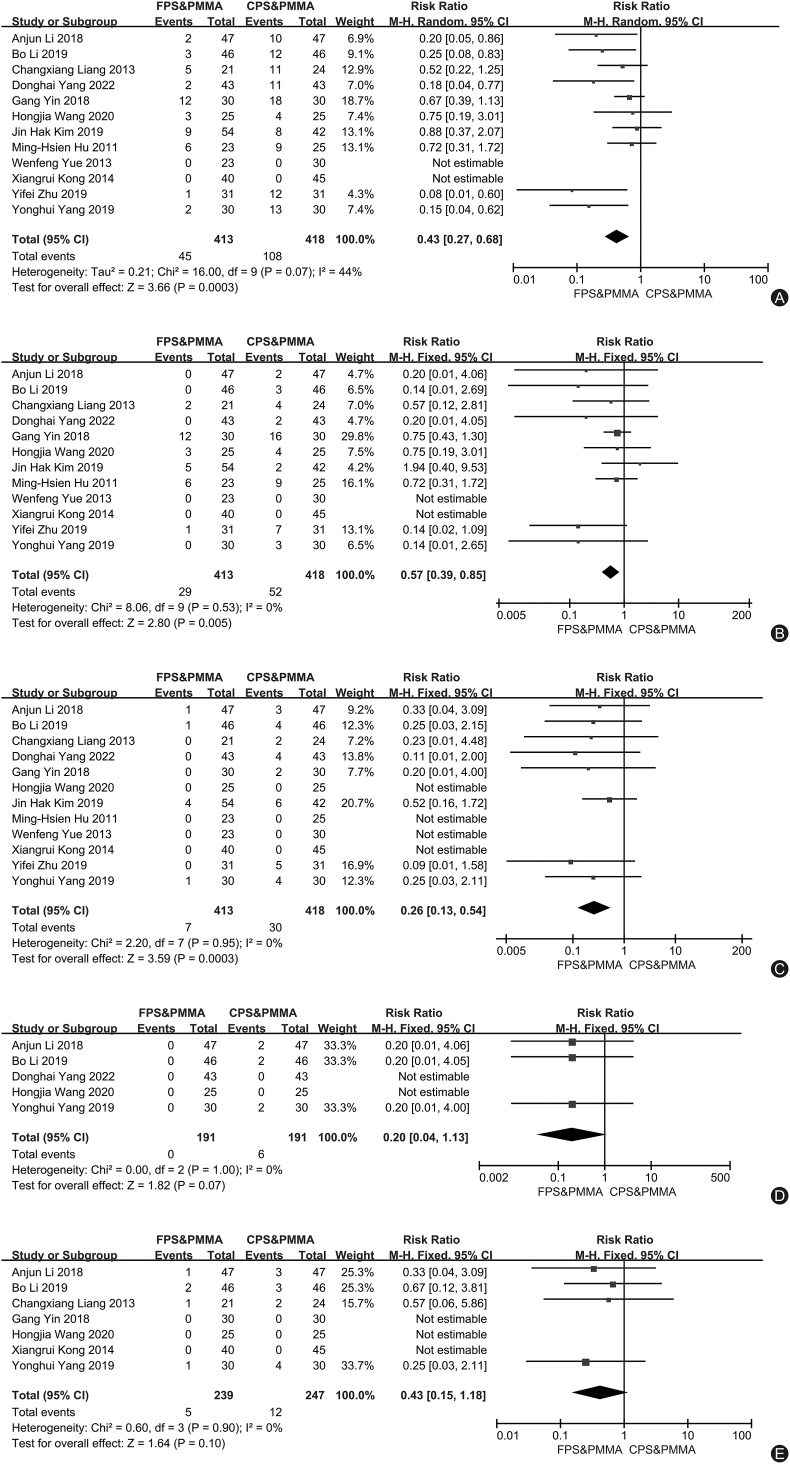
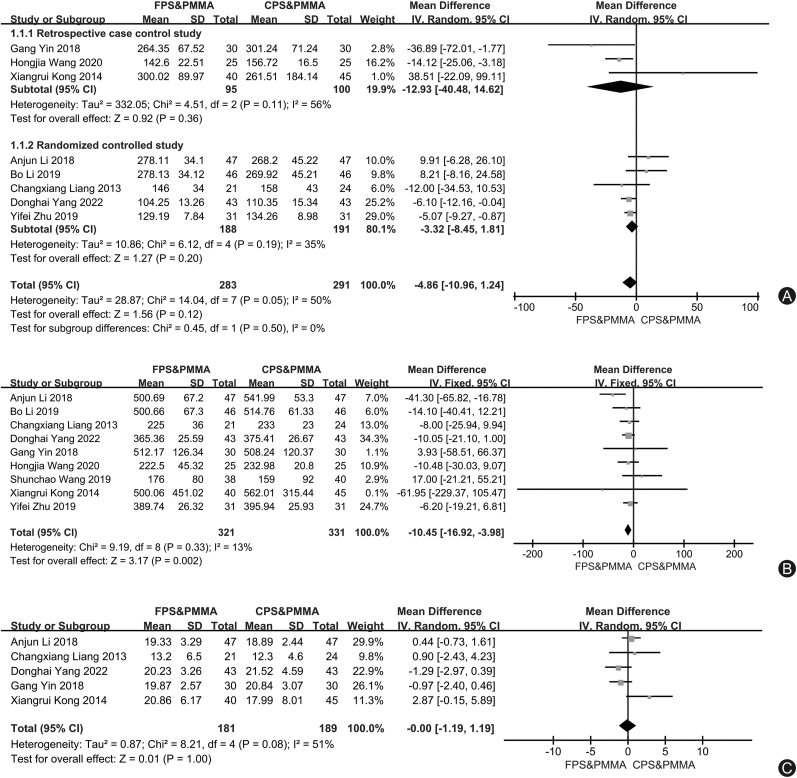
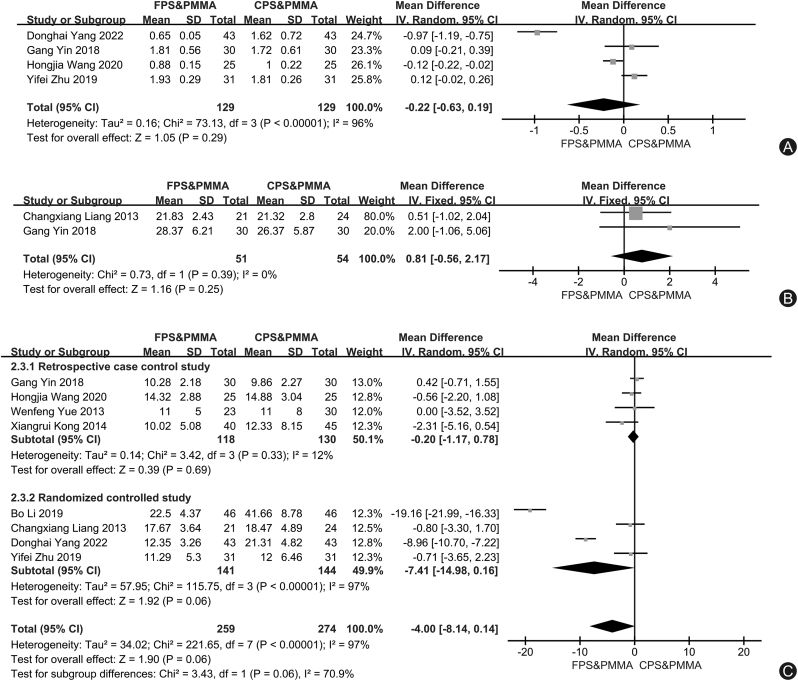
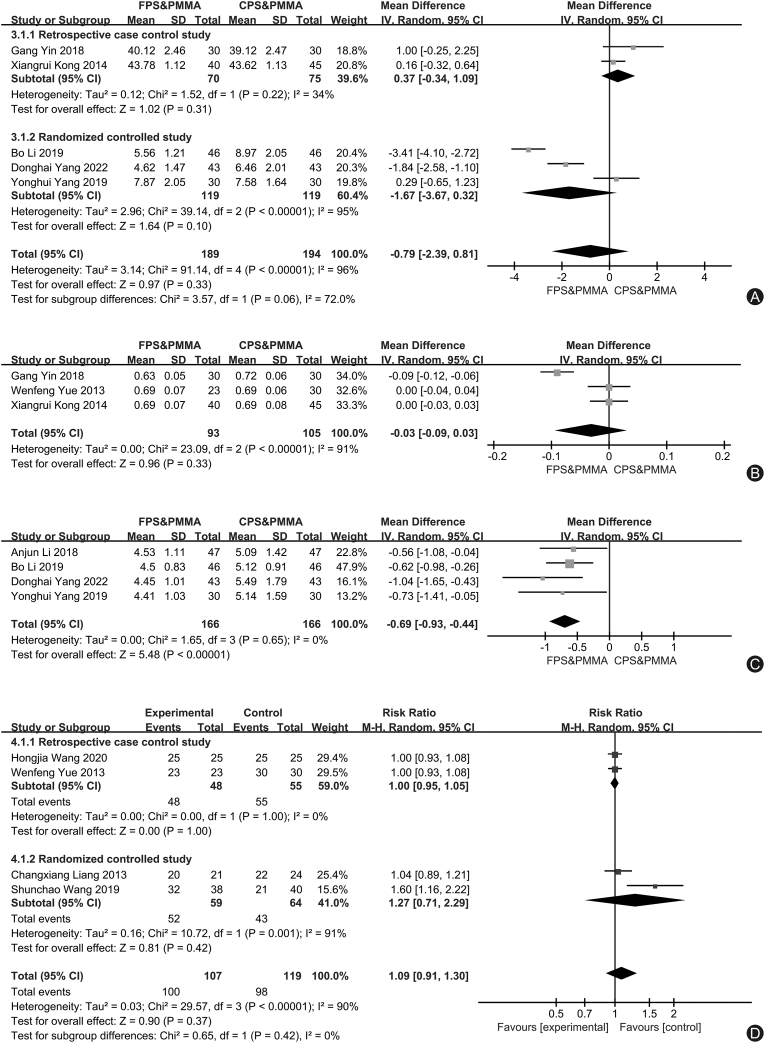
A total of 13 articles were included, including 7 randomized controlled studies and 6 retrospective case-control studies. There were 909 patients in these studies, 451 in the FPS and polymethyl methacrylate (FPS & PMMA) group and 458 in the CPS and polymethyl methacrylate (CPS & PMMA) group. The results of the meta-analysis showed that there was no significant difference between the 2 groups in operation time, hospital stay, visual analogue score, Japanese orthopaedic association score, Oswestry disability index score, Cobb angle, vertebral body deformation index and fusion rate (p > 0.05). The mean difference of intraoperative bleeding volume was -10.45, (95% confidence intervals (CI) (-16.92, -3.98), p = 0.002), the mean difference of loss height of the anterior edge of the vertebral body after surgery was -0.69 (95% CI (-0.93, -0.44), p < 0.001), and the relative risk (RR) of overall complication rate was 0.43 (95% CI (0.27, 0.68), p < 0.001), including the RR of bone cement leakage rate was 0.57 (95% CI (0.39, 0.85), p = 0.005). The screw loosening rate (RR = 0.26, 95% CI (0.13, 0.54), p < 0.001) of the FPS group was significantly lower than that of the CPS group.
The existing clinical evidence shows that compared with the CPS combined with bone cement, the use of FPS repair in the internal fixation of an osteoporotic vertebral body can reduce the amount of intraoperative bleeding, be more conducive to maintaining the height of the vertebral body, and significantly reduce the incidence of postoperative complications such as bone cement leakage and screw loosening.
近年来,骨水泥增强开窗椎弓根螺钉(FPS)已广泛应用于骨质疏松性脊柱的内固定和修复,在固定强度和稳定性方面有显著提高。然而,与传统增强方法相比,骨水泥增强FPS的优势仍未明确。本文比较开窗椎弓根螺钉与传统椎弓根螺钉(CPS)联合骨水泥治疗骨质疏松症的效果。
利用PubMed、Embase、Cochrane图书馆、中国知网、万方和中国生物医学文献服务系统数据库,进行FPS和CPS联合骨水泥增强用于骨质疏松性椎体内固定的临床对照研究。两名评估者严格按照纳入标准(参与者诊断、临床研究类型、FPS和CPS治疗及结局指标)和排除标准(重复文献及缺失或错误数据)筛选相关文献,并独立进行数据提取和质量评估。纳入确诊为胸腰椎骨折或脊柱退行性疾病患者中FPS与CPS联合骨水泥增强直接比较的临床对照研究。使用Cochrane随机对照研究风险偏倚评估工具和纽卡斯尔-渥太华量表对回顾性病例对照研究进行质量评估。采用RevMan软件(5.3版)进行荟萃分析,比较两种方法的临床疗效、影像学结果及相关并发症。
共纳入13篇文章,包括7项随机对照研究和6项回顾性病例对照研究。这些研究中共有909例患者,FPS与聚甲基丙烯酸甲酯(FPS & PMMA)组451例,CPS与聚甲基丙烯酸甲酯(CPS & PMMA)组458例。荟萃分析结果显示,两组在手术时间、住院时间、视觉模拟评分、日本骨科协会评分、Oswestry功能障碍指数评分、Cobb角、椎体变形指数和融合率方面无显著差异(p > 0.05)。术中出血量的平均差值为-10.45,(95%置信区间(CI)(-16.92,-3.98),p = 0.002),术后椎体前缘高度丢失的平均差值为-0.69(95% CI(-0.93,-0.44),p < 0.001),总体并发症发生率的相对风险(RR)为0.43(95% CI(0.27,0.68),p < 0.001),包括骨水泥渗漏率的RR为0.57(95% CI(0.39,0.85),p = 0.005)。FPS组的螺钉松动率(RR = 0.26,95% CI(0.13,0.54),p < 0.001)显著低于CPS组。
现有临床证据表明,与CPS联合骨水泥相比,使用FPS修复骨质疏松性椎体的内固定可减少术中出血量,更有利于维持椎体高度,并显著降低骨水泥渗漏和螺钉松动等术后并发症的发生率。