Kim Ok-Hyeon, Jeon Tae Jin, Kang Hana, Chang Eun Seo, Hong Soon Auck, Kim Min Kyoon, Lee Hyun Jung
Department of Anatomy and Cell Biology, College of Medicine, Chung-Ang University, Seoul, 06974, South Korea.
Department of Global Innovative Drugs, Graduate School of Chung-Ang University, Seoul, 06974, South Korea.
Sci Rep. 2025 Jan 3;15(1):693. doi: 10.1038/s41598-024-84437-6.
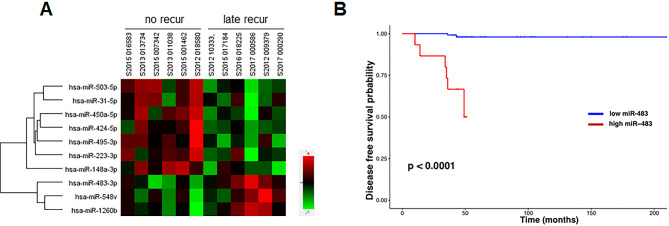
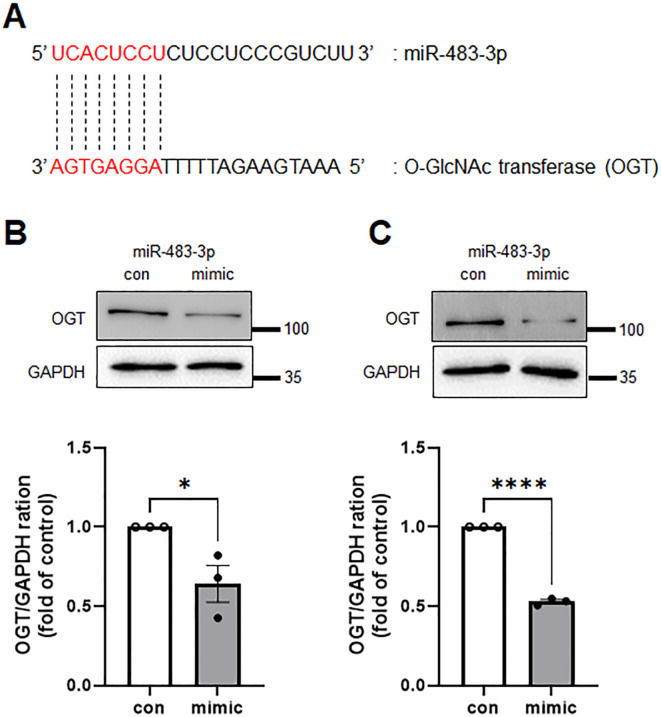
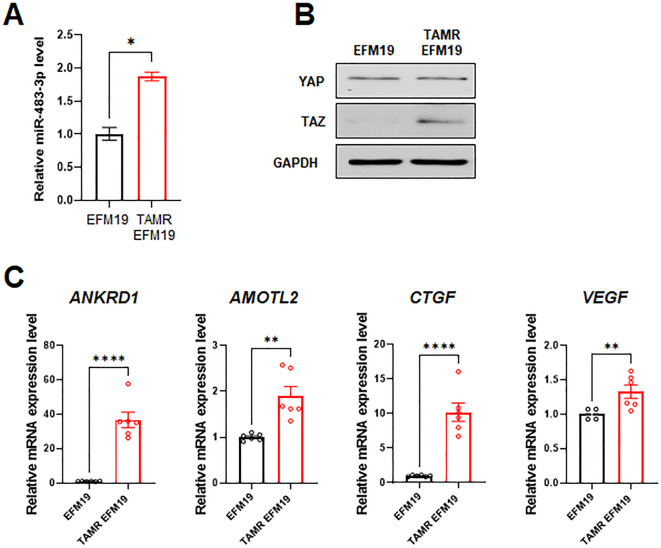
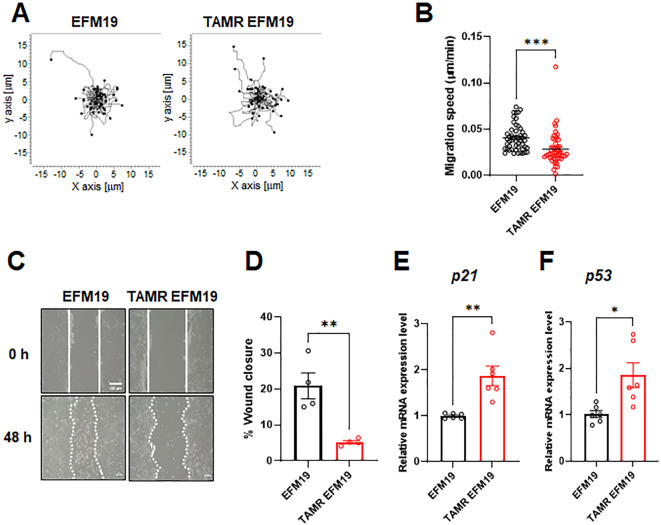
Patients with estrogen receptor-positive breast cancer undergoing continuous adjuvant hormone therapy often experience delayed recurrence with tamoxifen use, potentially causing adverse effects. However, the lack of biomarkers hampers patient selection for extended endocrine therapy. This study aimed to elucidate the molecular mechanisms underlying delayed recurrence and identify biomarkers. When miRNA expression was assessed in luminal breast cancer tissues with and without delayed recurrence using NanoString, a significant increase in the expression of miR483-3p was observed in samples from patients with delayed recurrence compared with those without. miR483-3p expression was elevated in tamoxifen resistant (TAMR) EFM19 cells than in non-resistant EFM19 cells. Notably, genes associated with cancer metastasis (AMOTL2, ANKRD1, CTGF, and VEGF) were upregulated in TAMR EFM19 cells, although cell motility and proliferation were reduced. Transfection of miR483-3p mimics into both non-resistant EFM19 and MCF7 cells resulted in increased expression of cancer metastasis-related genes, but decreased proliferation and migration. Given that miR483-3p can bind to the 3'UTR region of O-GlcNAc transferase (OGT) and potentially affect its protein expression, we examined OGT protein levels and found that transfection with miR483-3p mimics selectively reduced OGT expression. Overall, breast cancer cells subjected to long-term hormone therapy displayed elevated miR483-3p expression, reducing motility and dormancy induction via decreased OGT expression. These findings suggest that miR483-3p is a potential biomarker for long-term endocrine therapy.
接受持续辅助激素治疗的雌激素受体阳性乳腺癌患者使用他莫昔芬后常出现复发延迟,并可能产生不良反应。然而,缺乏生物标志物阻碍了延长内分泌治疗的患者选择。本研究旨在阐明复发延迟的分子机制并鉴定生物标志物。使用NanoString技术在有或无复发延迟的管腔型乳腺癌组织中评估miRNA表达时,发现复发延迟患者样本中miR483-3p的表达与无复发延迟患者相比显著增加。与非耐药EFM19细胞相比,他莫昔芬耐药(TAMR)的EFM19细胞中miR483-3p表达升高。值得注意的是,尽管细胞运动性和增殖减少,但与癌症转移相关的基因(AMOTL2、ANKRD1、CTGF和VEGF)在TAMR EFM19细胞中上调。将miR483-3p模拟物转染到非耐药EFM19和MCF7细胞中均导致癌症转移相关基因表达增加,但增殖和迁移减少。鉴于miR483-3p可与O-连接N-乙酰葡糖胺转移酶(OGT)的3'UTR区域结合并可能影响其蛋白表达,我们检测了OGT蛋白水平,发现转染miR483-3p模拟物可选择性降低OGT表达。总体而言,接受长期激素治疗的乳腺癌细胞miR483-3p表达升高,通过降低OGT表达减少运动性并诱导休眠。这些发现表明,miR483-3p是长期内分泌治疗的潜在生物标志物。