Pinto Sohan Zane, Aneck-Hahn Natalie
Department of Urology, Faculty of Health Sciences, Steve Biko Academic Hospital, University of Pretoria, Pretoria, South Africa.
Environmental Chemical Pollution and Health Research Unit, University of Pretoria Faculty of Health Sciences, Pretoria, South Africa.
Int Urol Nephrol. 2025 Jun;57(6):1715-1735. doi: 10.1007/s11255-024-04340-x. Epub 2025 Jan 3.
Contemporary antiretroviral (ARV) medications are used by millions of men for HIV treatment worldwide. Limited data exist on their direct effect on sperm motility. This pilot study hypothesizes that in vitro exposure to ARVs will reduce sperm kinematic and motility parameter values.
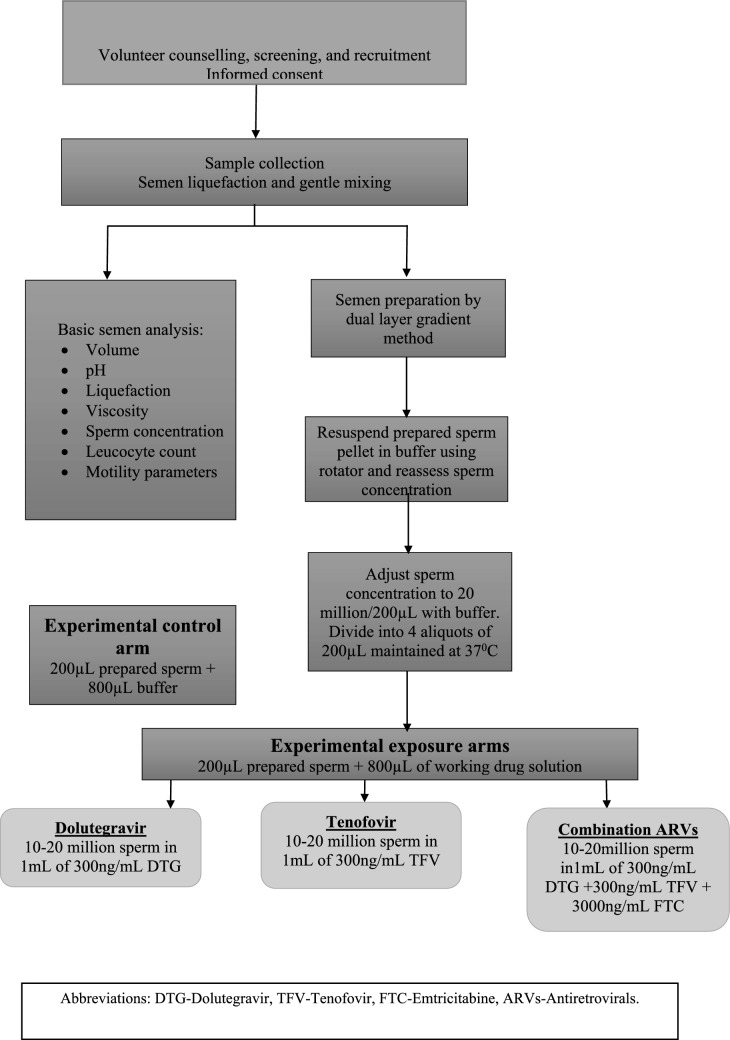
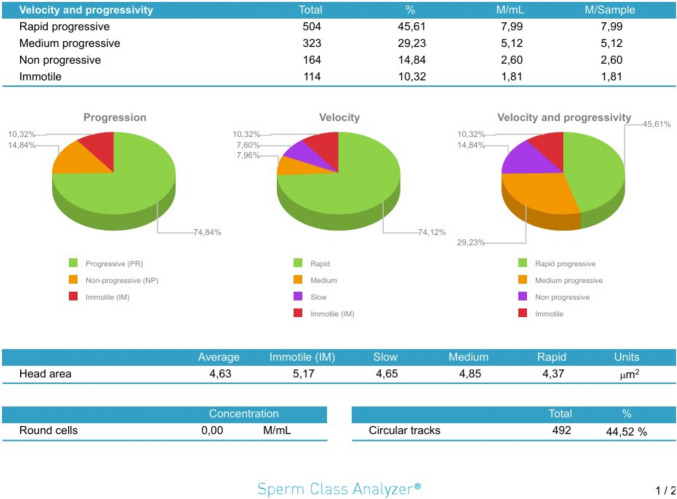
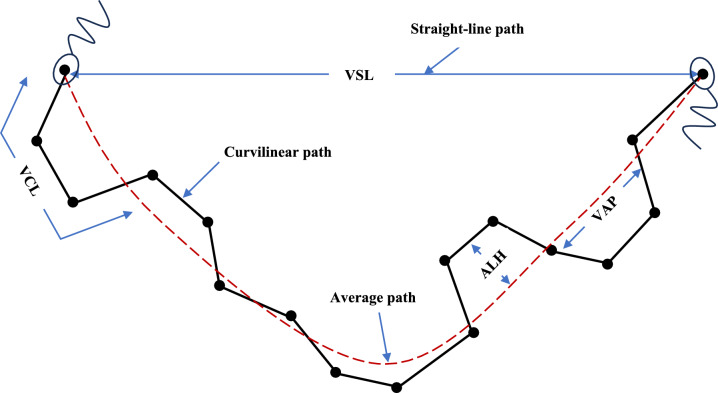
This laboratory-based experimental study analyzed sperm motility and kinematics after exposure to the ARVs Dolutegravir, Tenofovir, and Emtricitabine, individually and in combination. Each participant (n = 23) served as their experimental control. The Microptic SCA® Computer Assisted Sperm Analysis (CASA) system, Barcelona, Spain was used to generate quantitative data on sperm motility and the kinematics Straight-line velocity (VSL), Straightness index (STR), Linearity Index (LIN), Beat cross frequency (BCF), and the oscillation index (WOB).
VSL, STR, LIN, and WOB of the non-progressive (grade c) spermatozoa were significantly decreased after ARV treatment. BCF of the medium velocity progressive sperm population (grade b) was significantly increased 90 min after exposure in the Tenofovir arm, and a significant decrease in the proportion of grade b spermatozoa was recorded at 90 min in all the antiretroviral arms when compared to the control arm. No impaired sperm motility was observed within the first 30 min of exposure.
Pharmacovigilance is a healthcare emergency as the fast-changing world of newer drugs leaves clinicians vulnerable. They must prescribe drugs whose long-term somatic and germline adverse effects are not fully understood. Guidelines and drugs are changing faster than we can monitor for side effects. Despite Dolutegravir being the only mainstream integrase inhibitor first-line ARV in South Africa for five years, its replacement, Cabotegravir, is already being launched. More research in this field is required, especially for commonly prescribed drugs. This preliminary pilot study concludes that the current first-line ARVs used by HIV patients and HIV-negative patients on pre-exposure prophylaxis (PrEP) can alter sperm motility and kinematics. Further research with a larger sample size is warranted to quantify its impact on human fertility, addressing the limitations of this study, before a comprehensive conclusion of the effects of ARVs on human male fertility can be drawn. Of particular importance would be to study the impact of ARVs on reactive oxygen species levels in semen and sperm DNA fragmentation.
全球数百万男性使用当代抗逆转录病毒(ARV)药物进行HIV治疗。关于这些药物对精子活力的直接影响的数据有限。这项初步研究假设,体外暴露于抗逆转录病毒药物会降低精子运动学和活力参数值。
这项基于实验室的实验研究分析了单独及联合暴露于抗逆转录病毒药物多替拉韦、替诺福韦和恩曲他滨后精子的活力和运动学。每位参与者(n = 23)作为自身的实验对照。使用西班牙巴塞罗那的Microptic SCA®计算机辅助精子分析(CASA)系统生成关于精子活力和运动学的定量数据,包括直线速度(VSL)、直线性指数(STR)、线性指数(LIN)、鞭打交叉频率(BCF)和摆动指数(WOB)。
抗逆转录病毒治疗后,非进行性(c级)精子的VSL、STR、LIN和WOB显著降低。在替诺福韦组中,中等速度进行性精子群体(b级)的BCF在暴露90分钟后显著增加,与对照组相比,所有抗逆转录病毒治疗组在90分钟时b级精子比例均显著下降。在暴露的前30分钟内未观察到精子活力受损。
药物警戒是一项医疗紧急情况,因为新药快速变化的世界使临床医生易受影响。他们必须开具那些长期的躯体和生殖系不良反应尚未完全了解的药物。指南和药物的变化速度比我们监测副作用还要快。尽管多替拉韦在南非作为唯一的主流整合酶抑制剂一线抗逆转录病毒药物使用了五年,但它的替代药物卡博特韦已经推出。该领域需要更多研究,特别是针对常用药物。这项初步的试点研究得出结论,HIV患者和接受暴露前预防(PrEP)的HIV阴性患者目前使用的一线抗逆转录病毒药物可改变精子活力和运动学。在能够全面得出抗逆转录病毒药物对人类男性生育力影响的结论之前,有必要进行更大样本量的进一步研究以量化其对人类生育力的影响,解决本研究的局限性。特别重要的是研究抗逆转录病毒药物对精液中活性氧水平和精子DNA片段化的影响。