Shen Hongjian, Chen Huajie, Li Weimeng, He Shan, Liao Boyong, Xiong Wanyu, Shen Yang, Li Yongjuan, Gao Yanru, Li Yong Quan, Zhang Bipei
College of Horticulture and Landscape Architecture, Zhongkai University of Agriculture and Engineering, Guangzhou, China.
Plant Methods. 2025 Jan 3;21(1):1. doi: 10.1186/s13007-024-01320-1.
Virus-induced gene silencing (VIGS) is a rapid and powerful method for gene functional analysis in plants that pose challenges in stable transformation. Numerous VIGS systems based on Agrobacterium infiltration has been widely developed for tender tissues of various plant species, yet none is available for recalcitrant perennial woody plants with firmly lignified capsules, such as tea oil camellia. Therefore, there is an urgent need for an efficient, robust, and cost-effective VIGS system for recalcitrant tissues.
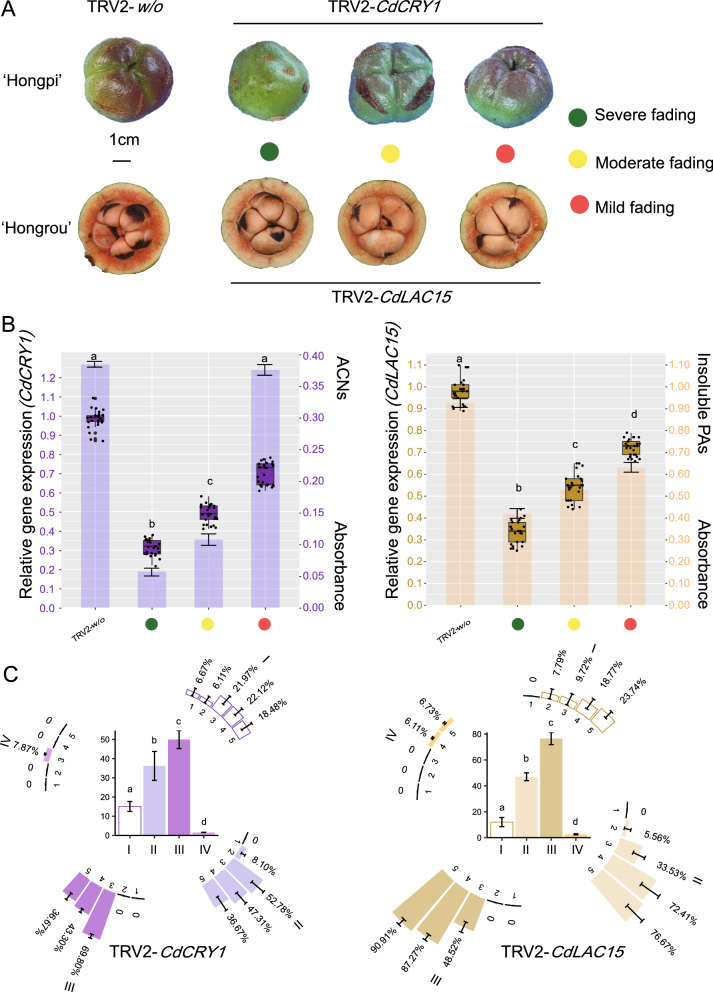
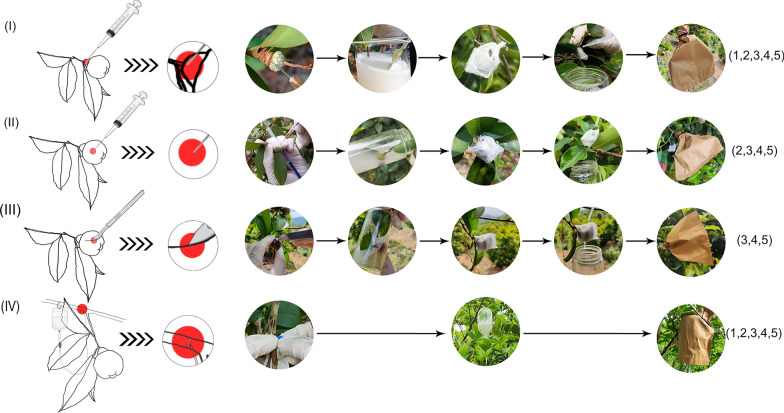
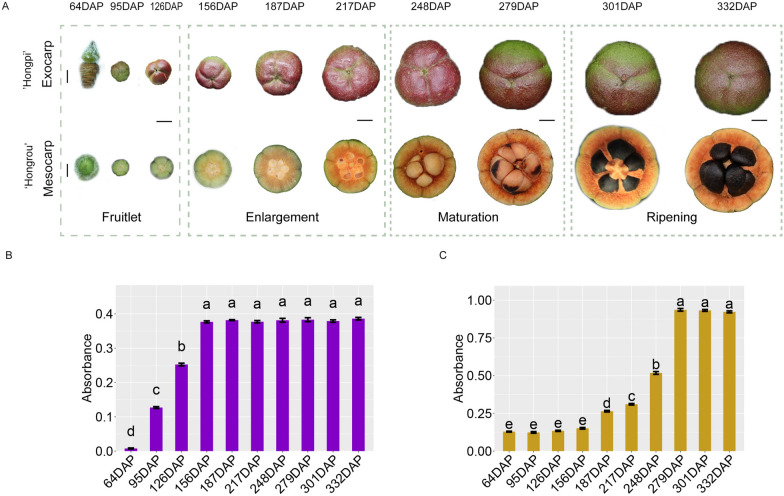
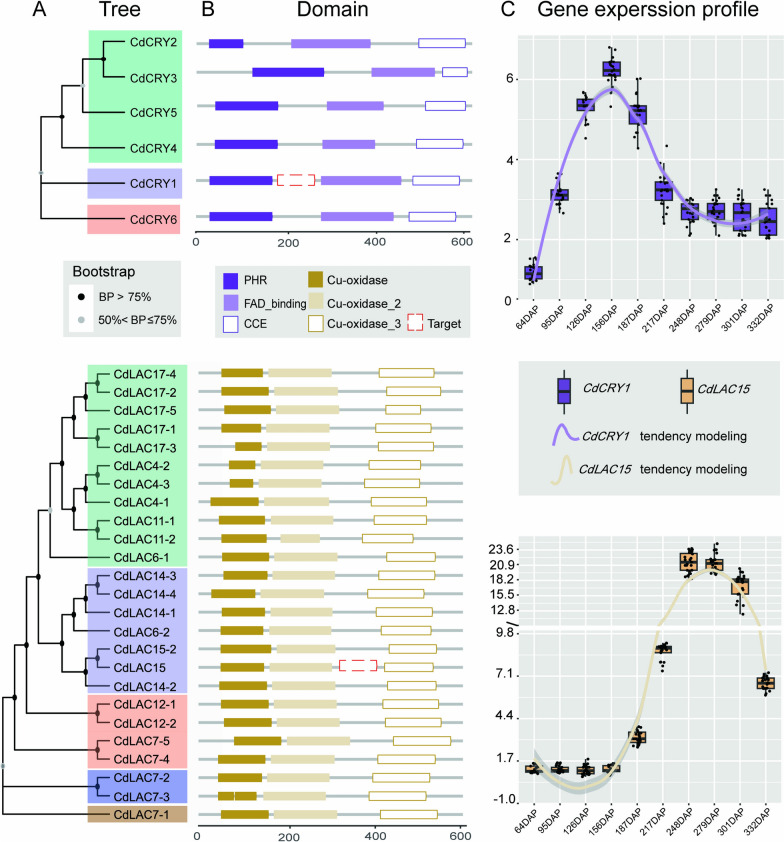
Herein, we initiated the Tobacco rattle virus (TRV)-elicited VIGS in Camellia drupifera capsules with an orthogonal analysis including three factors: silencing target, virus inoculation approach, and capsule developmental stage. To facilitate observation and statistical analysis, two genes predominantly involved in pericarp pigmentation were selected for silencing efficiency: CdCRY1 (coding for a key photoreceptor affecting light-responsive perceivable anthocyanin accumulation in exocarps) and CdLAC15 (coding for an oxidase catalyzing the oxidative polymerization of proanthocyanidins in mesocarps, resulting in unperceivable red-hued mesocarps). The infiltration efficiency achieved for each gene was ~ 93.94% by pericarp cutting immersion. The optimal VIGS effect for each gene was observed at early (~ 69.80% for CdCRY1) and mid stages (~ 90.91% for CdLAC15) of capsule development.
Using our optimized VIGS system, CdCRY1 and CdLAC15 expression was successfully knocked down in Camellia drupifera pericarps, leading to fading phenotypes in exocarps and mesocarps, respectively. The established VIGS system may facilitate functional genomic studies in tea oil camellia and other recalcitrant fruits of woody plants.
病毒诱导的基因沉默(VIGS)是一种用于在稳定转化方面存在挑战的植物中进行基因功能分析的快速且强大的方法。基于农杆菌浸润的众多VIGS系统已广泛应用于各种植物的嫩组织,但对于具有坚硬木质化蒴果的顽固多年生木本植物(如油茶)而言,尚无可用的VIGS系统。因此,迫切需要一种针对顽固组织的高效、稳健且经济高效的VIGS系统。
在此,我们通过包括沉默靶点、病毒接种方法和蒴果发育阶段这三个因素的正交分析,在油茶叶片蒴果中启动了烟草脆裂病毒(TRV)诱导的VIGS。为便于观察和统计分析,选择了两个主要参与果皮色素沉着的基因用于沉默效率研究:CdCRY1(编码一种关键光感受器,影响外果皮中光响应性可感知花青素积累)和CdLAC15(编码一种氧化酶,催化中果皮中原花青素的氧化聚合,导致中果皮呈现不可感知的红色)。通过果皮切割浸泡,每个基因的浸润效率达到约93.94%。在蒴果发育的早期(CdCRY1约为69.80%)和中期(CdLAC15约为90.91%)观察到每个基因的最佳VIGS效果。
使用我们优化的VIGS系统,成功敲低了油茶叶片外果皮中CdCRY1和CdLAC15的表达,分别导致外果皮和中果皮出现褪色表型。所建立的VIGS系统可能有助于油茶和其他顽固木本植物果实的功能基因组学研究。