Qin Weiwei, Ding Yu, Zhang Wenhao, Sun Lu, Weng Jianping, Zheng Xueying, Luo Sihui
Inflammation and Immune Mediated Diseases Laboratory of Anhui Province, School of Pharmacy, Anhui Medical University, Hefei, China; Institute of Endocrine and Metabolic Diseases, The First Affiliated Hospital of USTC, Division of Life Sciences and Medicine, University of Science and Technology of China, Hefei, China; Department of Endocrinology, The First Affiliated Hospital of Anhui Medical University, Hefei, China.
Institute of Endocrine and Metabolic Diseases, The First Affiliated Hospital of USTC, Division of Life Sciences and Medicine, University of Science and Technology of China, Hefei, China.
J Lipid Res. 2025 Feb;66(2):100740. doi: 10.1016/j.jlr.2024.100740. Epub 2025 Jan 2.
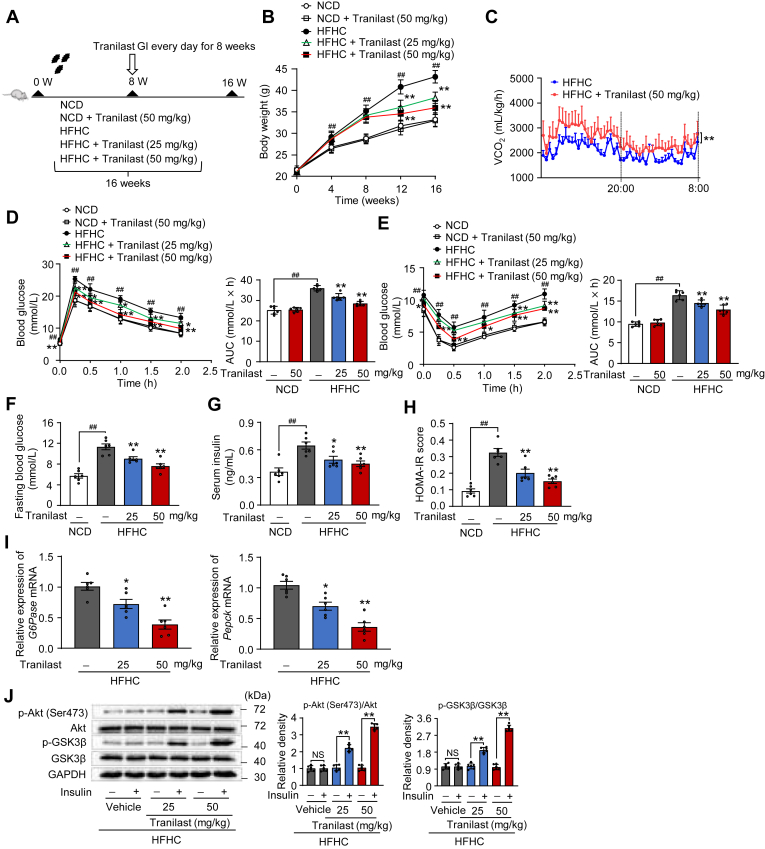
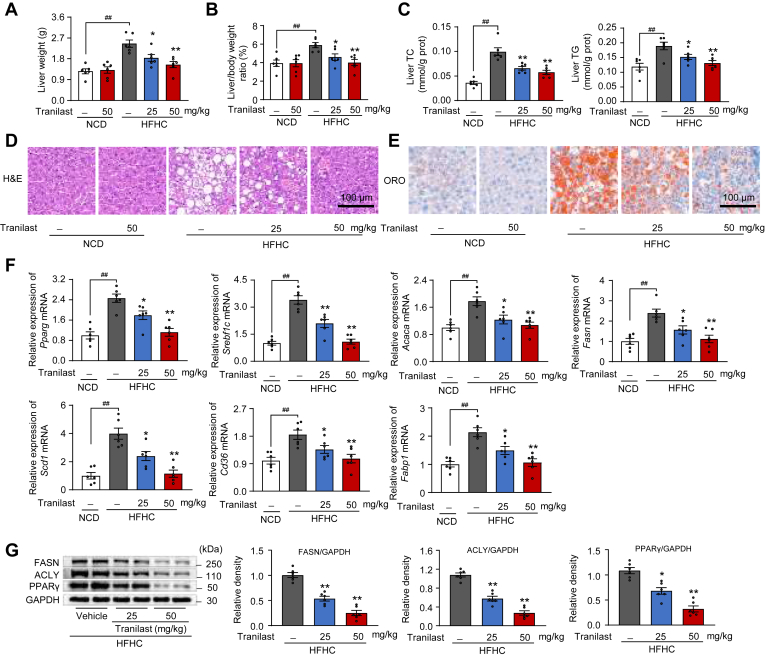
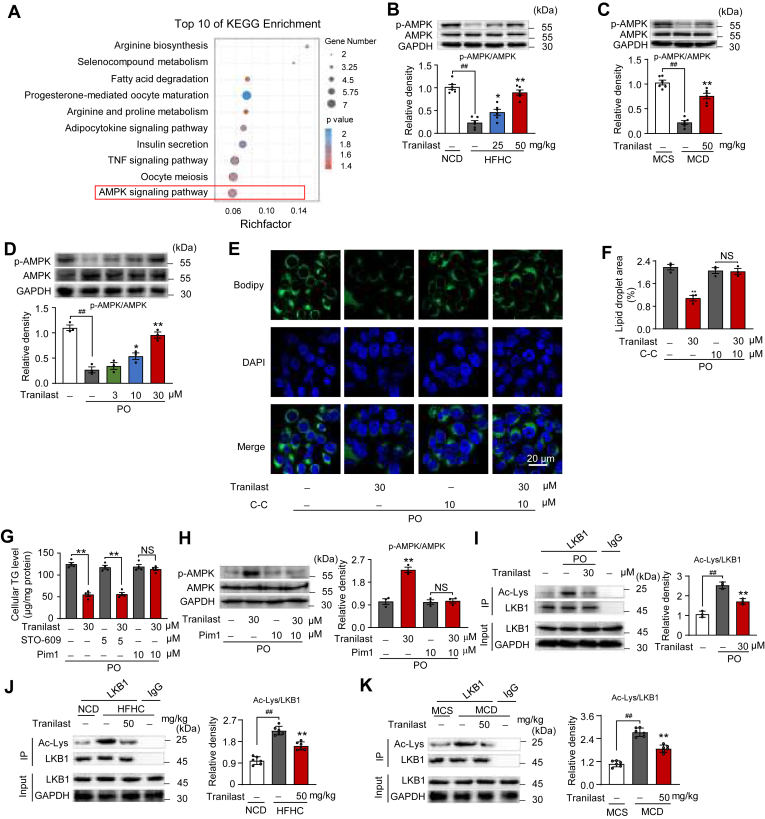
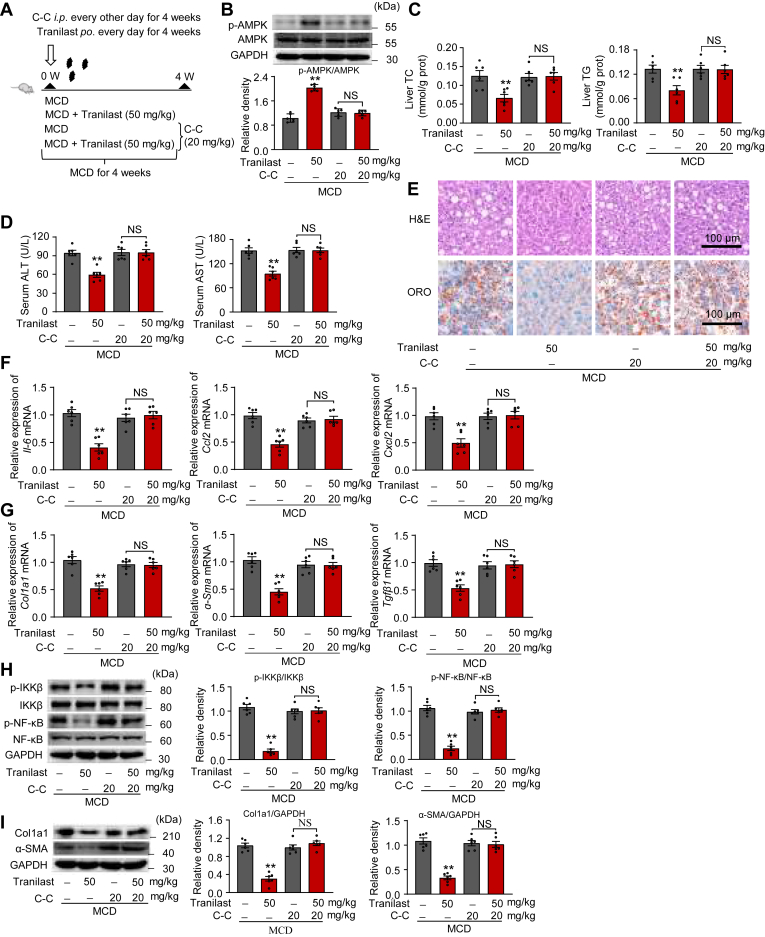
Nonalcoholic fatty liver disease (NAFLD) is a progressive condition characterized by ectopic fat accumulation in the liver, for which no FAD-approved drugs currently exist. Emerging evidence highlights the role of liver kinase B1 (LKB1), a key metabolic regulator, has been proposed in NAFLD, particularly in response to excessive nutrient levels. However, few agents have been identified that can prevent the progression of nonalcoholic steatohepatitis (NASH) by targeting LKB1 deacetylation. Through comprehensive screening of our in-house chemical library, we identified tranilast, a small molecule with remarkable inhibitory efficacy against lipid deposition induced by palmitic acid/oleic acid (PO). In this study, we investigated the novel biological function and mechanism of tranilast in regulating hepatic lipid response in NAFLD, focusing on its role in LKB1 deacetylation within hepatocytes. Our findings demonstrate that tranilast effectively reduced hepatic steatosis, inflammation, and fibrosis in NASH models induced by high-fat and high-cholesterol (HFHC) and methionine choline-deficient (MCD) diets. Mechanistic analysis using RNA sequencing revealed that tranilast mitigated hepatic lipid response by promoting LKB1 deacetylation and activating AMPK. Notably, in vivo experiments showed that the beneficial effects of tranilast in MCD diet-induced NASH model were reversed by the compound C (C-C), a known AMPK inhibitor, confirming that tranilast's effects on hepatic lipid response are mediated through the AMPK pathway. In summary, tranilast inhibits hepatic lipid response in NAFLD through LKB1 deacetylation, providing robust experimental evidence for the role of LKB1 in NAFLD. These findings position tranilast as a promising therapeutic candidate for the pharmacological management of metabolic diseases.
非酒精性脂肪性肝病(NAFLD)是一种进行性疾病,其特征是肝脏中出现异位脂肪堆积,目前尚无美国食品药品监督管理局(FAD)批准的药物用于治疗。新出现的证据表明,肝脏激酶B1(LKB1)作为一种关键的代谢调节因子,在NAFLD中发挥作用,尤其是在应对营养过剩时。然而,很少有药物被发现能够通过靶向LKB1去乙酰化来预防非酒精性脂肪性肝炎(NASH)的进展。通过对我们内部化学文库的全面筛选,我们发现了曲尼司特,一种对棕榈酸/油酸(PO)诱导的脂质沉积具有显著抑制作用的小分子。在本研究中,我们研究了曲尼司特在调节NAFLD肝脏脂质反应中的新生物学功能和机制,重点关注其在肝细胞内LKB1去乙酰化中的作用。我们的研究结果表明,曲尼司特在高脂高胆固醇(HFHC)和蛋氨酸胆碱缺乏(MCD)饮食诱导的NASH模型中有效减轻了肝脏脂肪变性、炎症和纤维化。使用RNA测序进行的机制分析表明,曲尼司特通过促进LKB1去乙酰化和激活AMPK来减轻肝脏脂质反应。值得注意的是,体内实验表明,已知的AMPK抑制剂化合物C(C-C)可逆转曲尼司特在MCD饮食诱导的NASH模型中的有益作用,证实曲尼司特对肝脏脂质反应的影响是通过AMPK途径介导的。总之,曲尼司特通过LKB1去乙酰化抑制NAFLD中的肝脏脂质反应,为LKB1在NAFLD中的作用提供了有力的实验证据。这些发现使曲尼司特成为代谢疾病药物治疗的有希望的候选药物。