Yao Jia-Shan, Zhang Xi-Han, Li Zi-Geng, Xi Yu
The First Affiliated Hospital, Shihezi University, Shihezi, China.
Thyroid Res. 2025 Jan 6;18(1):2. doi: 10.1186/s13044-024-00215-6.
This study aimed to evaluate the efficacy and safety of thermal ablation in the treatment of patients with Bethesda IV thyroid nodules (follicular neoplasms) by analyzing large-scale data on various outcomes.
Literature searches were conducted in PUBMED, EMBASE, Web of Science, and the Cochrane Library for studies on the use of thermal ablation in patients with Bethesda IV thyroid nodules published from March 1, 2014, to March 1, 2024. Data on volume change at 12 months; the volume reduction rate (VRR) at 1, 3, 6, and 12 months; the complete disappearance rate (CDR); and the complication rate were evaluated. All the data were analyzed with STATA 15.
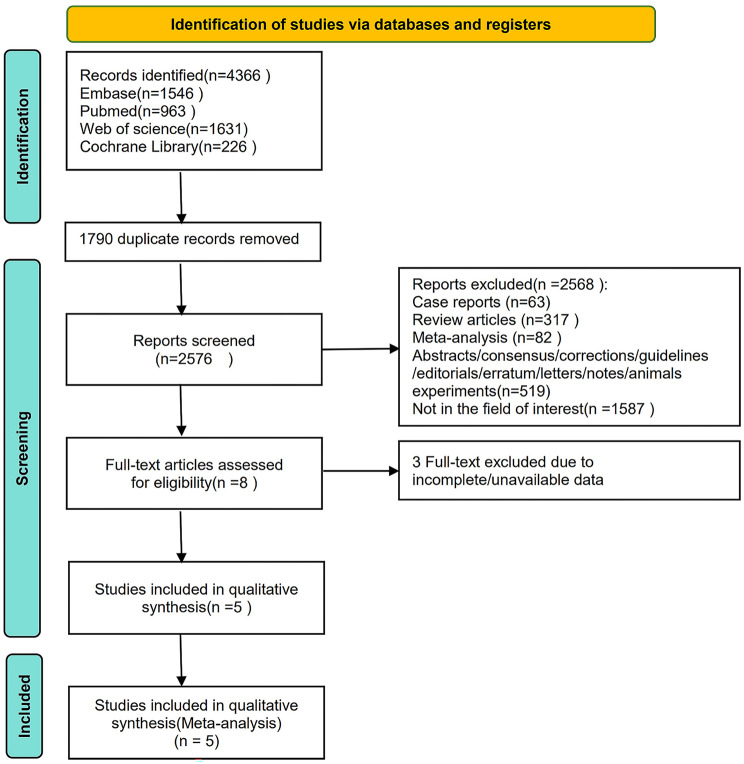
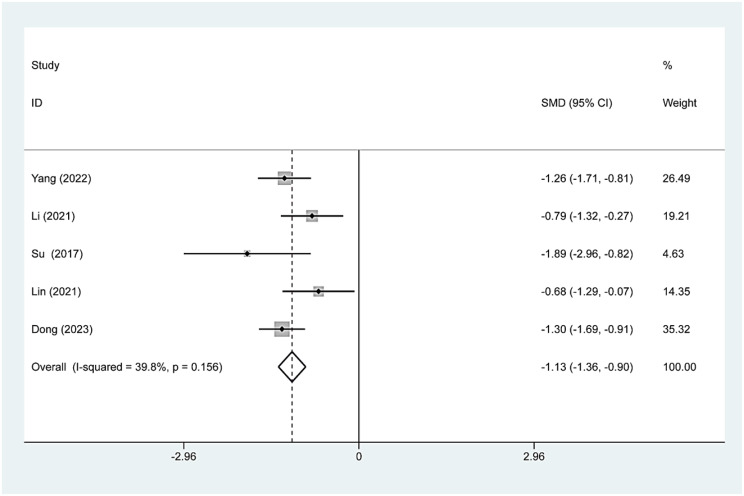
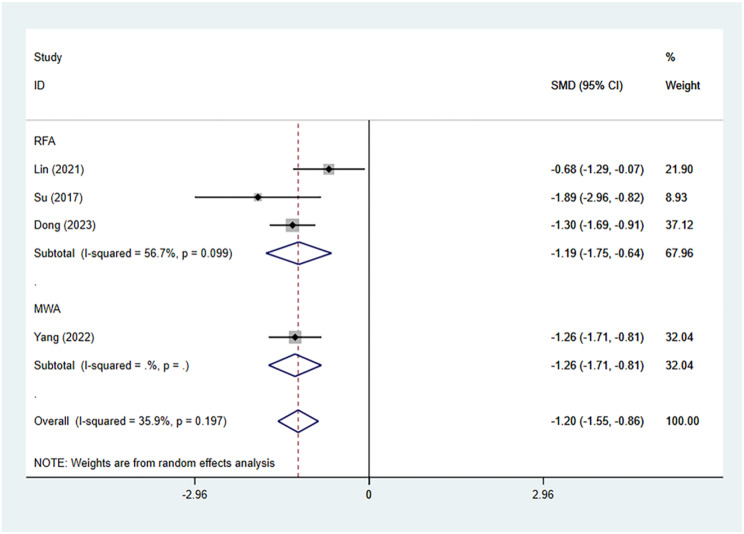
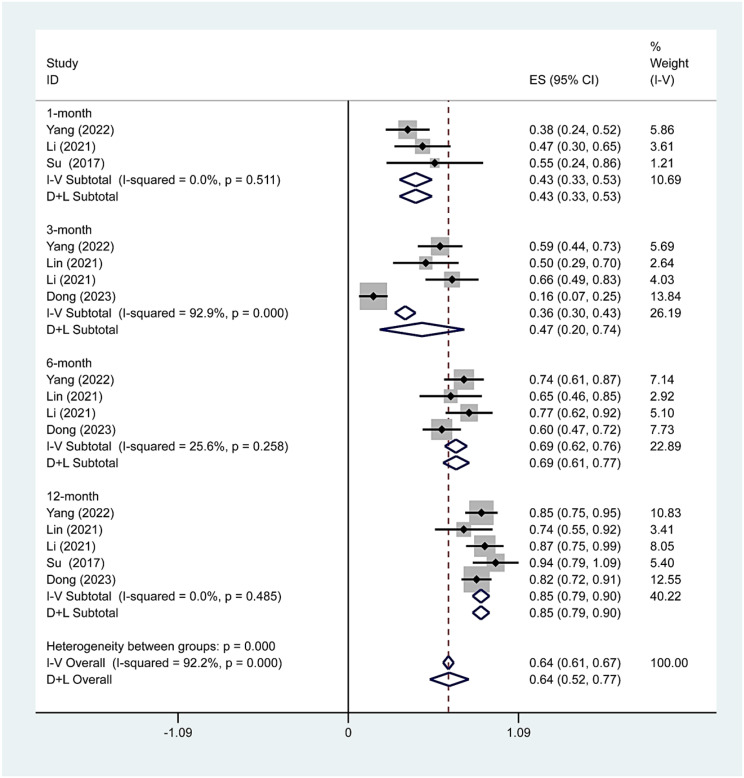
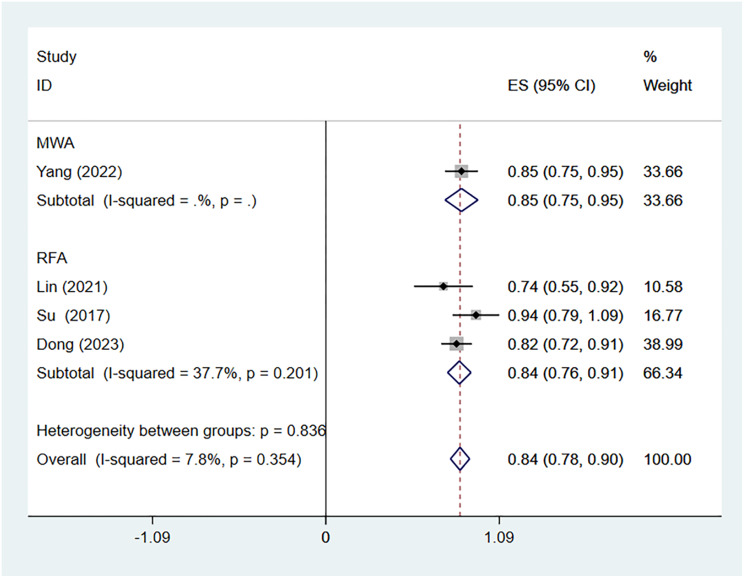
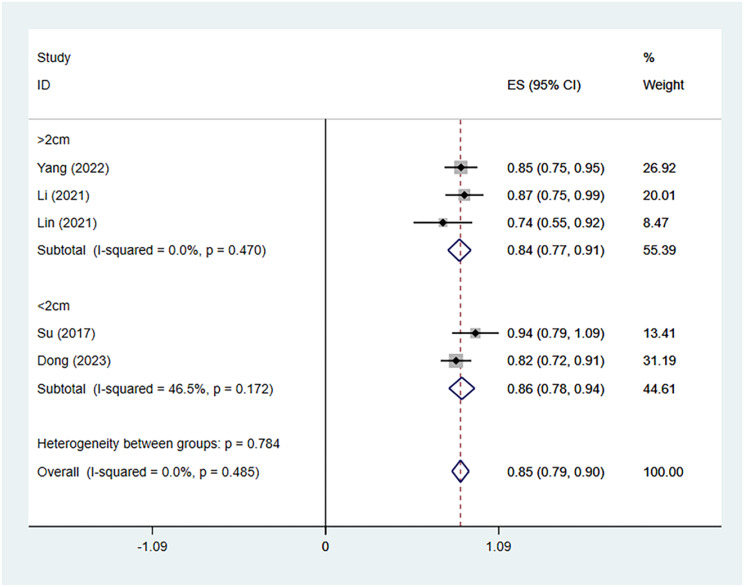
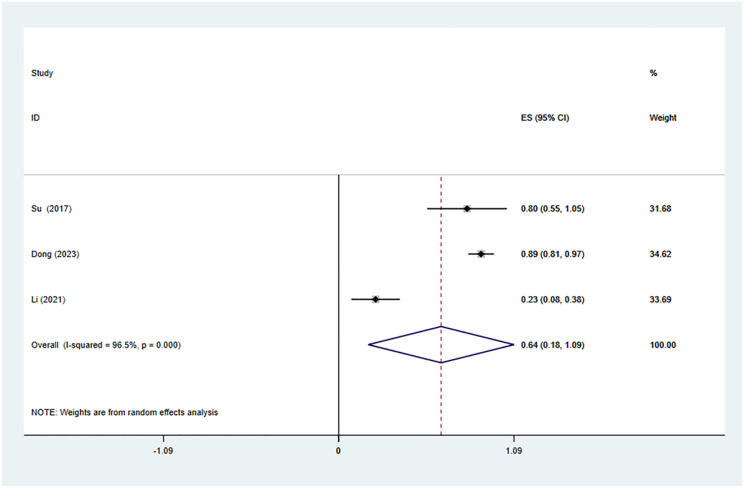
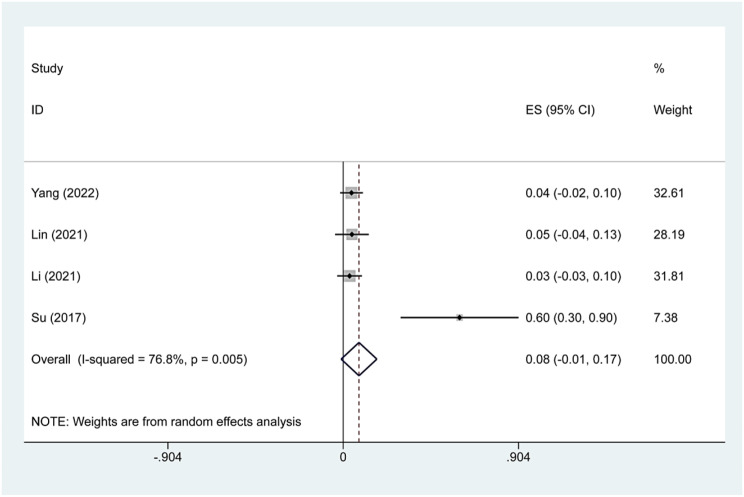
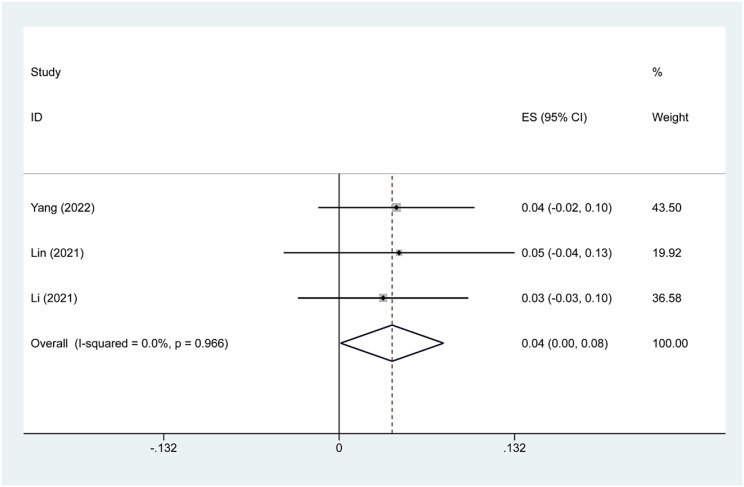
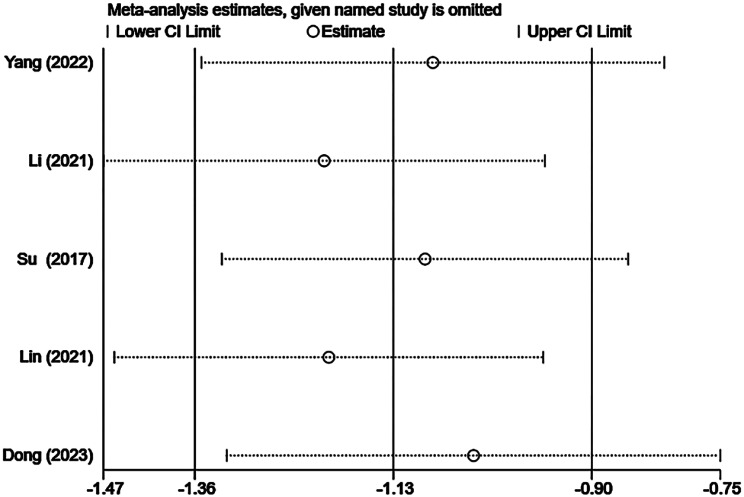
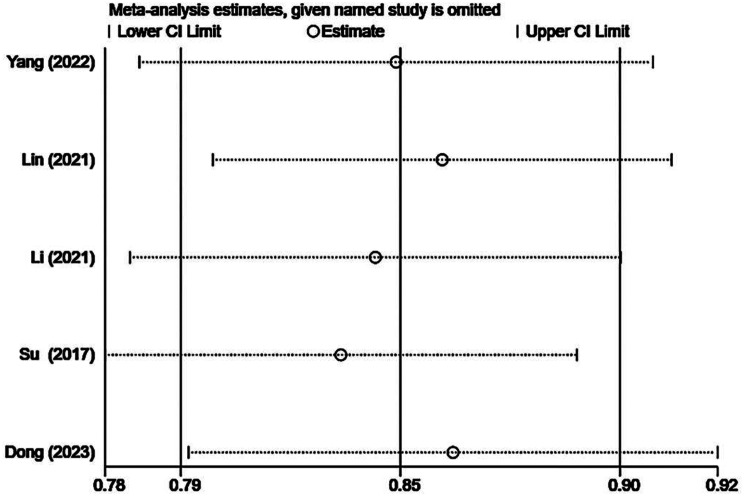
Five eligible studies were included. The findings indicate that thermal ablation is both effective and safe. The mean change in tumor volume at 12 months postthermal ablation was characterized by a standardized mean difference (SMD) of -1.13 (95% CI: -1.36 - -0.90, p = 0.000). Specifically, the mean changes in tumor volume at 12 months after radiofrequency ablation (RFA) and microwave ablation (MWA) were - 1.19 (95% CI: -1.75 - -0.64) and - 1.26 (95% CI: -1.71 - -0.81), respectively. The VRRs at 1, 3, 6, and 12 months postthermal ablation were 43% (95% CI: 33 - 53%), 47% (95% CI: 20 - 74%), 69% (95% CI: 62 - 76%), and 85% (95% CI: 79 - 90%), respectively. The VRRs at 12 months after RFA and MWA were 84% (95% CI: 76 - 91%) and 85% (95% CI: 75 - 95%), respectively. The VRR at 12 months, stratified by initial nodule size, was 84% (95% CI: 77 - 91%) and 86% (95% CI: 78 - 94%). The CDR at the final follow-up was 88% (95% CI: 80 - 95%). The complication rate was 4.0% (95% CI: 0.0 - 8.0%), with pain and hoarseness being the most frequently reported complications; no life-threatening complications were documented.
Thermal ablation is a reliable treatment for Bethesda IV thyroid nodules, and RFA and MWA are advantageous treatment strategies. However, more prospective, multicenter, and large-sample studies are needed in the future.
本研究旨在通过分析关于各种结局的大规模数据,评估热消融治疗贝塞斯达IV类甲状腺结节(滤泡性肿瘤)患者的疗效和安全性。
在PUBMED、EMBASE、科学网和考克兰图书馆中检索2014年3月1日至2024年3月1日发表的关于热消融治疗贝塞斯达IV类甲状腺结节患者的研究。评估12个月时的体积变化;1、3、6和12个月时的体积缩小率(VRR);完全消失率(CDR);以及并发症发生率。所有数据均使用STATA 15进行分析。
纳入了五项符合条件的研究。研究结果表明热消融既有效又安全。热消融后12个月肿瘤体积的平均变化以标准化均数差(SMD)为-1.13(95%CI:-1.36至-0.90,p = 0.000)为特征。具体而言,射频消融(RFA)和微波消融(MWA)后12个月肿瘤体积的平均变化分别为-1.19(95%CI:-1.75至-0.64)和-1.26(95%CI:-1.71至-0.81)。热消融后1、3、6和12个月的VRR分别为43%(95%CI:33至53%)、47%(95%CI:20至74%)、69%(95%CI:62至76%)和85%(95%CI:79至90%)。RFA和MWA后12个月的VRR分别为84%(95%CI:76至91%)和85%(95%CI:75至95%)。按初始结节大小分层,12个月时的VRR分别为84%(95%CI:77至91%)和86%(95%CI:78至94%)。最终随访时的CDR为88%(95%CI:80至95%)。并发症发生率为4.0%(95%CI:0.0至8.0%),疼痛和声音嘶哑是最常报告的并发症;未记录有危及生命的并发症。
热消融是治疗贝塞斯达IV类甲状腺结节的可靠方法,RFA和MWA是有利的治疗策略。然而,未来需要更多的前瞻性、多中心和大样本研究。