Luney Matthew S, White Stuart M, Moppett Iain K
From the Nuffield Department of Orthopaedics, Rheumatology and Musculoskeletal Sciences, University of Oxford, Oxford, UK.
Department of Anaesthesia, Brighton and Sussex University Hospitals NHS Trust, Brighton, UK.
A A Pract. 2025 Jan 6;19(1):e01891. doi: 10.1213/XAA.0000000000001891. eCollection 2025 Jan 1.
Hypotension during anesthesia for surgery for hip fracture is common and associated with myocardial injury, stroke, acute kidney injury, and delirium. We hypothesized that maintaining intraoperative blood pressure close to patients' preoperative values would reduce these complications compared to usual care.
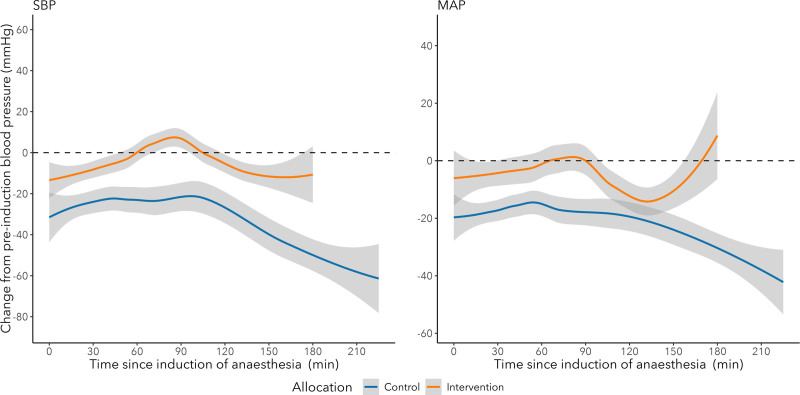
A pilot feasibility patient- and assessor-blinded parallel group randomized controlled trial. People with unilateral hip fracture aged ≥70 years with capacity to give consent before surgery were eligible. Participants were allocated at random before surgery to either tight blood pressure control (systolic blood pressure ≥80% preoperative baseline and mean arterial blood pressure ≥75 mm Hg) or usual care. Feasibility outcomes were protocol adherence, primary outcome data completeness, and recruitment rate. The composite primary outcome was myocardial injury, stroke, acute kidney injury or delirium within 7 days of surgery.
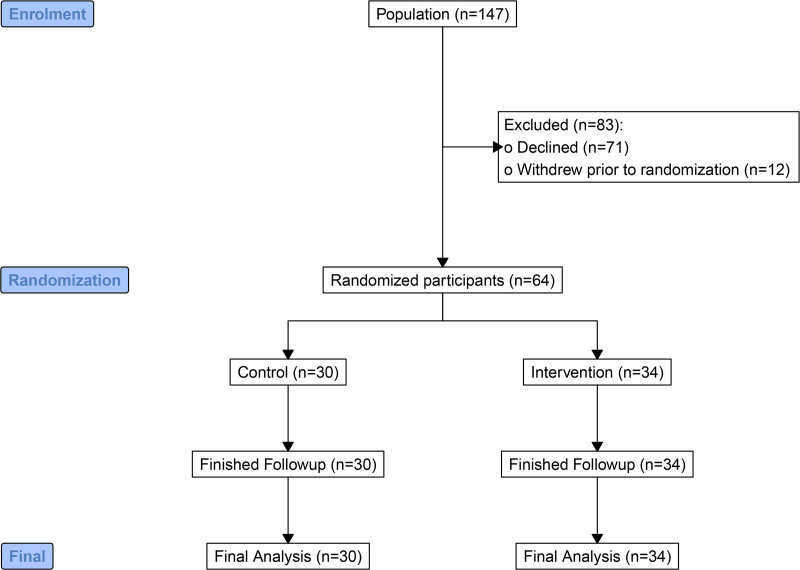
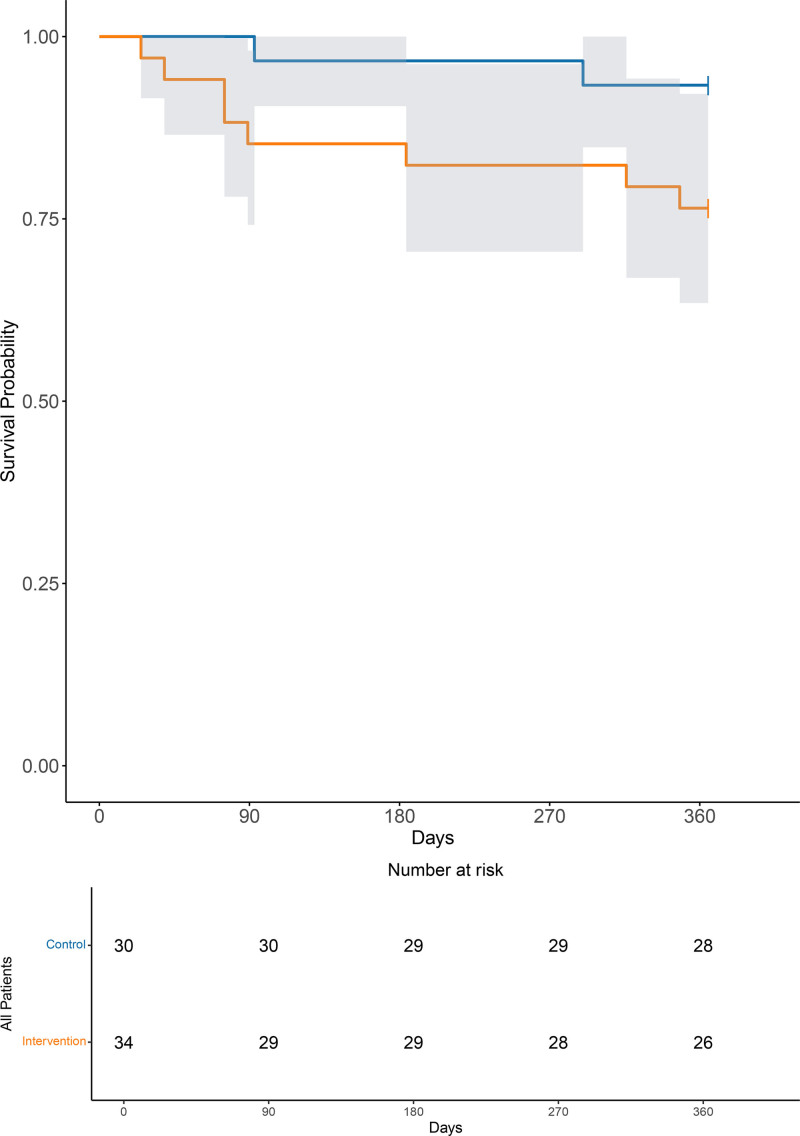
Seventy-six participants were enrolled, and 12 withdrew before randomization. Sixty-four participants were randomized, 30 were allocated to control, and 34 to intervention. There was no crossover, all 64 participants received their allocated treatment, primary outcome was known for all participants. The composite primary outcome occurred in 14 of 30 participants in the control group compared with 23 of 34 participants in the intervention group (P = .09), relative risk 1.45 (95% confidence interval [CI], 0.93-2.27).
A randomized controlled trial of tight intraoperative blood pressure control compared to usual care to reduce major postoperative complications after fractured neck of femur surgery is possible. However, the data would suggest a large sample size would be required for a definitive trial.
髋部骨折手术麻醉期间低血压很常见,且与心肌损伤、中风、急性肾损伤和谵妄相关。我们假设,与常规治疗相比,术中将血压维持在接近患者术前水平可减少这些并发症。
一项试点可行性患者和评估者双盲平行组随机对照试验。年龄≥70岁、术前有能力签署知情同意书的单侧髋部骨折患者符合条件。参与者在手术前被随机分配至严格血压控制组(收缩压≥术前基线的80%且平均动脉压≥75 mmHg)或常规治疗组。可行性结果包括方案依从性、主要结局数据完整性和招募率。复合主要结局为术后7天内发生心肌损伤、中风、急性肾损伤或谵妄。
共纳入76名参与者,12名在随机分组前退出。64名参与者被随机分组,30名被分配至对照组,34名被分配至干预组。无交叉情况,所有64名参与者均接受了分配的治疗,所有参与者的主要结局均已知。对照组30名参与者中有14名发生复合主要结局,而干预组34名参与者中有23名发生(P = 0.09),相对风险为1.45(95%置信区间[CI],0.93 - 2.27)。
与常规治疗相比,进行一项关于股骨颈骨折手术后严格术中血压控制以减少主要术后并发症的随机对照试验是可行的。然而,数据表明确定性试验需要大样本量。