
视紫质神经元相互作用蛋白(Optineurin)与核因子E2相关因子2(NRF2)协同作用,通过控制线粒体动力学和细胞凋亡来调节牙根形态发生。
Optineurin Cooperates With NRF2 to Regulate Tooth Root Morphogenesis by Controlling Mitochondrial Dynamics and Apoptosis.
作者信息
Liu Haojie, Zhang Xinyu, Ge Xiao, Hsu ChingCho, Wang Yan, Chen Simai, Yan Xingzhi, Xu Rongyao, Ma Junqing, Guo Shuyu
机构信息
Department of Orthodontics, The Affiliated Stomatological Hospital of Nanjing Medical University, Nanjing, China.
State Key Laboratory Cultivation Base of Research, Prevention and Treatment for Oral Diseases (Nanjing Medical University), Nanjing, China.
出版信息
Cell Prolif. 2025 May;58(5):e13799. doi: 10.1111/cpr.13799. Epub 2025 Jan 6.
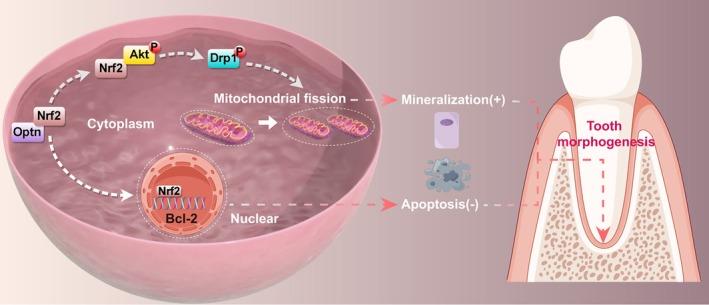
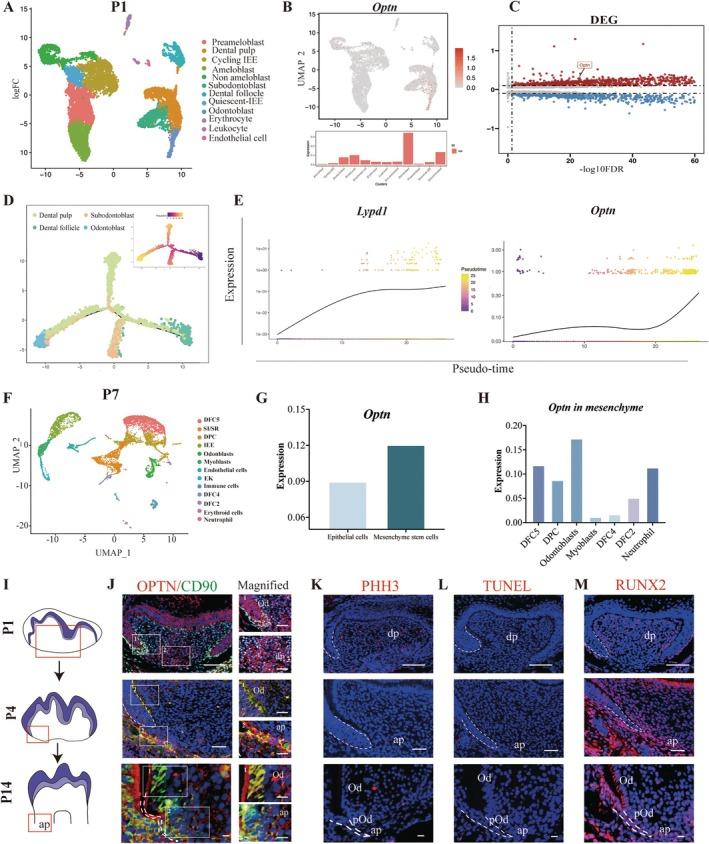
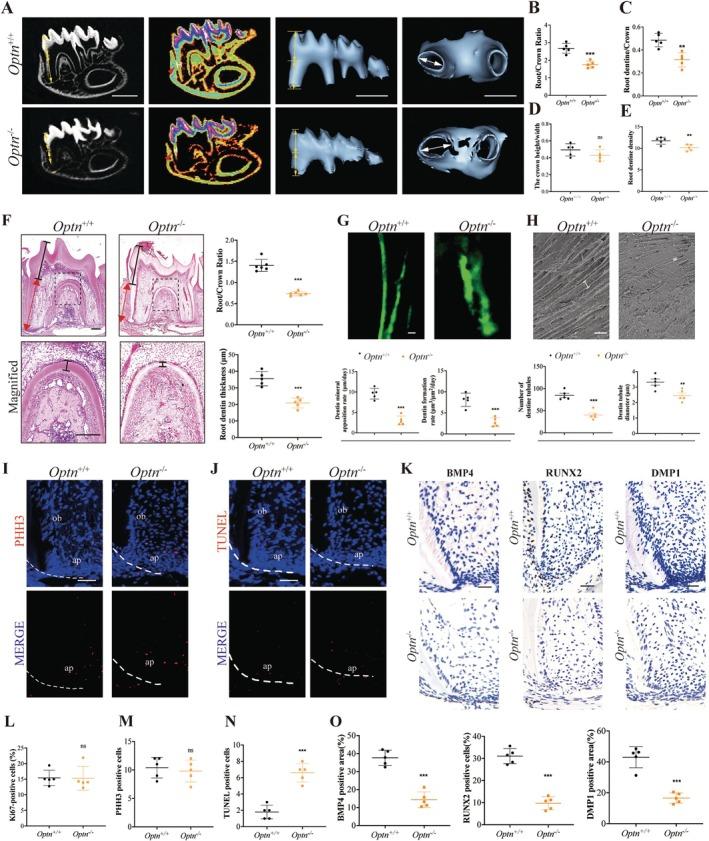
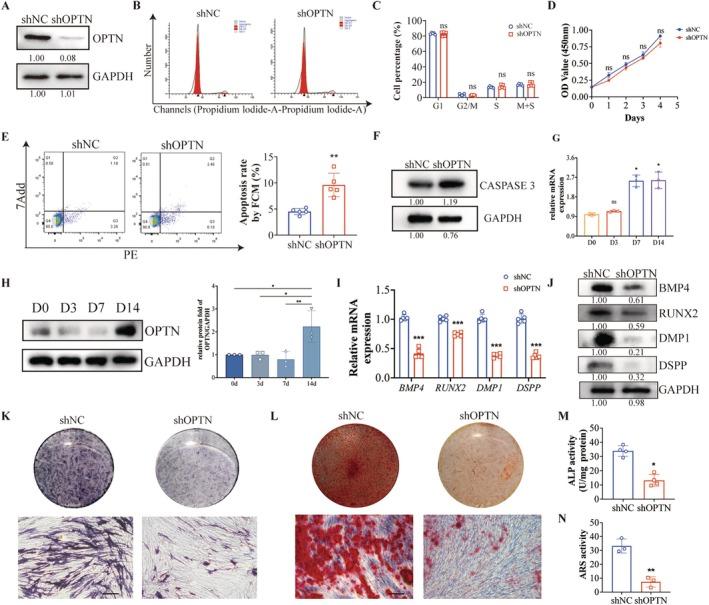
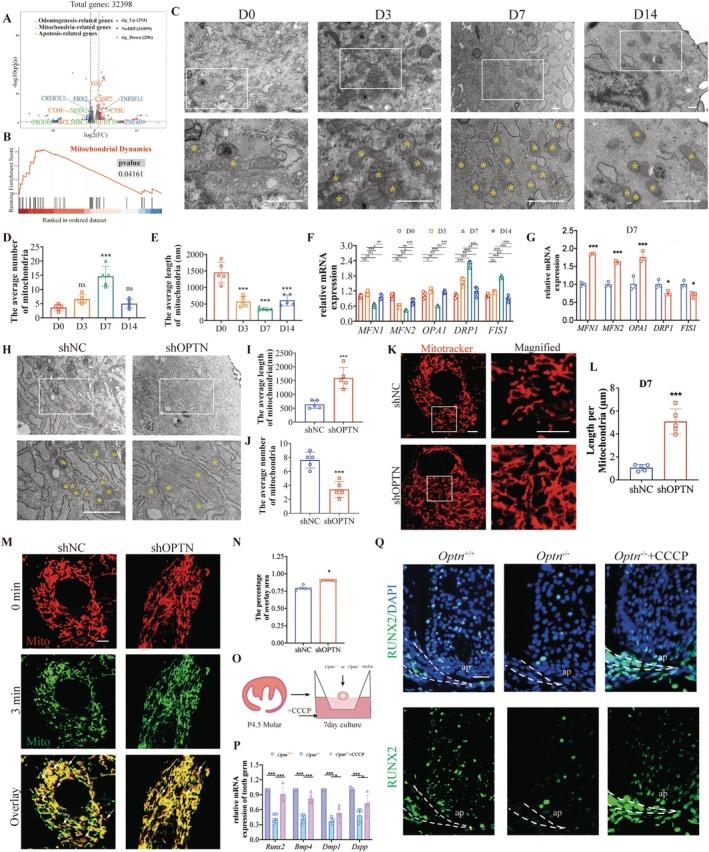
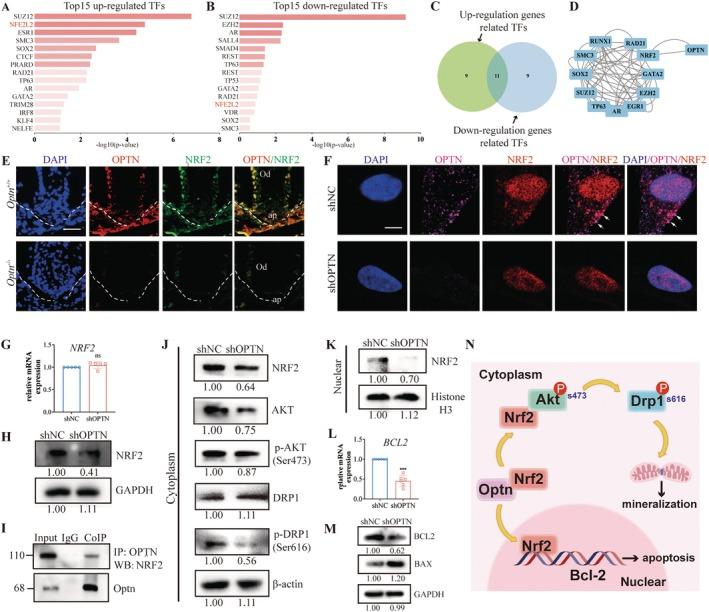
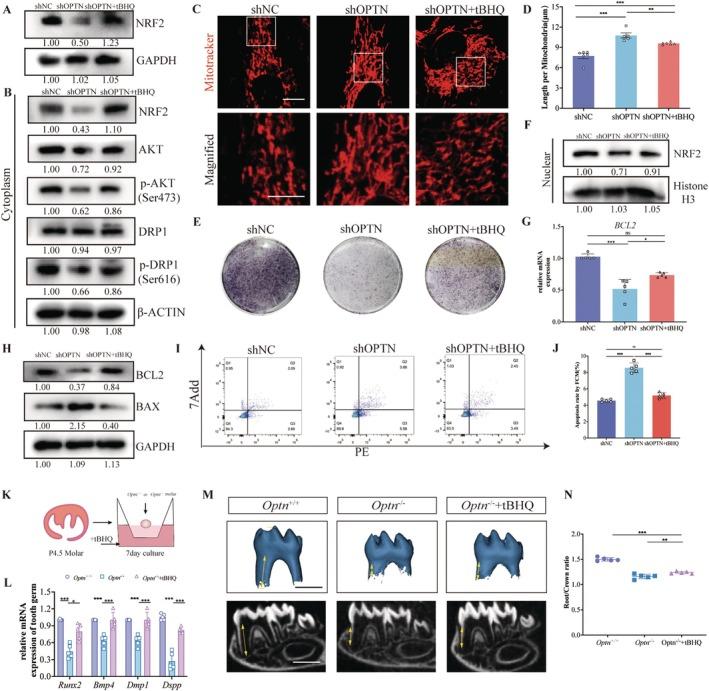
Tooth root development is a complex process essential for tooth function, yet the role of root dentin development in tooth morphogenesis is not fully understood. Optineurin (OPTN), linked to bone disorders like Paget's disease of bone (PDB), may affect tooth root development. In this study, we used single-cell sequencing of embryonic day 16.5 (E16.5), postnatal day 1 (P1), and P7 mouse teeth, as well as embryonic and adult human teeth, to show that OPTN is vital for odontoblastic differentiation. In Optn mice, we observed short root deformities and defective dentin, with impaired apical papilla differentiation and increased apoptosis. In vitro OPTN downregulation in stem cells of the apical papilla (SCAPs) exacerbated apoptosis and hindered odontoblastic differentiation. RNA-seq analysis revealed significant differences in mitochondrial dynamics between control and OPTN knockout SCAPs. We discovered that OPTN influences mitochondrial dynamics primarily by promoting fission, leading to odontoblastic differentiation and mineralisation. Mechanistically, OPTN cooperates with NRF2 to regulate mitochondrial fission via DRP1 phosphorylation and affects the transcription of BCL2. Rescue experiments using an activator of NRF2 in ex vivo organ cultures and local gingival injection experiments confirmed these findings. Therefore, we concluded that OPTN, interacting with NRF2, acts as a key regulator of SCAPs mitochondrial dynamics, mineralisation and apoptosis during tooth development. These findings provide fresh insights into the mechanisms underlying tooth root development.
牙根发育是一个对牙齿功能至关重要的复杂过程,然而牙根牙本质发育在牙齿形态发生中的作用尚未完全明确。与骨疾病如佩吉特骨病(PDB)相关的视紫质神经元(OPTN)可能影响牙根发育。在本研究中,我们对胚胎第16.5天(E16.5)、出生后第1天(P1)和P7的小鼠牙齿以及胚胎和成人牙齿进行单细胞测序,以表明OPTN对成牙本质细胞分化至关重要。在Optn小鼠中,我们观察到牙根畸形和牙本质缺陷,根尖乳头分化受损且细胞凋亡增加。在体外,根尖乳头干细胞(SCAPs)中OPTN的下调加剧了细胞凋亡并阻碍了成牙本质细胞分化。RNA测序分析揭示了对照和OPTN基因敲除的SCAPs之间线粒体动力学的显著差异。我们发现OPTN主要通过促进裂变来影响线粒体动力学,从而导致成牙本质细胞分化和矿化。从机制上讲,OPTN与NRF2协同作用,通过DRP1磷酸化调节线粒体裂变,并影响BCL2的转录。在体外器官培养中使用NRF2激活剂的拯救实验和局部牙龈注射实验证实了这些发现。因此,我们得出结论,OPTN与NRF2相互作用,在牙齿发育过程中作为SCAPs线粒体动力学、矿化和细胞凋亡的关键调节因子。这些发现为牙根发育的潜在机制提供了新的见解。
 Zotero 插件