Fang Dan, Xu Tianqi, Li Fulei, Sun Yue, Sun Jingyi, Yin Yanqing, Zhang Haijie, Wang Zhiqiang, Liu Yuan
Jiangsu Co-innovation Center for Prevention and Control of Important Animal Infectious Diseases and Zoonoses, College of Veterinary Medicine, Yangzhou University, Yangzhou, China.
Joint International Research Laboratory of Agriculture and Agri-Product Safety, the Ministry of Education of China, Yangzhou University, Yangzhou, China.
Nat Commun. 2025 Jan 6;16(1):417. doi: 10.1038/s41467-024-55791-w.
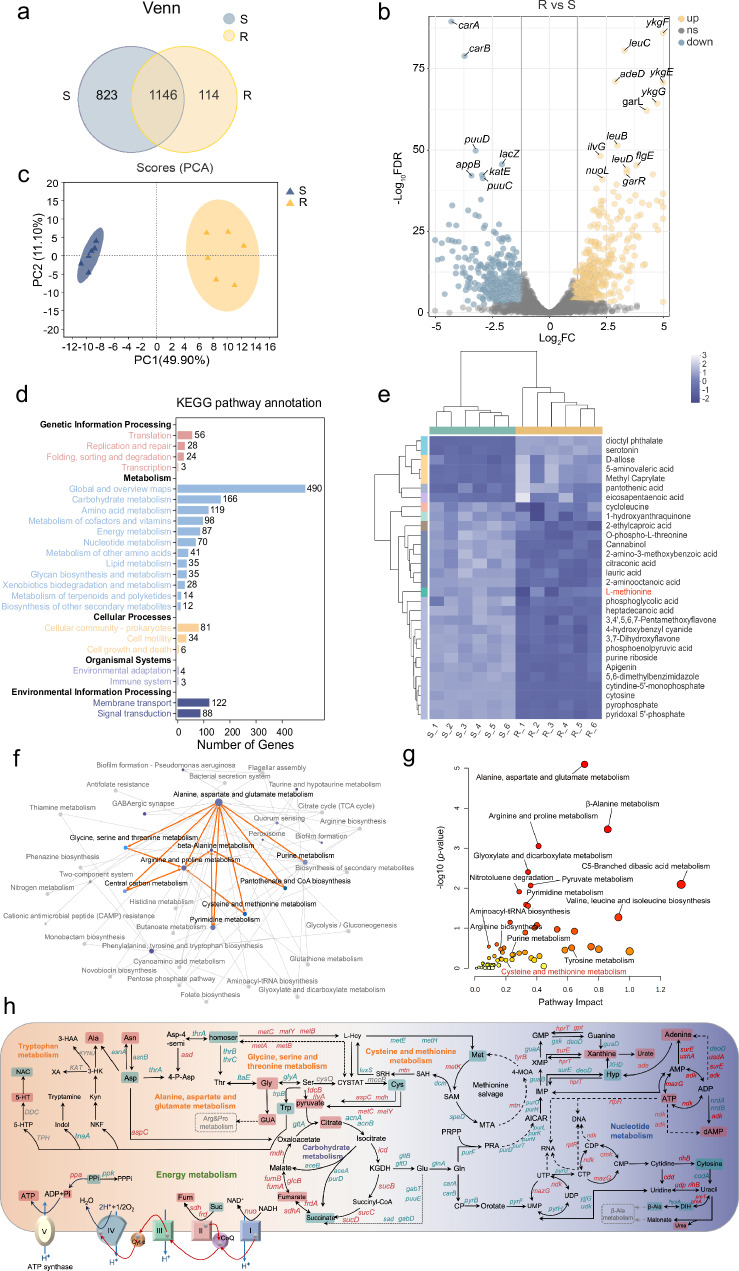
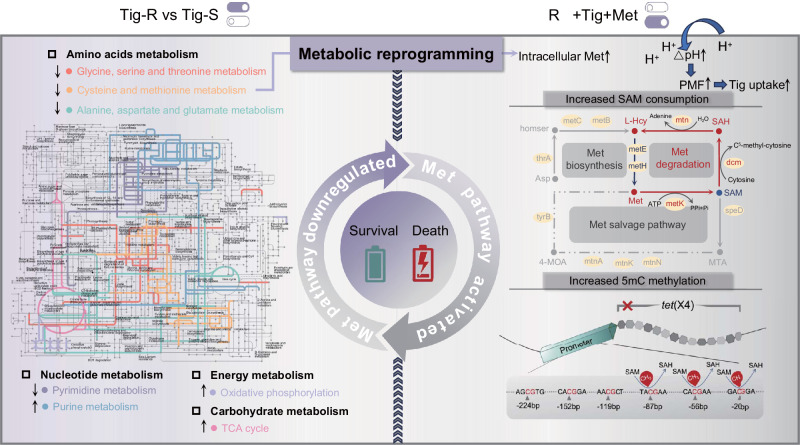
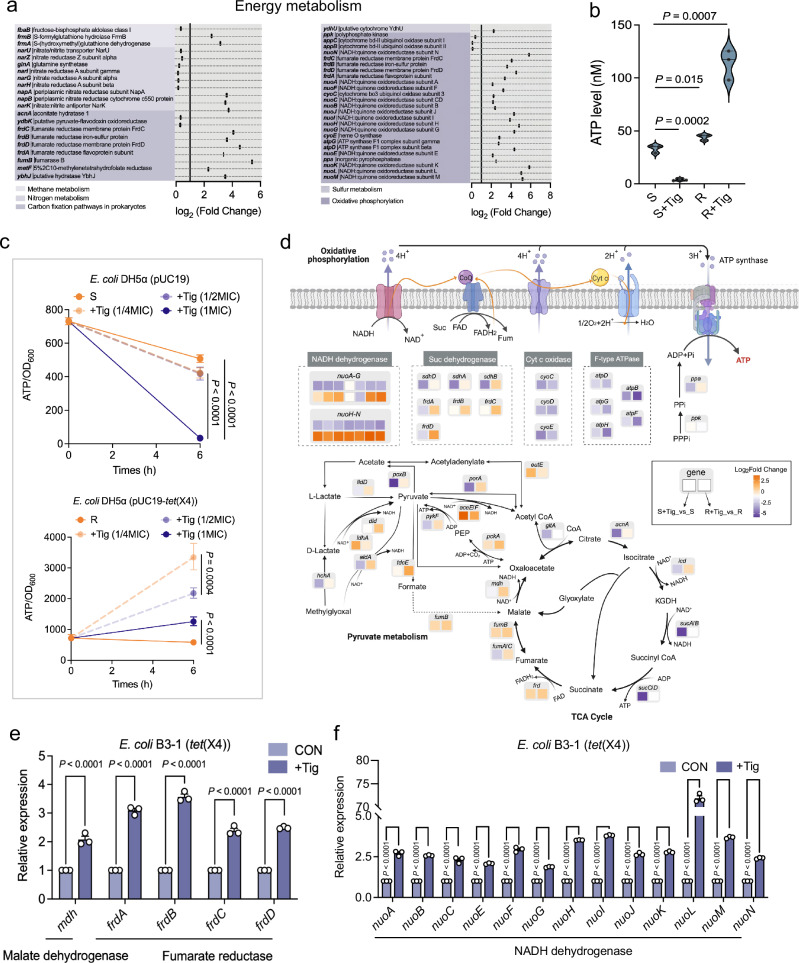
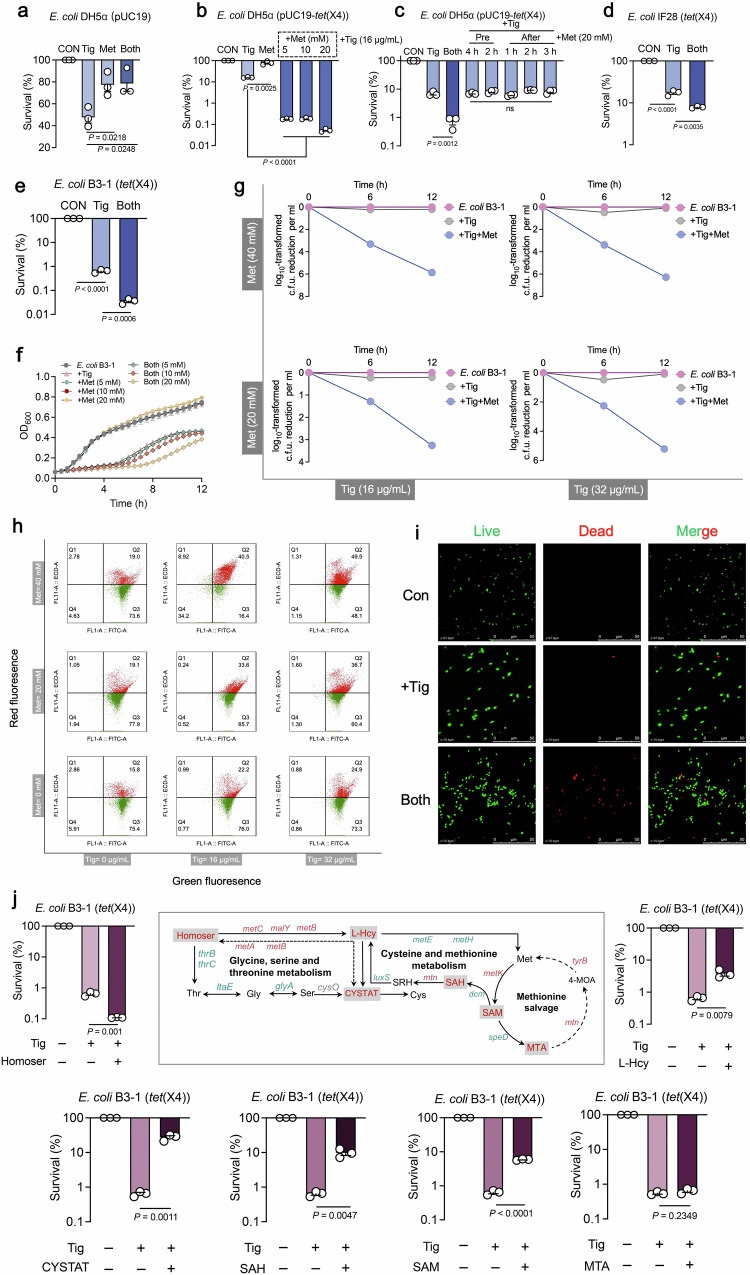
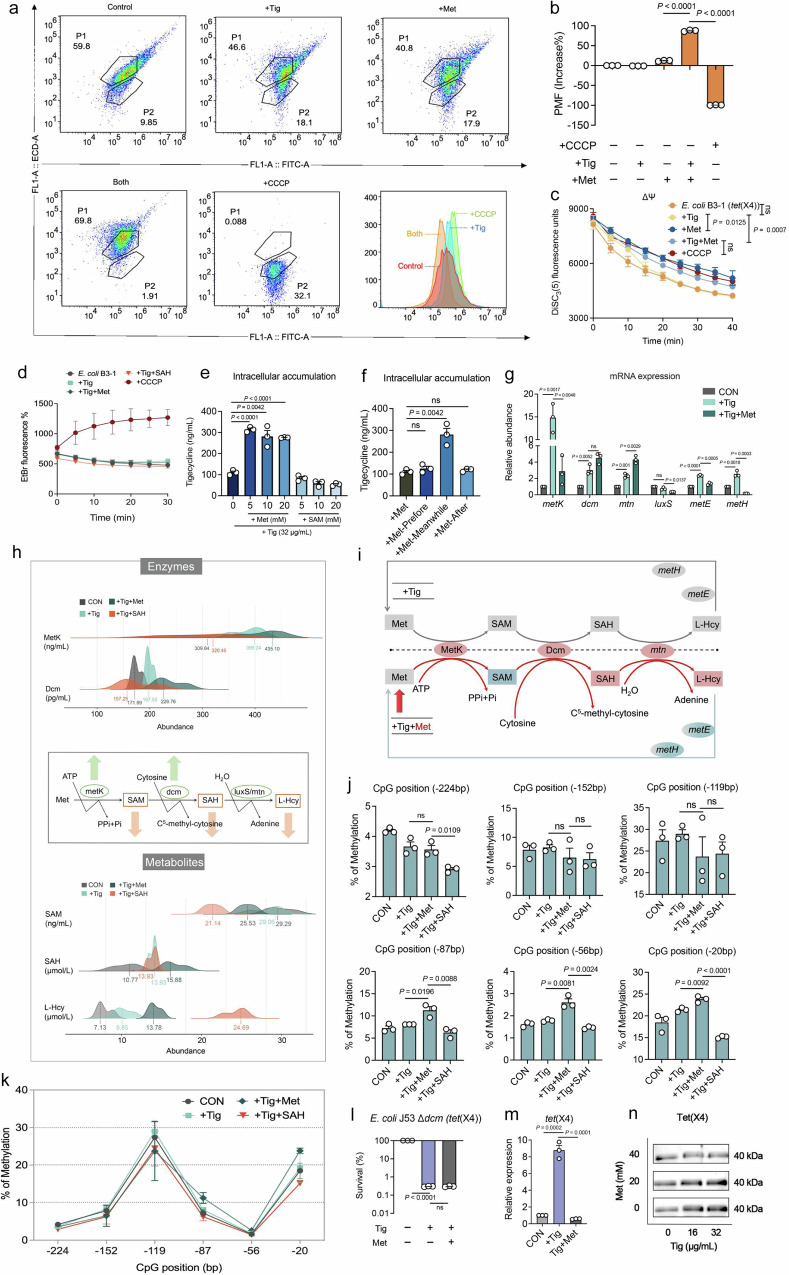
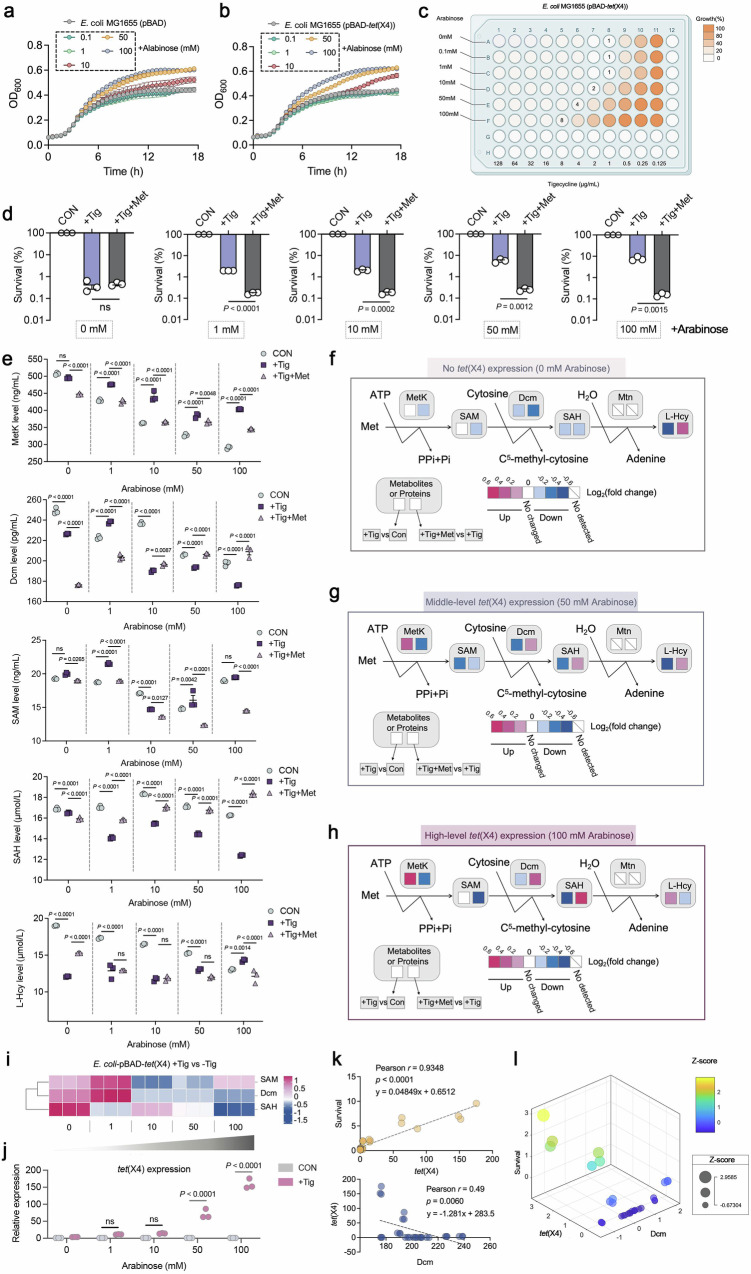
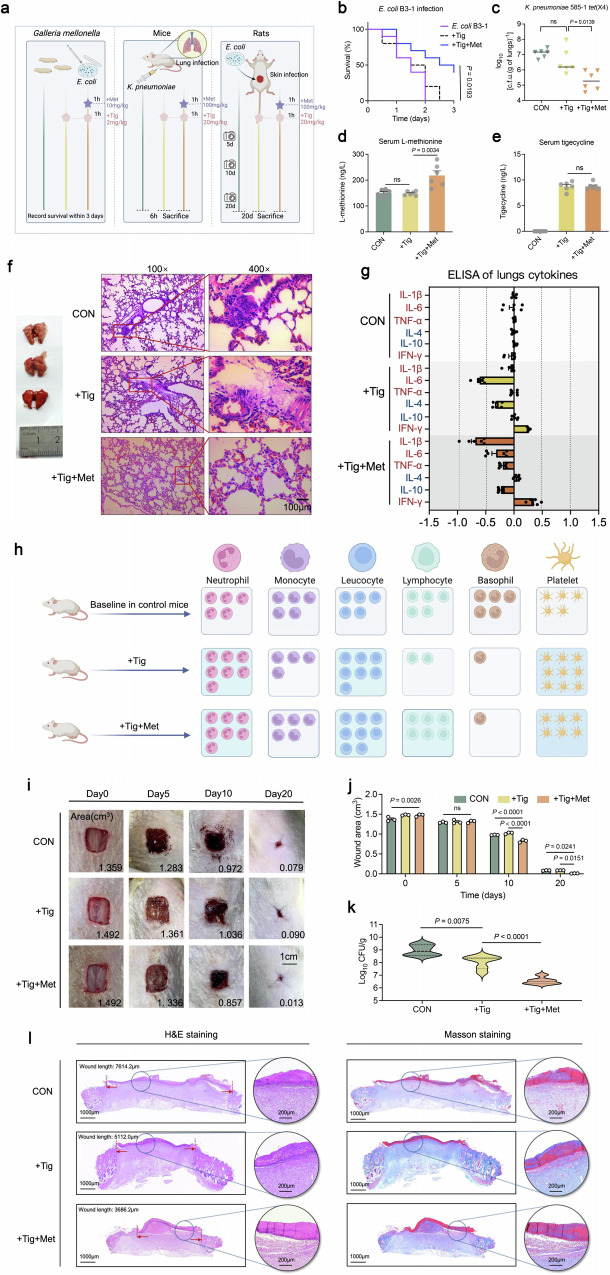
Tigecycline is a last-resort antibiotic to treat complicated infections caused by multidrug-resistant pathogens, while the emergence of plasmid-mediated tet(X) family severely compromises its clinical efficacy. Novel antimicrobial strategies not limited to new antibiotics in pharmaceutical pipeline are urgently needed. Herein, we reveal the metabolic disparities between tet(X)-negative and -positive E. coli, including distinct energy demand patterns under tigecycline exposure. In particular, the cysteine and methionine metabolism pathway is remarkably downregulated in tet(X)-positive bacteria. More importantly, we find that the addition of exogenous L-methionine (Met) effectively resensitizes tet(X)-positive pathogens to tigecycline. Our mechanistic analysis demonstrates that exogenous Met promotes intracellular tigecycline accumulation by upregulating bacterial proton motive force. Moreover, Met accelerates the conversion to S-adenosyl-L-methionine, an essential methyl donor, thereby enhancing 5mC methylation modification in the promoter region of tet(X4) gene and reducing its expression. Consistently, the potentiation of Met to tigecycline is abolished in tet(X4)-carrying E. coli Δdcm but restored in dcm-complementary bacteria, which encodes DNA-cytosine methyltransferase. In multiple animal models of infection, Met markedly potentiates the effectiveness of tigecycline against pathogenic E. coli and K. pneumoniae. Overall, this work highlights the therapeutic potential of Met in overcoming plasmid-mediated high-level tigecycline resistance, and provides a new paradigm to enhance antibiotic efficacy by harnessing cellular metabolic networks as well as epigenetic modifications.
替加环素是治疗由多重耐药病原体引起的复杂感染的一种最后手段抗生素,而质粒介导的tet(X)家族的出现严重损害了其临床疗效。迫切需要不限于制药研发中新抗生素的新型抗菌策略。在此,我们揭示了tet(X)阴性和阳性大肠杆菌之间的代谢差异,包括在替加环素暴露下不同的能量需求模式。特别是,半胱氨酸和甲硫氨酸代谢途径在tet(X)阳性细菌中显著下调。更重要的是,我们发现添加外源性L-甲硫氨酸(Met)可有效使tet(X)阳性病原体对替加环素重新敏感。我们的机制分析表明,外源性Met通过上调细菌质子动力促进细胞内替加环素积累。此外,Met加速向S-腺苷-L-甲硫氨酸(一种必需的甲基供体)的转化,从而增强tet(X4)基因启动子区域的5mC甲基化修饰并降低其表达。一致地,在携带tet(X4)的大肠杆菌Δdcm中,Met对替加环素的增强作用被消除,但在编码DNA-胞嘧啶甲基转移酶的dcm互补细菌中恢复。在多种感染动物模型中,Met显著增强替加环素对致病性大肠杆菌和肺炎克雷伯菌的有效性。总体而言,这项工作突出了Met在克服质粒介导的高水平替加环素耐药性方面的治疗潜力,并提供了一种通过利用细胞代谢网络以及表观遗传修饰来提高抗生素疗效的新范例。