Maruyama Kohei, Shimizu Yuki, Nomura Yumi, Oh-Hara Tomoko, Takahashi Yuki, Nagayama Satoshi, Fujita Naoya, Katayama Ryohei
Division of Experimental Chemotherapy, Cancer Chemotherapy Center, Japanese Foundation for Cancer Research, Tokyo, Japan.
Department of Computational Biology and Medical Sciences, Graduate School of Frontier Sciences, The University of Tokyo, Tokyo, Japan.
NPJ Precis Oncol. 2025 Jan 6;9(1):4. doi: 10.1038/s41698-024-00793-6.
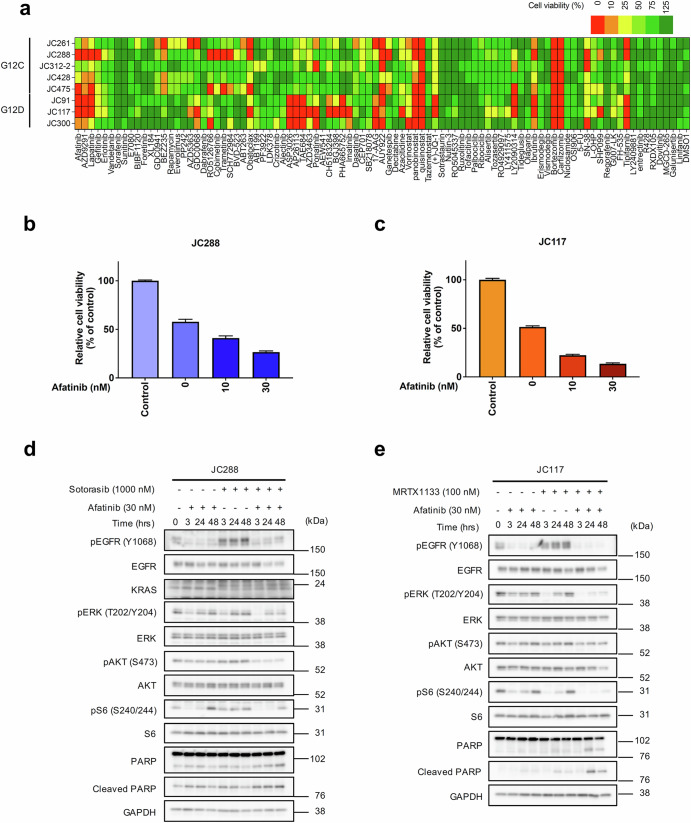
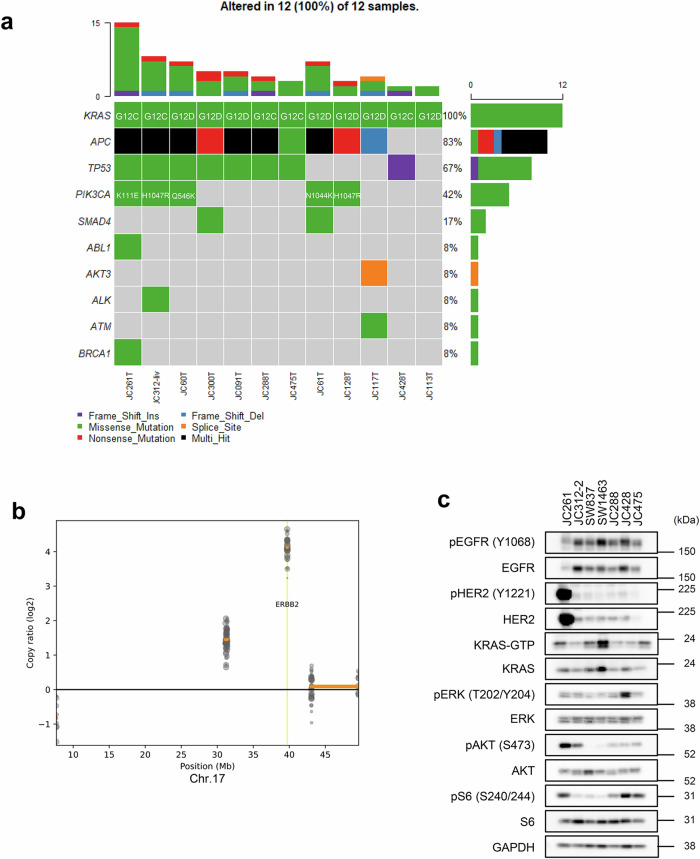
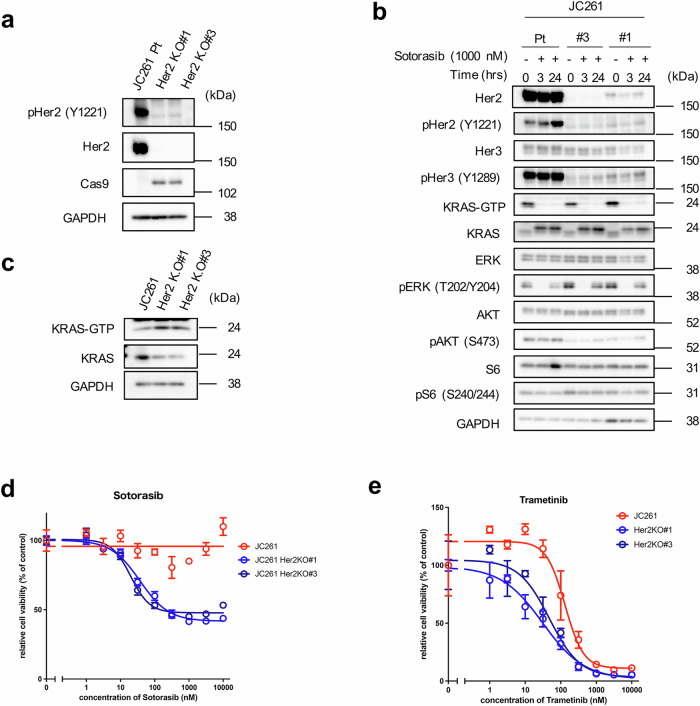
KRAS-specific inhibitors have shown promising antitumor effects, especially in non-small cell lung cancer, but limited efficacy in colorectal cancer (CRC) patients. Recent studies have shown that EGFR-mediated adaptive feedback mediates primary resistance to KRAS inhibitors, but the other resistance mechanisms have not been identified. In this study, we investigated intrinsic resistance mechanisms to KRAS inhibitors using patient-derived CRC cells (CRC-PDCs). We found that KRAS-mutated CRC-PDCs can be divided into at least an EGFR pathway-activated group and a PI3K/AKT pathway-activated group. In the latter group, PDCs with PIK3CA major mutation showed high sensitivity to PI3K+mTOR co-inhibition, and a PDC with Her2 amplification with PIK3CA minor mutation showed PI3K-AKT pathway dependency but lost KRAS-MAPK dependency by cytoplasmic localization of KRAS. In the PDC, Her2 knockout restored KRAS plasma membrane localization and KRAS inhibitor sensitivity. The current study provides insight into the mechanisms of primary resistance to KRAS inhibitors, including aberrant KRAS localization.
KRAS特异性抑制剂已显示出有前景的抗肿瘤作用,尤其是在非小细胞肺癌中,但对结直肠癌(CRC)患者的疗效有限。最近的研究表明,表皮生长因子受体(EGFR)介导的适应性反馈介导了对KRAS抑制剂的原发性耐药,但其他耐药机制尚未明确。在本研究中,我们使用患者来源的结直肠癌细胞(CRC-PDCs)研究了对KRAS抑制剂的内在耐药机制。我们发现,KRAS突变的CRC-PDCs至少可分为EGFR途径激活组和PI3K/AKT途径激活组。在后一组中,具有PIK3CA主要突变的PDCs对PI3K+mTOR联合抑制表现出高敏感性,而具有Her2扩增和PIK3CA次要突变的PDC表现出PI3K-AKT途径依赖性,但由于KRAS的细胞质定位而失去了KRAS-丝裂原活化蛋白激酶(MAPK)依赖性。在该PDC中,Her2基因敲除恢复了KRAS的质膜定位和KRAS抑制剂敏感性。本研究深入探讨了对KRAS抑制剂原发性耐药的机制,包括KRAS定位异常。