Hameed Muhammad, James Charles, Wong Kevin, Lewis Paul, Roberson Paula, Schmitz Kelli, Jayappa Sateesh, Rowell Amy, McVay-Gilam Marcene, Frost Todd, Springer Adam, Moore Mary
University of Arkansas for Medical Sciences.
Arkansas Children's Hospital.
Res Sq. 2024 Dec 24:rs.3.rs-5632134. doi: 10.21203/rs.3.rs-5632134/v1.
Reports of radiographic exam evaluation for G-tube malposition in children are limited.
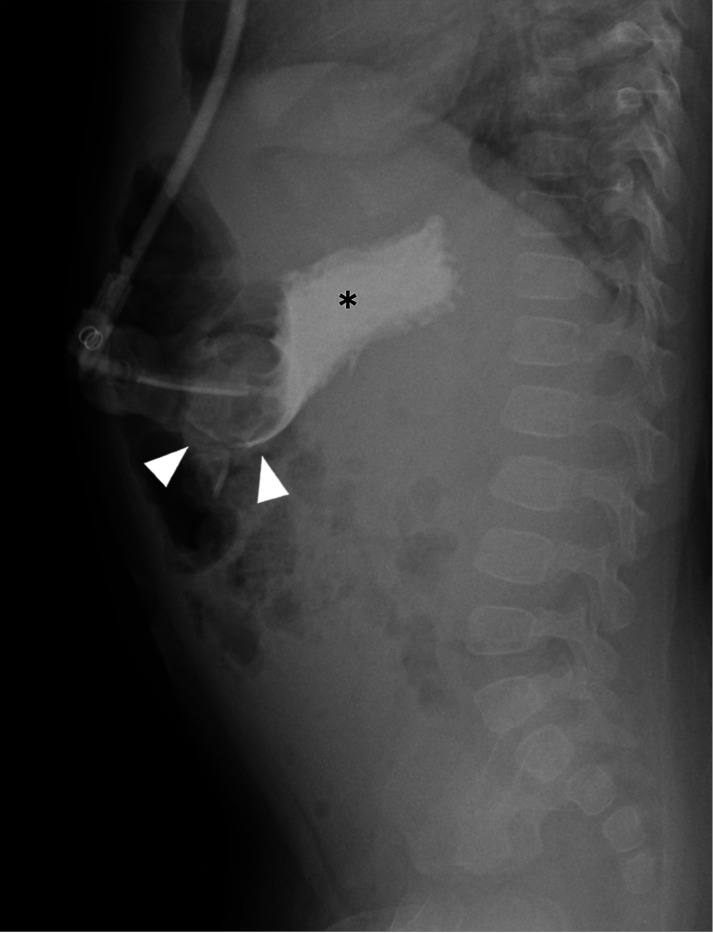
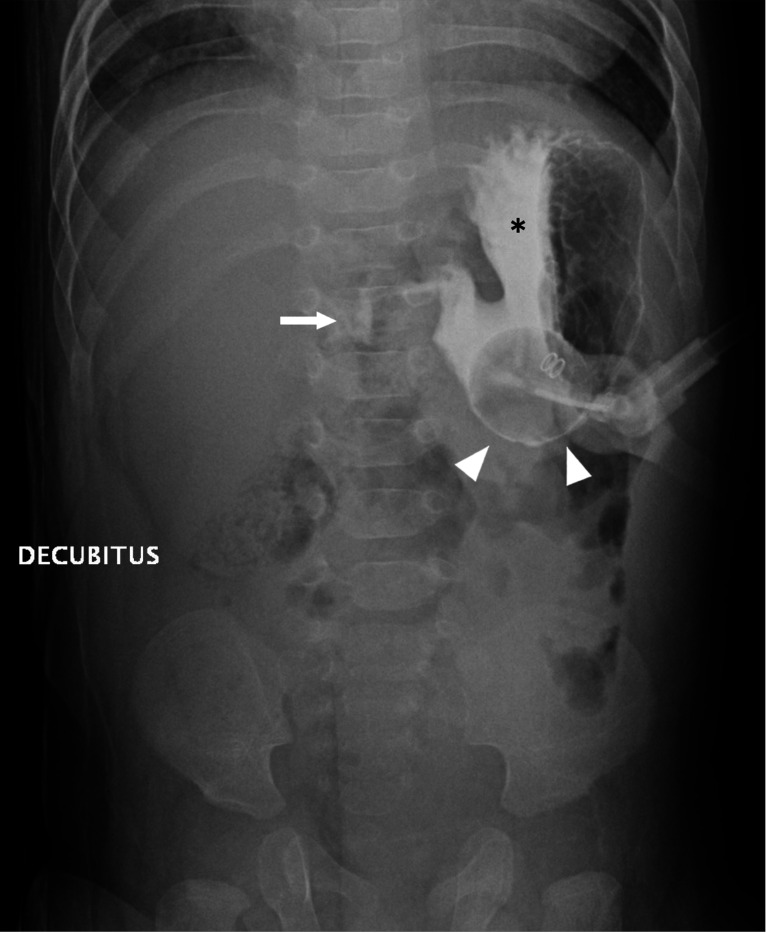
Evaluate effectiveness of a new 2-view abdominal radiograph exam protocol instituted to provide 24/7 coverage at 2 affiliated hospitals and replace the prior fluoroscopic G-tube contrast check exam.
G-tube radiographic exams performed between December 2019 and May 2022 at 2 affiliated hospitals were identified and retrospective chart review was performed to delineate exam test yield, accuracy, sensitivity, specificity. Additional data collected included exam adherence to protocol, years of experience of the reporting pediatric radiologist, reporting time, and 30-day adverse events.
227 exams were performed in 186 patients. 2-view radiograph protocol was followed in 81.9% (186/227); Additional radiograph views were performed in 18.1% (41/227); additional contrast volume in 9.3% (21/227). Reporting time under 1 hour occurred in 79.7% (181/227). 5.7% (13/227) exams were reported as indeterminate adding a median time delay of 40 minutes (IQR 90). Indeterminate exam reporting did not correlate with years of experience of the reporting pediatric radiologist (p=0.19); reporting time over 1 hour occurred more often in the after-hours group (p= 0.032). Fluoroscopic G-tube contrast check was requested in 8 of 13 indeterminate readings. Following reclassification of indeterminate exams based on clinical suspicion, test performance: yield 94.3%, accuracy 97.3%, sensitivity 81.8%, specificity 98.2%, PPV 69.2%, NPV 99.1%.
This new diagnostic exam performed well with high test yield, accuracy, specificity and negative predictive value. The exam mostly followed protocol, allowed timely resumption of G-tube use, and provided a needed 24/7 remote coverage option for the new affiliated hospital.
关于儿童胃造口管(G管)位置不当的影像学检查评估报告有限。
评估一种新的双视图腹部X线检查方案的有效性,该方案在两家附属医院提供全天候覆盖,并取代先前的荧光镜下G管造影检查。
确定2019年12月至2022年5月期间在两家附属医院进行的G管影像学检查,并进行回顾性病历审查,以确定检查的阳性率、准确性、敏感性、特异性。收集的其他数据包括检查对方案的依从性、报告儿科放射科医生的经验年限、报告时间和30天不良事件。
186例患者共进行了227次检查。81.9%(186/227)的检查遵循双视图X线检查方案;18.1%(41/227)的检查进行了额外的X线视图;9.3%(21/227)的检查增加了造影剂用量。79.7%(181/227)的检查报告时间在1小时以内。5.7%(13/227)的检查报告为不确定,中位延迟时间为40分钟(四分位间距90)。不确定检查报告与报告儿科放射科医生的经验年限无关(p=0.19);报告时间超过1小时在非工作时间组更常见(p=0.032)。13例不确定读数中有8例要求进行荧光镜下G管造影检查。根据临床怀疑对不确定检查进行重新分类后,检查性能:阳性率94.3%,准确性97.3%,敏感性81.8%,特异性98.2%,阳性预测值69.2%,阴性预测值99.1%。
这种新的诊断检查表现良好,具有高阳性率、准确性、特异性和阴性预测值。该检查大多遵循方案,允许及时恢复G管使用,并为新附属医院提供了所需的全天候远程覆盖选项。