Calhoun Caitlin C, Kan Shih-Hsin, Stover Alexander E, Harb Jerry F, Monuki Edwin S, Wang Raymond Y, Schwartz Philip H
Research Institute, Children's Hospital of Orange County, Orange, CA, USA.
Department of Pathology and Laboratory Medicine, University of California, Irvine, Irvine, CA, USA.
Mol Ther Methods Clin Dev. 2024 Nov 5;32(4):101367. doi: 10.1016/j.omtm.2024.101367. eCollection 2024 Dec 12.
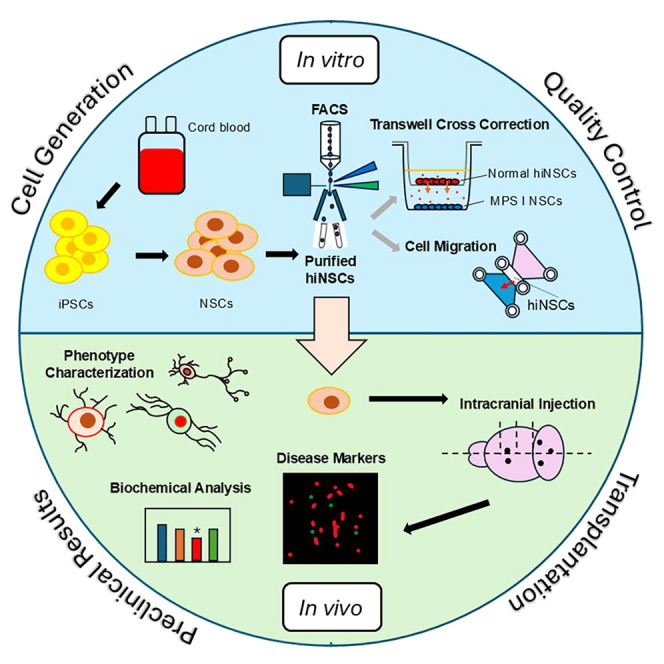
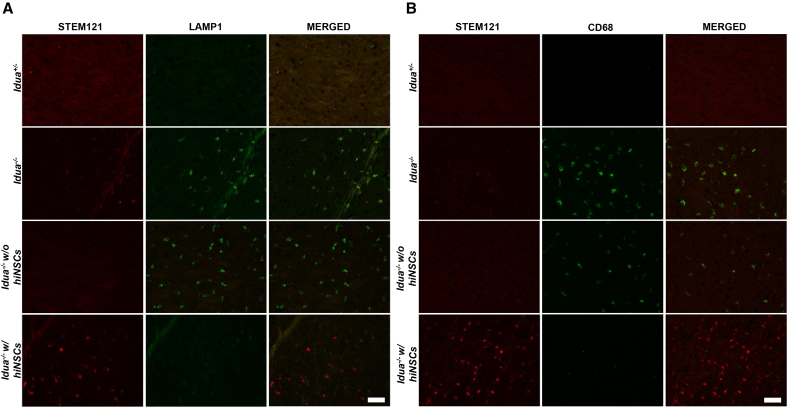
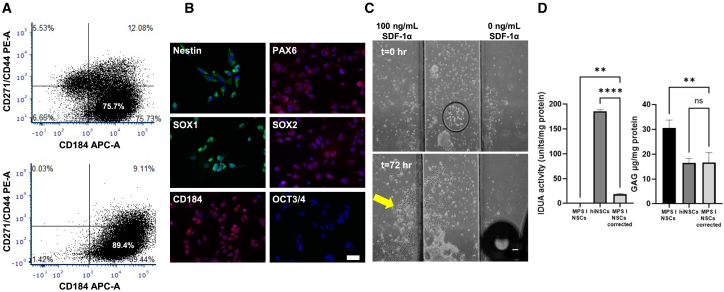
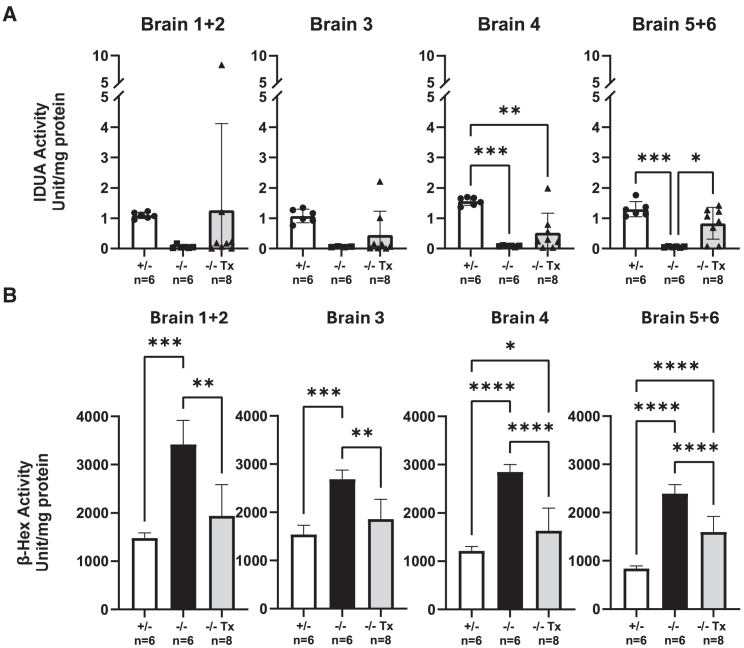
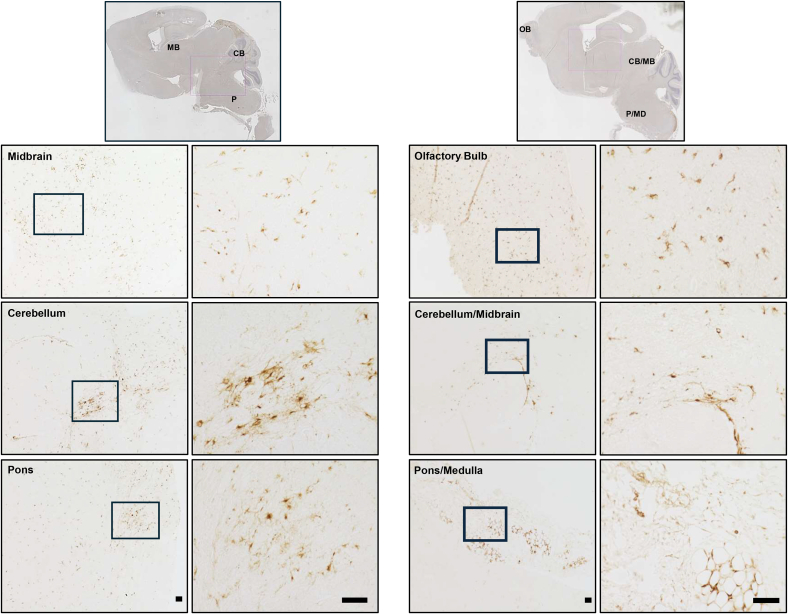
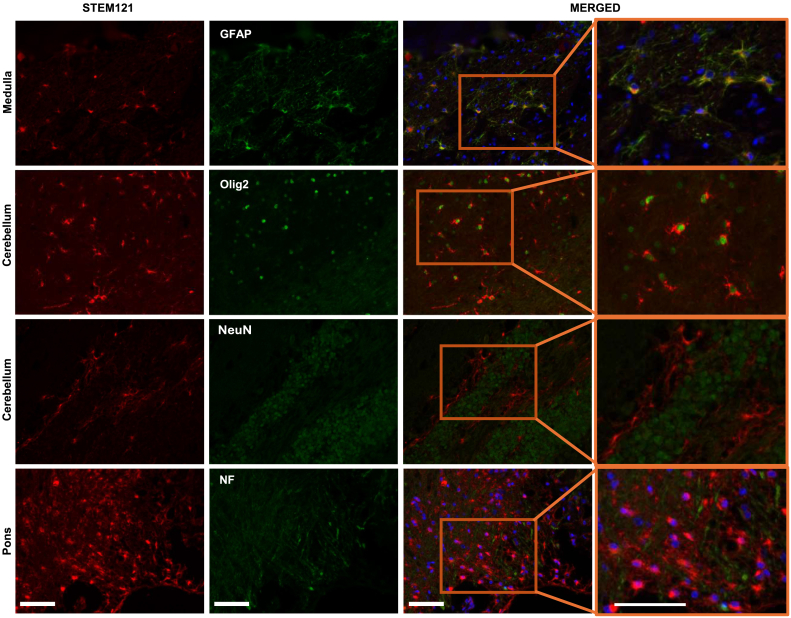
Mucopolysaccharidosis type I (MPS I) is a metabolic disorder characterized by a deficiency in α-l-iduronidase (IDUA), leading to impaired glycosaminoglycan degradation. Current approved treatments seek to restore IDUA levels via enzyme replacement therapy (ERT) and/or hematopoietic stem cell transplantation (HSCT). The effectiveness of these treatment strategies in preventing neurodegeneration is limited due to the inability of ERT to penetrate the blood-brain barrier (BBB) and HSCT's limited CNS reconstitution of IDUA levels. We reprogrammed human cord blood cells into induced pluripotent stem cells (iPSCs), differentiated them into human induced neural stem cells (hiNSCs), and sorted them using fluorescence-activated cell sorting (FACS). Our studies showed that these hiNSCs can migrate and cross-correct IDUA deficiency. Purified hiNSCs were then transplanted into neonatal immunodeficient MPS I mice ( ). Analysis of brain tissue obtained 8 months after transplantation showed partially restored IDUA activity, with distribution and differentiation of engrafted hiNSCs throughout the brain into glial cell types. The presence of engrafted hiNSCs was associated with decreased levels of biomarkers commonly elevated in the mouse brain, such as β-hexosaminidase, CD68, and LAMP1, suggesting physiological efficacy. These results highlight the potential of hiNSCs for use as a patient-specific cellular therapy for MPS I.
I型粘多糖贮积症(MPS I)是一种代谢紊乱疾病,其特征在于α-L-艾杜糖醛酸酶(IDUA)缺乏,导致糖胺聚糖降解受损。目前批准的治疗方法试图通过酶替代疗法(ERT)和/或造血干细胞移植(HSCT)来恢复IDUA水平。由于ERT无法穿透血脑屏障(BBB)以及HSCT对IDUA水平的中枢神经系统重建有限,这些治疗策略在预防神经变性方面的有效性受到限制。我们将人脐带血细胞重编程为诱导多能干细胞(iPSC),将其分化为人类诱导神经干细胞(hiNSC),并使用荧光激活细胞分选(FACS)对其进行分选。我们的研究表明,这些hiNSC可以迁移并纠正IDUA缺陷。然后将纯化的hiNSC移植到新生免疫缺陷MPS I小鼠体内( )。对移植后8个月获得的脑组织进行分析,结果显示IDUA活性部分恢复,植入的hiNSC在整个大脑中分布并分化为神经胶质细胞类型。植入的hiNSC的存在与小鼠脑中通常升高的生物标志物水平降低有关,如β-己糖胺酶、CD68和LAMP1,提示具有生理功效。这些结果突出了hiNSC作为MPS I患者特异性细胞疗法的潜力。