Anaya Gabriel, Garrido Juan Manuel, Riquelme José Antonio, Martínez Rafael Mª, Membrillo Alberto, Caro José Antonio, Pajuelo Ana, Ruiz Adrián, Martín de la Cruz José C, Molina Antonio
MERAGEM (AGR-158) Research Group, Department of Genetics, University of Córdoba, CN IV KM 396, 14014 Cordoba, Spain.
INREPA (HUM-262) Research Group, Department of History, University of Córdoba, Plaza Cardenal Salazar, 3, 14003 Cordoba, Spain.
Animals (Basel). 2024 Dec 20;14(24):3693. doi: 10.3390/ani14243693.
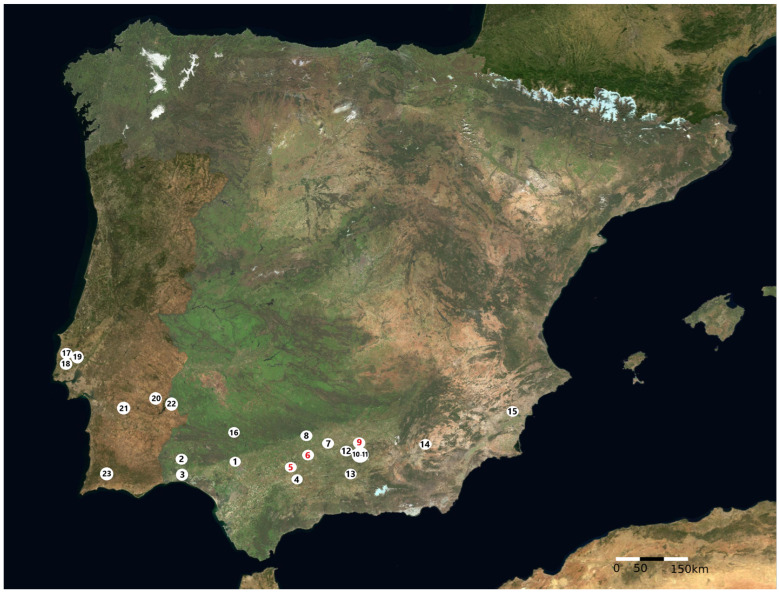
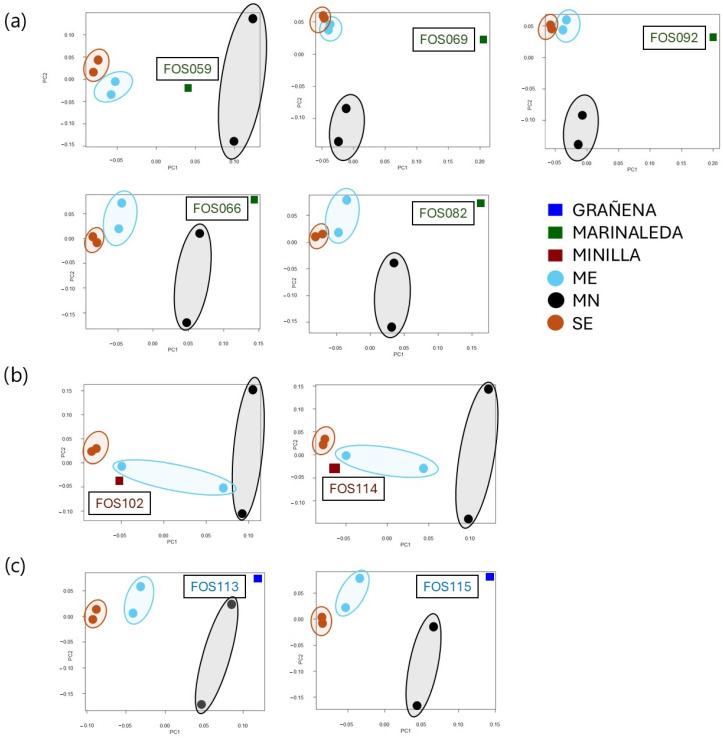
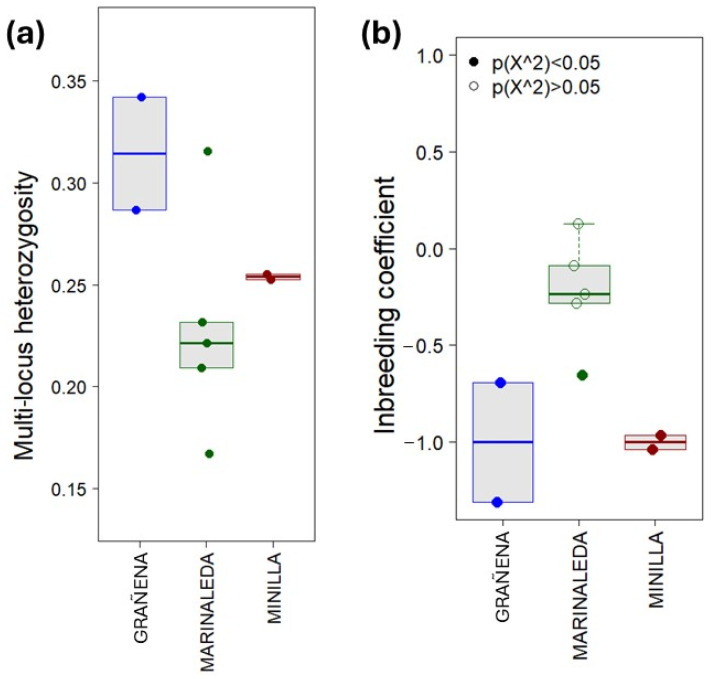
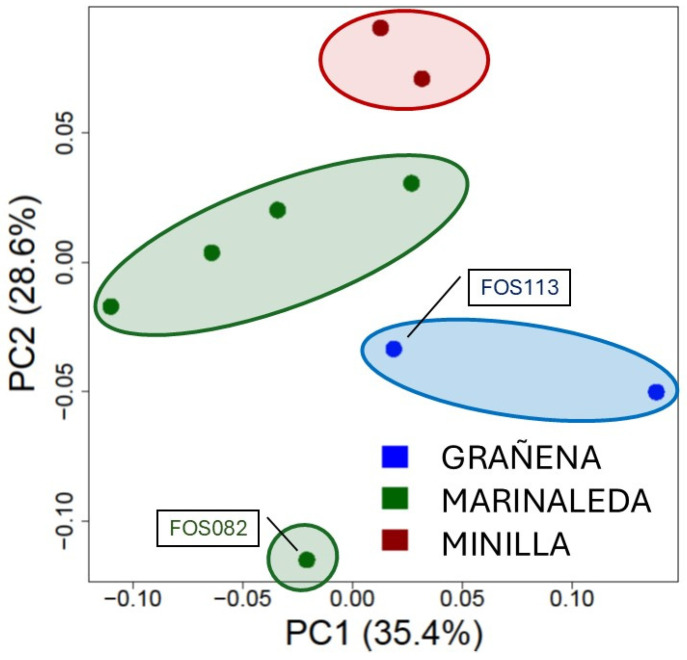
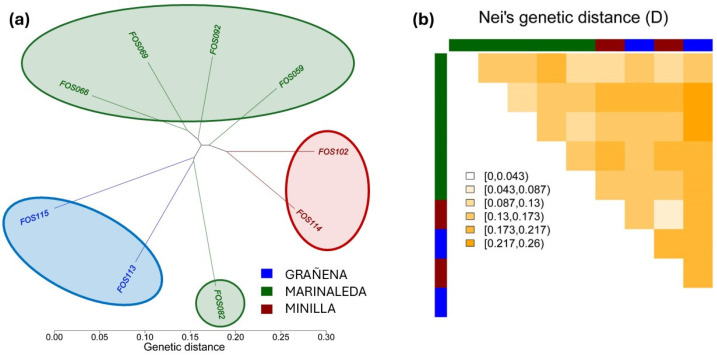
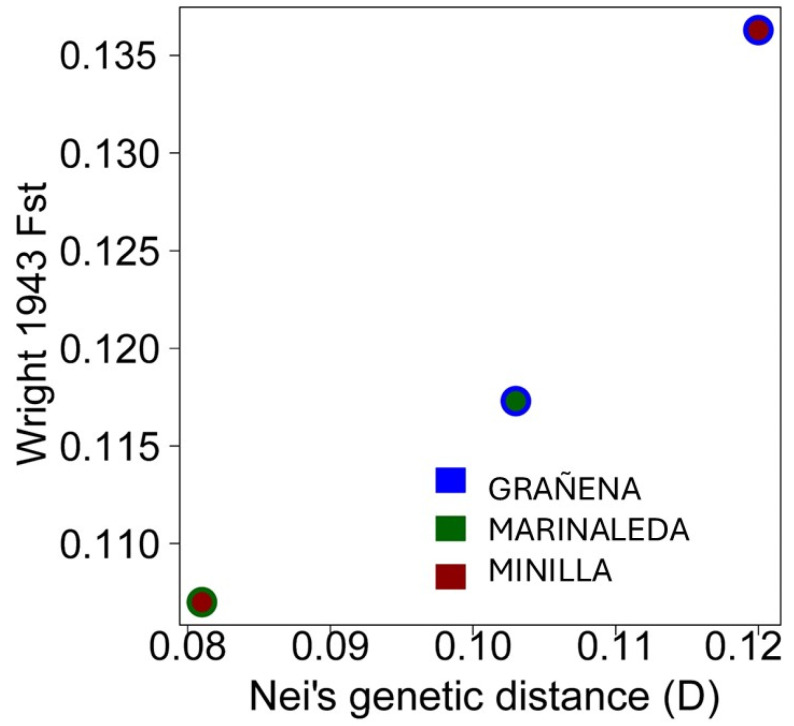
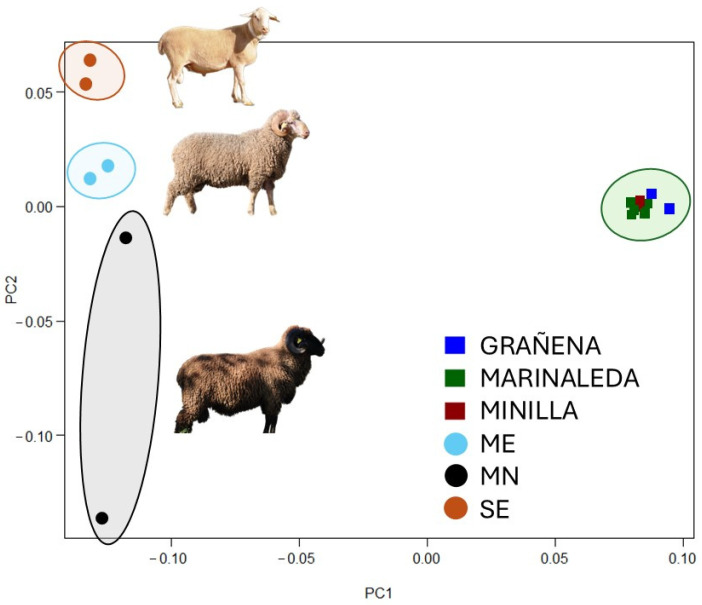
The Spanish Merino is the most significant sheep breed globally due to its economic and cultural importance in human history. It has also had a substantial influence on the development of other Merino and Merino-derived breeds. Historical sources indicate that crossbreeding to produce finer, higher-quality wool was already taking place in the south of the Iberian Peninsula during the Roman era. This evidence suggests that individuals with a racial pattern very similar to that of the modern Merino may have already existed on the peninsula. The presence of the skeletal remains of these animals at various human settlements dated to the late fourth and third millennia BC could provide insights into the genomics of these ancestral sheep. This study analyses ancient DNA extracted from nine skeletal remains from three archaeological sites in Southern Iberia, dated to the third millennium BC. The samples were sequenced and aligned with the ovine genome. The genetic distances observed among the samples indicate a closer relationship between several animals from the Marinaleda (Seville) and Grañena Baja (Jaén) sites. The study of the slaughter/death age profiles identified at La Minilla (La Rambla, Córdoba) suggests an approach centred on meat exploitation, while the data from Marinaleda (Seville) and Grañena Baja (Jaén) indicate the potential exploitation of secondary resources. A review of the composition of these small ruminant herds could provide insights into the type of secondary resource exploitation that may have been prioritised. Our aim is to investigate the presence of distinct production systems, differentiating between those aimed primarily at meat use and those focused on secondary products. This is the first approach to exploring the genetic evidence for sheep livestock related to its productive use during this period and in this geographical area.
西班牙美利奴羊是全球最重要的绵羊品种,因其在人类历史中的经济和文化重要性。它对其他美利奴羊及其衍生品种的发展也产生了重大影响。历史资料表明,在罗马时代,伊比利亚半岛南部就已经开始进行杂交育种以生产更细、质量更高的羊毛。这一证据表明,半岛上可能已经存在与现代美利奴羊种族模式非常相似的个体。在公元前四千年末和三千年的各个人类定居点发现的这些动物的骨骼遗骸,可能有助于了解这些祖先绵羊的基因组学。本研究分析了从伊比利亚半岛南部三个考古遗址的九具骨骼遗骸中提取的古代DNA,这些遗骸的年代可追溯到公元前三千年。对样本进行了测序,并与绵羊基因组进行了比对。样本之间观察到的遗传距离表明,来自马里纳莱达(塞维利亚)和格拉涅纳巴哈(哈恩)遗址的几只动物之间关系更为密切。在拉米尼利亚(科尔多瓦省拉兰布拉)确定的屠宰/死亡年龄分布研究表明,其方法以肉类开发为中心,而来自马里纳莱达(塞维利亚)和格拉涅纳巴哈(哈恩)的数据表明可能对二级资源进行了开发利用。对这些小型反刍动物群体组成的回顾,可以深入了解可能被优先考虑的二级资源开发利用类型。我们的目的是调查不同生产系统的存在情况,区分主要以肉类使用为目的的系统和专注于二级产品的系统。这是探索这一时期和该地理区域与绵羊生产用途相关的遗传证据的首次尝试。