Antelo-Pais Paula, Prieto-Díaz Miguel Ángel, Micó-Pérez Rafael M, Pallarés-Carratalá Vicente, Velilla-Zancada Sonsoles, Polo-García José, Barquilla-García Alfonso, Ginel-Mendoza Leovigildo, Segura-Fragoso Antonio, Vitelli-Storelli Facundo, Martín-Sánchez Vicente, Hermida-Ameijerias Álvaro, Cinza-Sanjurjo Sergio
Santa Comba Health Centre, Health Area of Santiago de Compostela, PC 15840 Santiago de Compostela, Spain.
Vallobín-La Florida Health Centre, PC 33012 Oviedo, Spain.
Biomolecules. 2024 Nov 29;14(12):1530. doi: 10.3390/biom14121530.
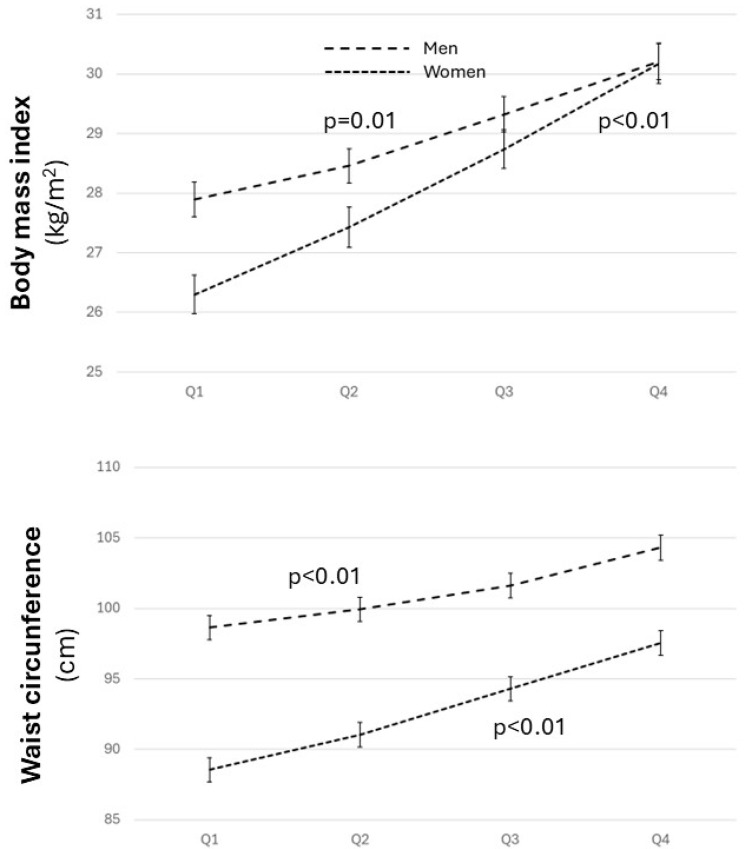
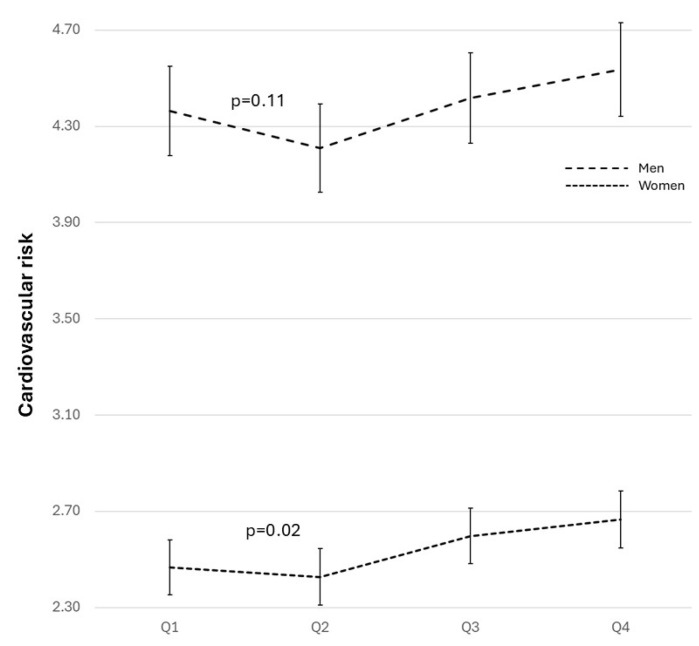
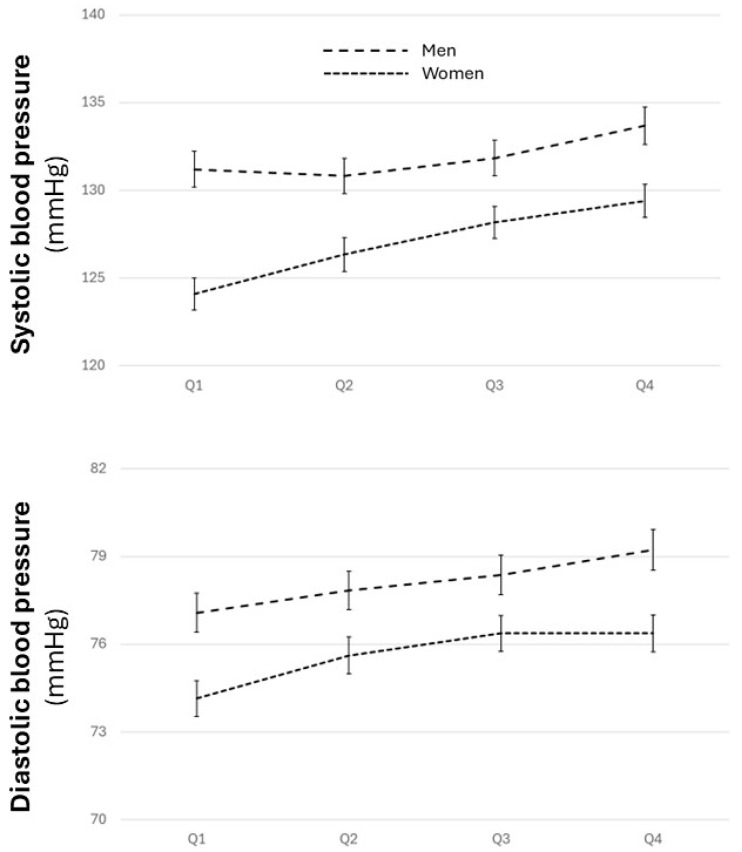
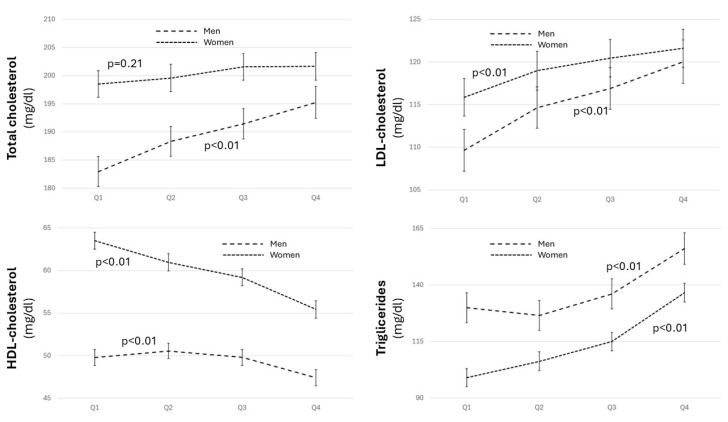
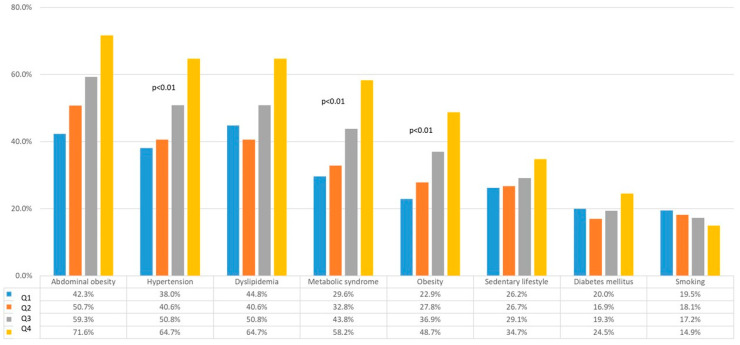
(1) Background: Urate levels lower than the classical cut-off point for defining hyperuricemia can increase cardiovascular risks. The aim of this study is to determine if there is a relationship between different urate levels and classic cardiovascular risk factors (CVRFs). (2) Methods: A cross-sectional study of the inclusion visits of the patients recruited to the IBERICAN study was conducted. The patients were classified into quartiles according to their distribution of urate levels and separated by sex; the three lower points corresponded to normal levels of urate, and the highest quartile was determined according to the classical definition of HU. Multivariate analysis models, adjusted for epidemiological variables, were used to analyze the association of urate levels with CVRFs. (3) Results: The presence of CVRFs was higher across the quartiles of urate, with a continuous increase along the quartiles in both sexes in accordance with body mass index ( < 0.01), waist circumference ( < 0.01), blood pressure ( < 0.01), and LDL cholesterol ( < 0.01). The CV risk estimated by SCORE was associated with an increase along the quartiles in women ( = 0.02). (4) Conclusions: A progressive increase in the frequency of CVRFs, as well as in their levels, was observed across the quartiles of uricemia, which reflects an increase in the CVRs associated with uricemia.
(1) 背景:尿酸水平低于定义高尿酸血症的经典切点会增加心血管风险。本研究的目的是确定不同尿酸水平与经典心血管危险因素(CVRFs)之间是否存在关联。(2) 方法:对纳入IBERICAN研究的患者的入组访视进行横断面研究。根据患者尿酸水平分布将其分为四分位数,并按性别分开;三个较低点对应尿酸正常水平,最高四分位数根据高尿酸血症的经典定义确定。使用针对流行病学变量进行调整的多变量分析模型来分析尿酸水平与CVRFs的关联。(3) 结果:在尿酸四分位数中,CVRFs的存在率更高,男女两性中随着四分位数的升高,根据体重指数(<0.01)、腰围(<0.01)、血压(<0.01)和低密度脂蛋白胆固醇(<0.01)呈持续增加。SCORE估计的心血管风险与女性四分位数的升高相关(=0.02)。(4) 结论:在血尿酸四分位数中观察到CVRFs的频率及其水平逐渐增加,这反映了与血尿酸相关的心血管风险增加。