Han Chuting, Zhu Mengying, Liu Yiting, Yang Yan, Cheng Jun, Li Pengyun
Key Laboratory of Medical Electrophysiology of Ministry of Education and Medical Electrophysiological Key Lab of Sichuan Province, Institute of Cardiovascular Research, Southwest Medical University, Luzhou 646000, China.
Biomolecules. 2024 Dec 13;14(12):1596. doi: 10.3390/biom14121596.
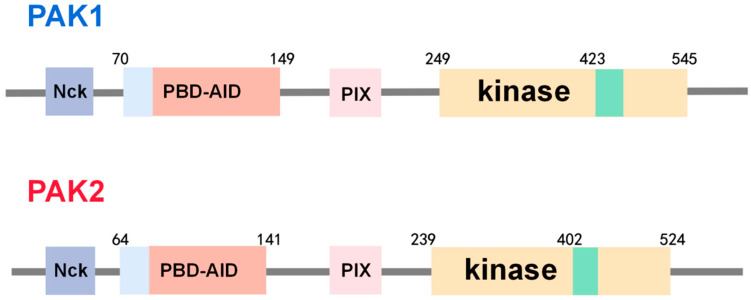
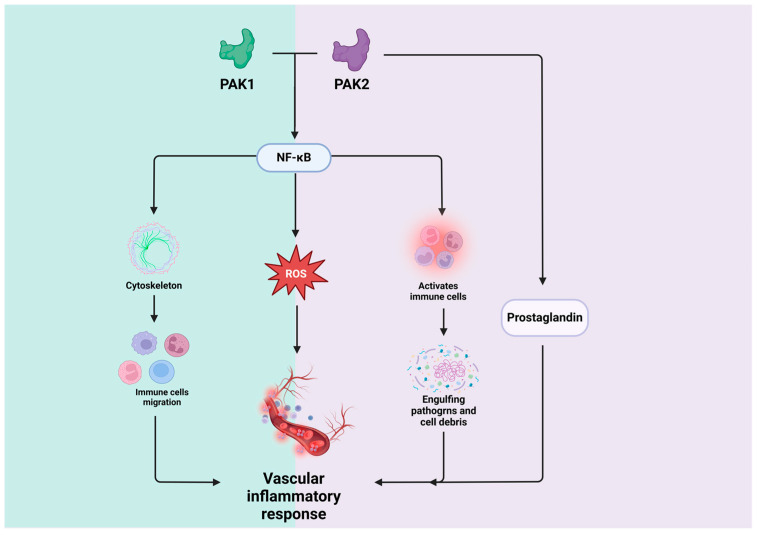
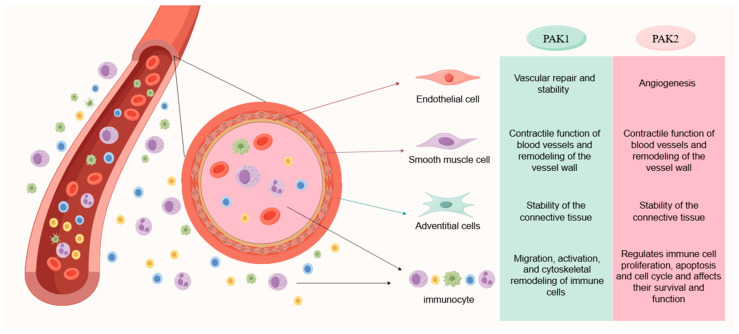
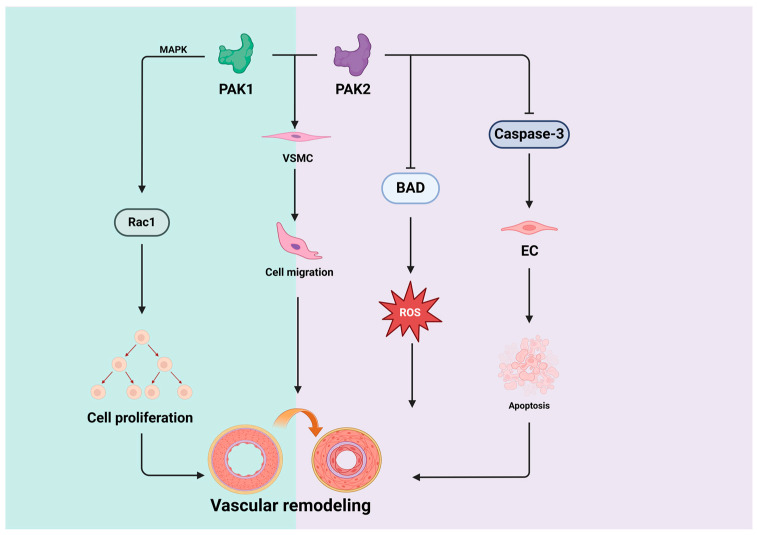
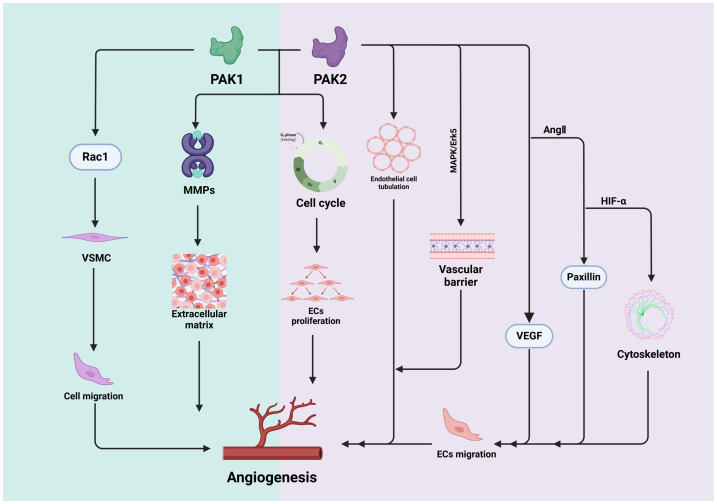
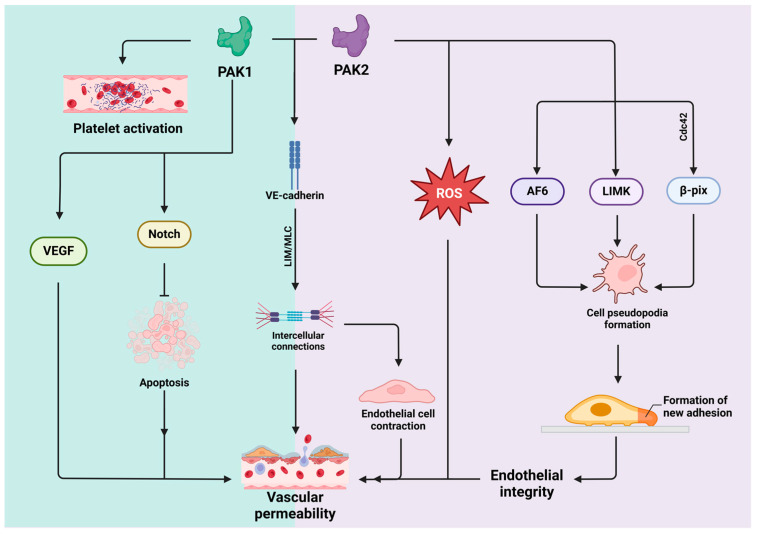
The PAK (p21-activated kinases) family is a class of intracellular signal transduction protein kinases that regulate various cellular functions, mainly through their interactions with small GTP enzymes. PAK1 and PAK2 in the PAK kinase family are key signal transduction molecules that play important roles in various biological processes, including morphological changes, migration, proliferation, and apoptosis, and are involved in the progression of many diseases. Abnormal expression or dysregulation of PAK1 and PAK2 may be associated with several diseases, including cancer, neurological diseases, etc. The current research mainly focuses on studying the role of PAK and PAK inhibitors in the regulation of cancer progression, but relatively few reports are available that explore their potential role in cardiovascular diseases. Vascular injury and repair are complex processes involved in many cardiovascular conditions, including atherosclerosis, restenosis, and hypertension. Emerging research suggests that PAK1 and PAK2 have pivotal roles in vascular endothelial cell functions, including migration, proliferation, and angiogenesis. These kinases also modulate vascular smooth muscle relaxation, vascular permeability, and structural alterations, which are critical in the development of atherosclerosis and vascular inflammation. By targeting these activities, PAK proteins are essential for both normal vascular physiology and the pathogenesis of vascular diseases, highlighting their potential as therapeutic targets for vascular health. This review focuses on recent studies that offer experimental insights into the mechanisms by which PAK1 and PAK2 regulate the biological processes of vascular injury and repair and the therapeutic potential of the current existing PAK inhibitors in vascular-related diseases. The limitations of treatment with some PAK inhibitors and the ways that future development can overcome these challenges are also discussed.
PAK(p21激活激酶)家族是一类细胞内信号转导蛋白激酶,主要通过与小GTP酶相互作用来调节各种细胞功能。PAK激酶家族中的PAK1和PAK2是关键的信号转导分子,在各种生物学过程中发挥重要作用,包括形态变化、迁移、增殖和凋亡,并参与多种疾病的进展。PAK1和PAK2的异常表达或失调可能与包括癌症、神经疾病等多种疾病相关。目前的研究主要集中在PAK及PAK抑制剂在癌症进展调控中的作用,但探索它们在心血管疾病中潜在作用的报道相对较少。血管损伤和修复是许多心血管疾病(包括动脉粥样硬化、再狭窄和高血压)所涉及的复杂过程。新出现的研究表明,PAK1和PAK2在血管内皮细胞功能(包括迁移、增殖和血管生成)中起关键作用。这些激酶还调节血管平滑肌舒张、血管通透性和结构改变,这些在动脉粥样硬化和血管炎症的发展中至关重要。通过靶向这些活性,PAK蛋白对于正常血管生理和血管疾病的发病机制都至关重要,凸显了它们作为血管健康治疗靶点的潜力。本综述重点关注近期研究,这些研究为PAK1和PAK2调节血管损伤和修复生物学过程的机制以及现有PAK抑制剂在血管相关疾病中的治疗潜力提供了实验见解。还讨论了一些PAK抑制剂治疗的局限性以及未来发展克服这些挑战的方法。