Rallis Efstathios, Grech Vasiliki-Sofia, Lotsaris Kleomenis, Tertipi Niki, Sfyri Eleni, Kefala Vassiliki
Department of Biomedical Sciences, School of Health and Care Sciences, University of West Attica, GR-12243 Athens, Greece.
Psychiatrist in Department of Psychiatry, Athens General Hospital 'Evaggelismos', GR-10676 Athens, Greece.
Genes (Basel). 2024 Nov 25;15(12):1507. doi: 10.3390/genes15121507.
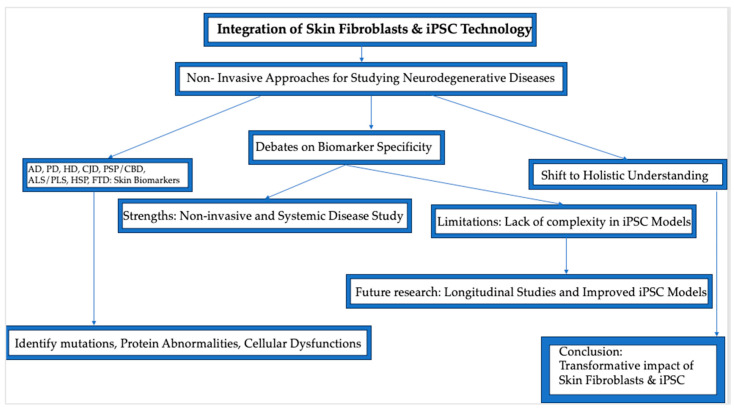
As the global population ages, the rising prevalence of neurodegenerative diseases, characterized by abnormal protein aggregates, presents significant challenges for early diagnosis and disease monitoring. Identifying accessible tissue biomarkers is crucial for advancing our ability to detect and track the progression of these diseases. Among the most promising biomarkers is the skin, which shares a common embryological origin with the brain and central nervous system (CNS). This biological connection positions the skin as a potential reflection of CNS pathology. Over the past decades, gene expression studies have demonstrated that key genes involved in neurodegenerative diseases are also expressed in skin tissues. Genes such as , , , , , , , , and are prominent in this regard. Beyond gene expression, proteins related to neurodegenerative diseases-such as α-synuclein, TAU, PARKIN, and prion protein (PrP)-have been isolated from the skin of affected individuals, underscoring the skin's capacity to mirror neural degeneration. This non-invasive window into neurodegenerative processes is further enhanced by advances in stem cell technology, which have allowed for the generation of human-induced pluripotent stem cells (iPSCs) from patient-derived fibroblasts. These iPSCs offer a valuable model for studying disease mechanisms and developing therapeutic approaches. This review conducts a comprehensive analysis of the literature from databases such as PubMed, Google Scholar, and ResearchGate, emphasizing the unique potential of the skin as a non-invasive biomarker for neurodegenerative diseases. It explores how the skin serves as a bridge between gene expression and disease pathology in both the skin and the CNS. By leveraging this biological connection, the skin emerges as a promising model for enhancing our understanding of neurodegenerative disorders and developing innovative strategies for early detection and treatment. However, significant limitations remain, requiring further validation to establish the specificity and sensitivity of these biomarkers.
随着全球人口老龄化,以异常蛋白质聚集体为特征的神经退行性疾病患病率不断上升,给早期诊断和疾病监测带来了重大挑战。识别可获取的组织生物标志物对于提高我们检测和跟踪这些疾病进展的能力至关重要。皮肤是最有前景的生物标志物之一,它与大脑和中枢神经系统(CNS)有着共同的胚胎学起源。这种生物学联系使皮肤成为中枢神经系统病理学的潜在反映。在过去几十年中,基因表达研究表明,参与神经退行性疾病的关键基因也在皮肤组织中表达。在这方面,诸如 、 、 、 、 、 、 、 和 等基因尤为突出。除了基因表达外,与神经退行性疾病相关的蛋白质,如α-突触核蛋白、TAU、帕金森蛋白和朊病毒蛋白(PrP),已从受影响个体的皮肤中分离出来,这突出了皮肤反映神经退行性变的能力。干细胞技术的进步进一步增强了这个洞察神经退行性过程的非侵入性窗口,该技术使得从患者来源的成纤维细胞中生成人类诱导多能干细胞(iPSC)成为可能。这些iPSC为研究疾病机制和开发治疗方法提供了有价值的模型。本综述对来自PubMed、谷歌学术和ResearchGate等数据库的文献进行了全面分析,强调了皮肤作为神经退行性疾病非侵入性生物标志物的独特潜力。它探讨了皮肤如何在皮肤和中枢神经系统中作为基因表达与疾病病理学之间的桥梁。通过利用这种生物学联系,皮肤成为一个有前景的模型,有助于增强我们对神经退行性疾病的理解,并开发早期检测和治疗的创新策略。然而,仍然存在重大局限性,需要进一步验证以确定这些生物标志物的特异性和敏感性。