Shin Yong-Il, Kim Min-Seok, Yang Yeong-Ae, Jeon Gye-Rok, Kim Jae-Ho, Choi Yeon-Jin, Choi Woo-Cheol, Kim Jae-Hyung
Department of Rehabilitation Medicine, School of Medicine, Pusan National University, Yangsan 50612, Republic of Korea.
Department of Rehabilitation Medicine, Yangsan Hospital, Pusan National University, Yangsan 50612, Republic of Korea.
Biomedicines. 2024 Dec 23;12(12):2922. doi: 10.3390/biomedicines12122922.
Low-energy far-infrared rays (FIRs) are widely used in the treatment of wounds, lymphedema, and various vascular diseases, and various types of products that emit infrared rays are being used at home for patients with blood flow-related diseases without experimental evidence.
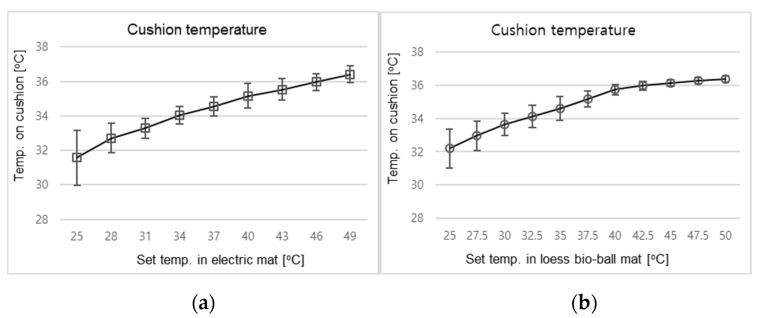
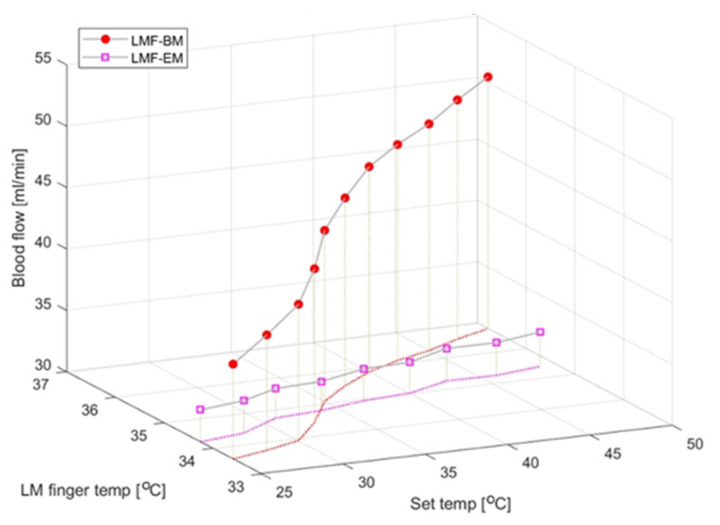
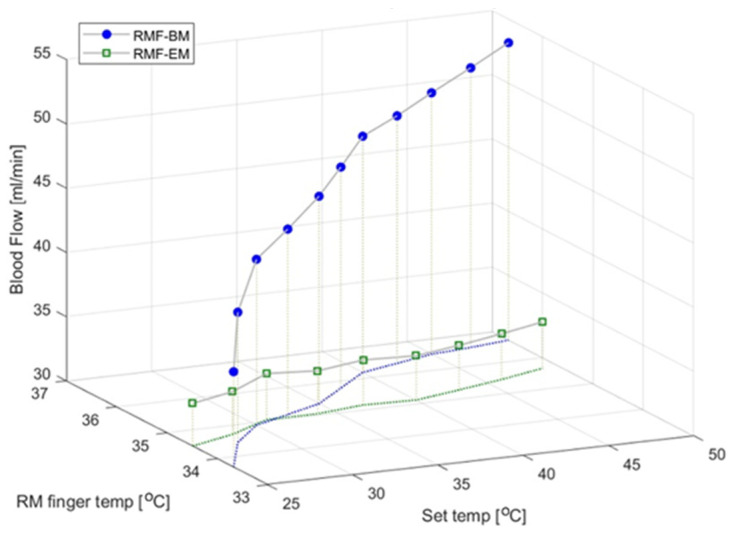
Blood flow and epidermal temperature were measured while applying conductive heat and FIRs via an electric mat (non-intervention) or a loess bio-ball mat (intervention).
In the control group ( = 30), there was a minimal change in blood flow and epidermal temperature in the right and left middle fingers (LMF, RMF) as the mat temperature gradually increased. In the experimental group ( = 30), when the mat temperature increased from 25 °C to 50 °C, the blood flow increased by 39.80% in the LMF and by 41.83% in the RMF. In addition, the epidermal temperature increased by 8.78% in the LMF and by 8.44% in the RMF.
The FIRs emitted from loess bio-balls can be applied to alleviate symptoms not only in patients with blood flow problems in medical settings but also in people who complain of discomfort due to blood flow disorders or cold hands and feet during their daily life and sleep.
低能量远红外线(FIRs)被广泛用于伤口、淋巴水肿及各种血管疾病的治疗,并且在没有实验证据的情况下,各种发射红外线的产品正被在家中用于患有血流相关疾病的患者。
通过电垫(非干预)或黄土生物球垫(干预)施加传导热和远红外线时,测量血流和表皮温度。
在对照组(n = 30)中,随着垫子温度逐渐升高,左右中指(LMF、RMF)的血流和表皮温度变化极小。在实验组(n = 30)中,当垫子温度从25°C升高到50°C时,左手中指血流增加39.80%,右手中指血流增加41.83%。此外,左手中指表皮温度升高8.78%,右手中指表皮温度升高8.44%。
黄土生物球发射的远红外线不仅可用于缓解医疗机构中血流问题患者的症状,还可用于缓解日常生活和睡眠中因血流紊乱或手脚冰凉而感到不适的人群的症状。