Zamłyński Mateusz, Grokhovska Marta, Surányi Andrea, Olejek Anita
Department of Gynecology, Obstetrics and Oncological Gynecology, Faculty of Medical Sciences in Zabrze, Medical University of Silesia, Stefana Batorego 15, 41-902 Bytom, Poland.
Department of Obstetrics, Gynecology and Perinatology, Lviv National Medical University of Danylo Halytskyy, Pekarska 69, 79010 Lviv, Ukraine.
Biomedicines. 2024 Dec 23;12(12):2929. doi: 10.3390/biomedicines12122929.
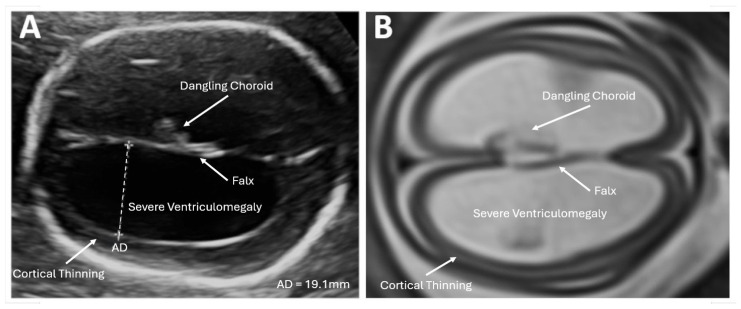
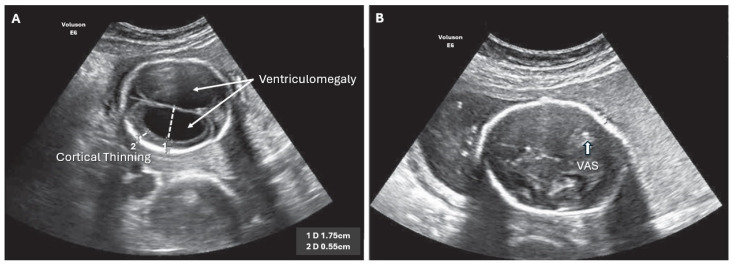
The widening of the vestibular dimension of lateral ventricles > 10 mm should be considered a symptom rather than a definitive diagnosis. In fact, fetal ventriculomegaly (VM) is a defect with 'multifaceted' clinical consequences in the child's further neurodevelopment. Isolated fetal ventriculomegaly can cause neurological defects ranging from mild neurodevelopmental delay to severe complications in the form of ongoing palliative care to the death of patients at various developmental periods. The spectrum of compilations often depends on the severity of the ventriculomegaly. In the prenatal period, the combined diagnostic tools include the following: ultrasound/MRI and genetic, infectious tests that form the basis of reliable counseling. We hypothesize that advances in the diagnostic process allow the identification of 'probably' isolated forms of severe VM (ISVM). The review authors electronically searched MEDLINE, EMBASE, and the Cochrane Library databases, describing the evidence-based validity and option of prenatal decompression for ISVM. The purpose of this review is to present the evolution of diagnostic techniques and views indicating the possibility and limitations of implementing prenatal decompression in severe ISVM. In conclusion, after reviewing the available data, we want to introduce the idea that perinatal centers are close to or have reached the necessary capability, expertise, and competence to perform ISVM decompression procedures. Endoscopic ventriculostomy of the third ventricle (ETV) appears to be promising, as it seems to be associated with minimal perinatal complications and better neurological outcomes for the newborn. However, long-term follow-up results for the neurodevelopment of patients who underwent ETV have not been reported. Looking ahead, randomized trials with the long-term neurodevelopmental follow-up of children who underwent prenatal decompression due to ISVM are needed.
侧脑室前庭维度增宽>10mm应被视为一种症状而非确定性诊断。事实上,胎儿脑室扩大(VM)是一种在儿童后续神经发育中具有“多方面”临床后果的缺陷。孤立性胎儿脑室扩大可导致从轻度神经发育迟缓到严重并发症等一系列神经学缺陷,这些并发症包括在不同发育阶段持续进行姑息治疗直至患者死亡。并发症的范围通常取决于脑室扩大的严重程度。在产前阶段,联合诊断工具包括以下几种:超声/MRI以及基因、感染性检测,这些构成了可靠咨询的基础。我们推测,诊断过程的进步能够识别出“可能”的严重孤立性脑室扩大(ISVM)形式。综述作者通过电子检索MEDLINE、EMBASE和Cochrane图书馆数据库,描述了针对ISVM进行产前减压的循证有效性和选择。本综述的目的是呈现诊断技术的演变以及观点,表明在严重ISVM中实施产前减压的可能性和局限性。总之,在审查现有数据后,我们想提出这样一个观点,即围产期中心已接近或已具备进行ISVM减压手术所需的能力、专业知识和技能。第三脑室内镜下造瘘术(ETV)似乎很有前景,因为它似乎与最小的围产期并发症以及新生儿更好的神经学预后相关。然而,尚未报道接受ETV治疗患者神经发育的长期随访结果。展望未来,需要对因ISVM接受产前减压的儿童进行长期神经发育随访的随机试验。