Kato Hideyuki, Mathis Bryan J, Shimoda Tomonari, Nakajima Tomomi, Tokunaga Chiho, Hiramatsu Yuji
Department of Cardiovascular Surgery, University of Tsukuba Institute of Medicine, Tsukuba 305-8575, Japan.
Medicina (Kaunas). 2024 Dec 16;60(12):2064. doi: 10.3390/medicina60122064.
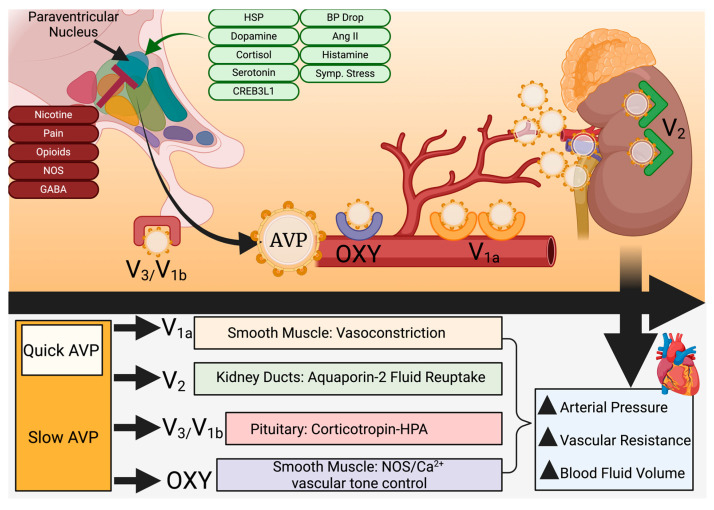
: Vasopressin increases blood pressure through aquaporin-2-mediated water retention and is useful for managing hemodynamics after surgery. However, even after decades of study, clear clinical guidelines on doses and ideal use cases after cardiovascular surgery remain unclear. Here, the existing literature is synthesized on vasopressin use for cardiac surgeries and coupled with real-world clinical experience to outline a clearer clinical path for vasopressin use. : Literature from 1966 to the present was searched, and information on surgical outcomes for cardiovascular surgery was extracted. Clinicians from the University of Tsukuba with extensive vasopressin experience in pediatric cardiovascular patients were consulted for general use guidelines. : Vasopressin response after cardiovascular surgery is multifaceted, and low-power trials, plus conflicting study reports, generally render it as a secondary choice behind norepinephrine. Clinical experience indicates that low doses of 0.2-0.3 mU/kg/min with constant blood pressure and oxygen monitoring for response are required. Although sole use is not recommended, vasopressin may aid in controlling hemodynamics when given with other volemic or osmolal drugs. : Vasopressin may work in a select population of first-line non-responders, but relevant response factors remain unanalyzed and clear guidelines for use remain unestablished. Future, large-scale studies are needed to delineate temporal and demographic characteristics that affect response to vasopressin for the purpose of managing post-surgical capillary leakage and hemodynamics.
血管加压素通过水通道蛋白-2介导的水潴留作用升高血压,对术后血流动力学管理有用。然而,即使经过数十年的研究,关于心血管手术后血管加压素剂量及理想应用病例的明确临床指南仍不清晰。在此,综合现有关于心脏手术中血管加压素使用的文献,并结合实际临床经验,为血管加压素的使用勾勒出更清晰的临床路径。:检索了1966年至今的文献,并提取了心血管手术的手术结果信息。咨询了筑波大学在儿科心血管患者中具有丰富血管加压素使用经验的临床医生,以获取一般使用指南。:心血管手术后血管加压素的反应是多方面的,低效能试验以及相互矛盾的研究报告一般将其列为去甲肾上腺素之后的二线选择。临床经验表明,需要以0.2 - 0.3 mU/kg/min的低剂量持续监测血压和血氧以观察反应。虽然不建议单独使用,但血管加压素与其他扩容或渗透压药物联用时可能有助于控制血流动力学。:血管加压素可能对部分一线无反应者有效,但相关反应因素仍未分析,明确的使用指南也未确立。未来需要大规模研究来描绘影响血管加压素反应的时间和人口统计学特征,以处理术后毛细血管渗漏和血流动力学问题。