Lu Ying, Zhang Yang, Jin Zhaoyang, Cui Shuaishuai, Wu Li, He Yujian
School of Chemical Sciences, University of Chinese Academy of Sciences, Beijing 100049, China.
School of Future Technology, University of Chinese Academy of Sciences, Beijing 100049, China.
Int J Mol Sci. 2024 Dec 15;25(24):13439. doi: 10.3390/ijms252413439.
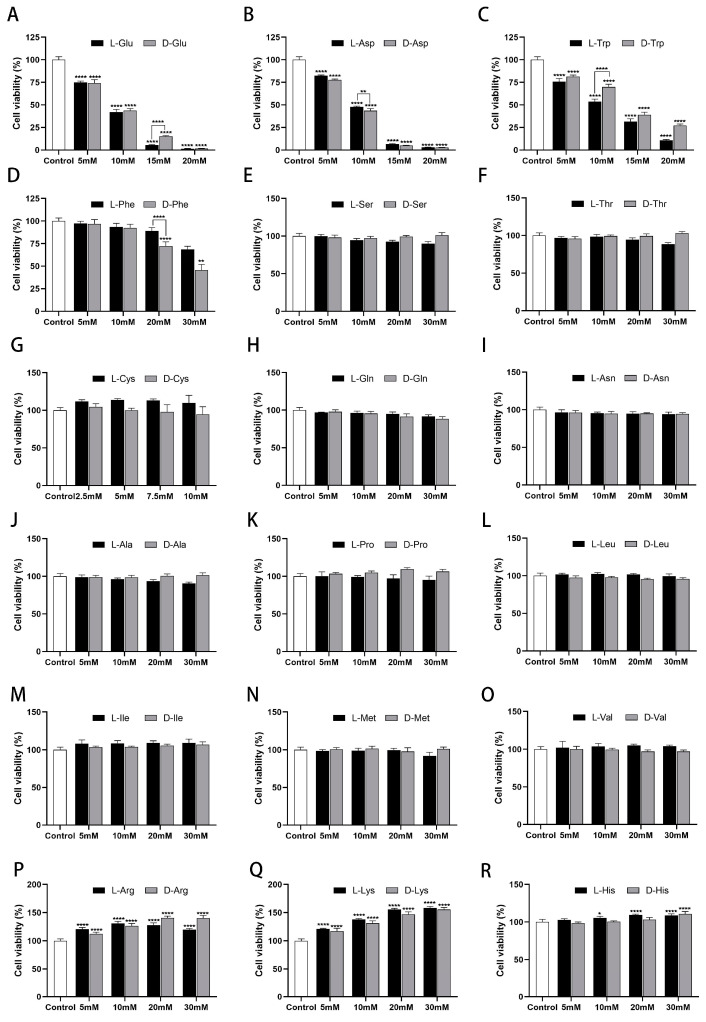
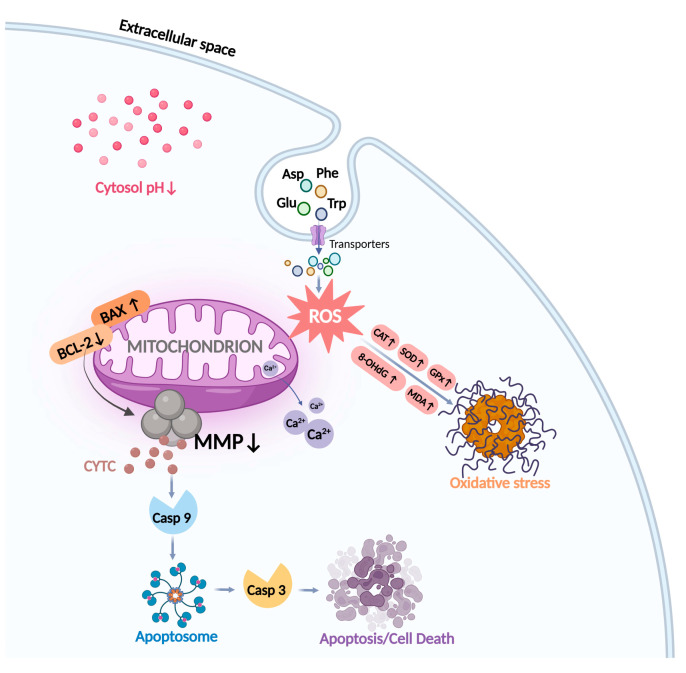
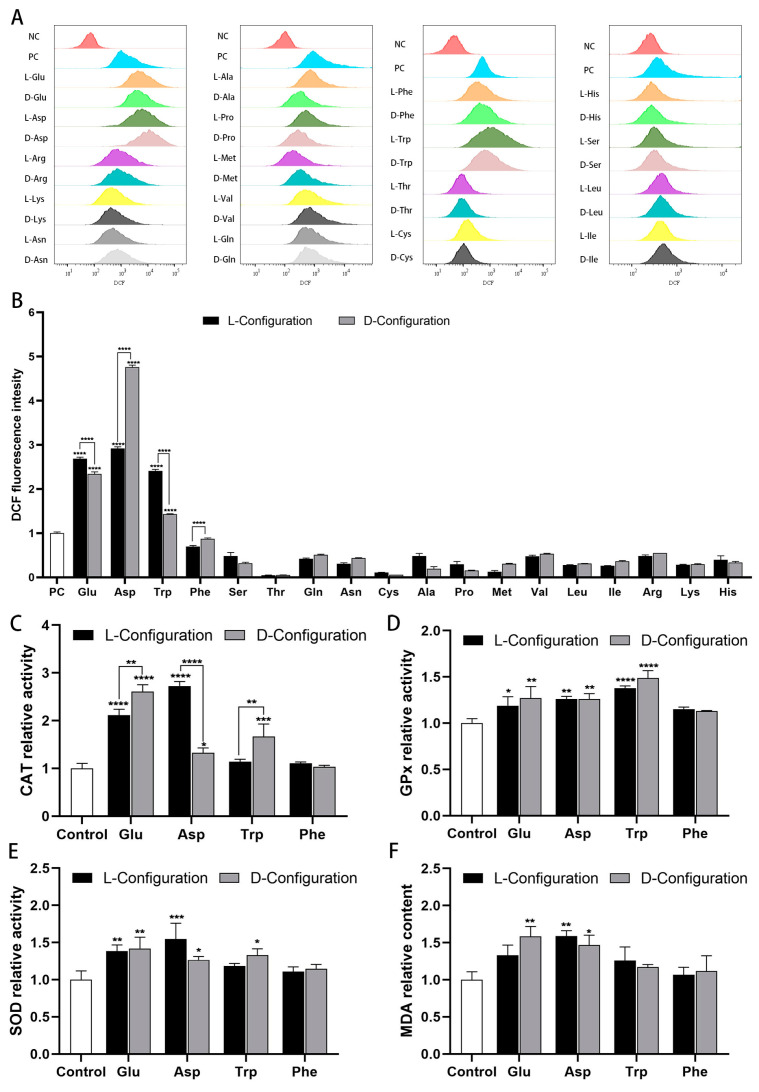
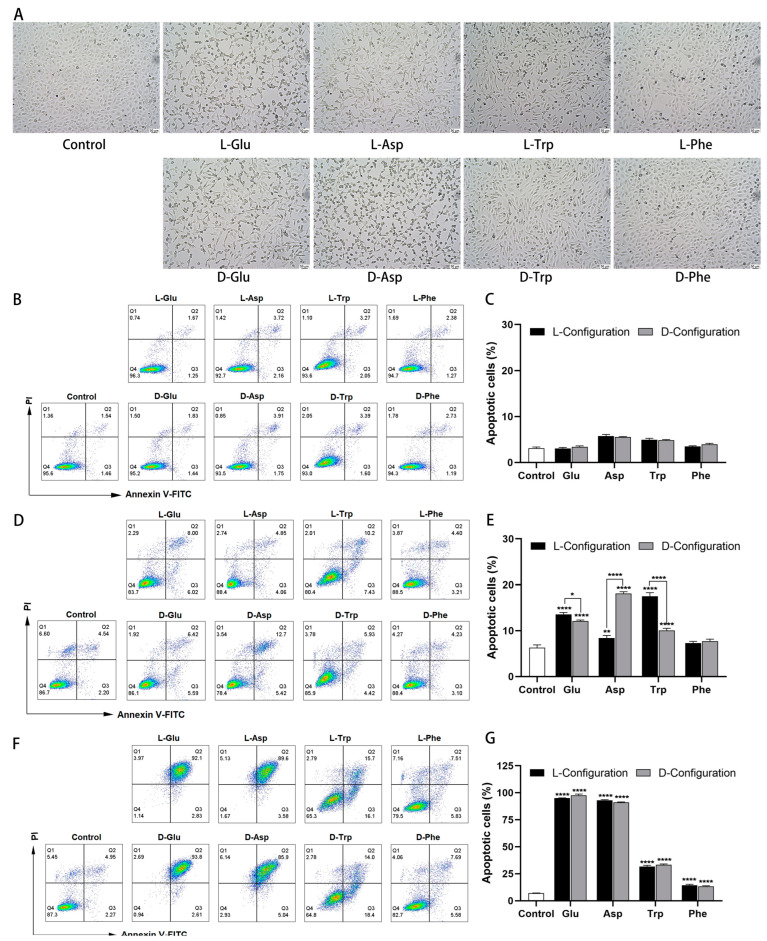
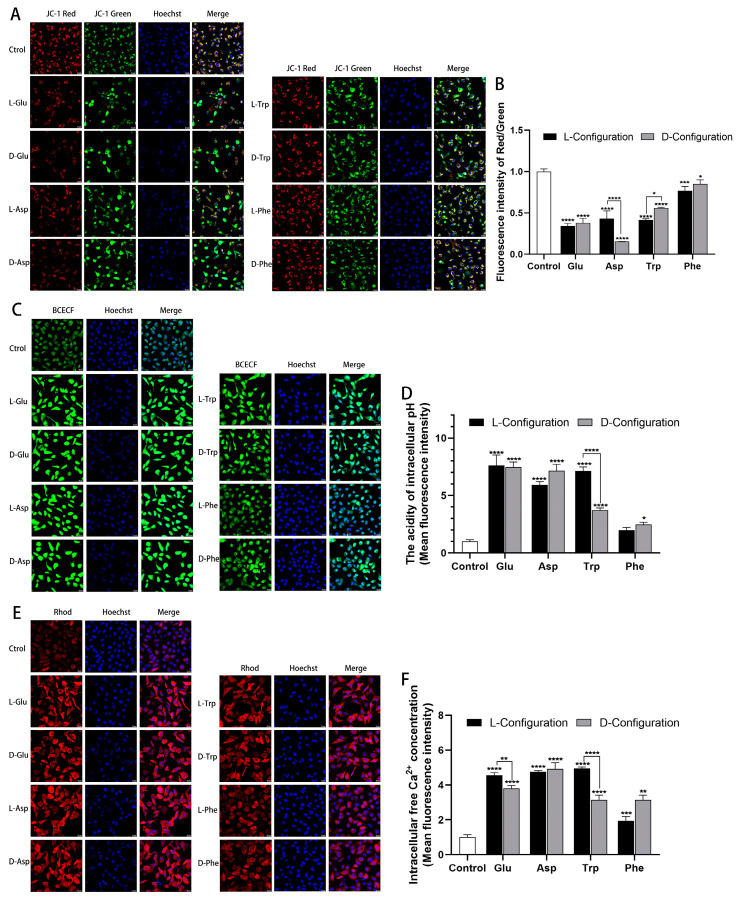
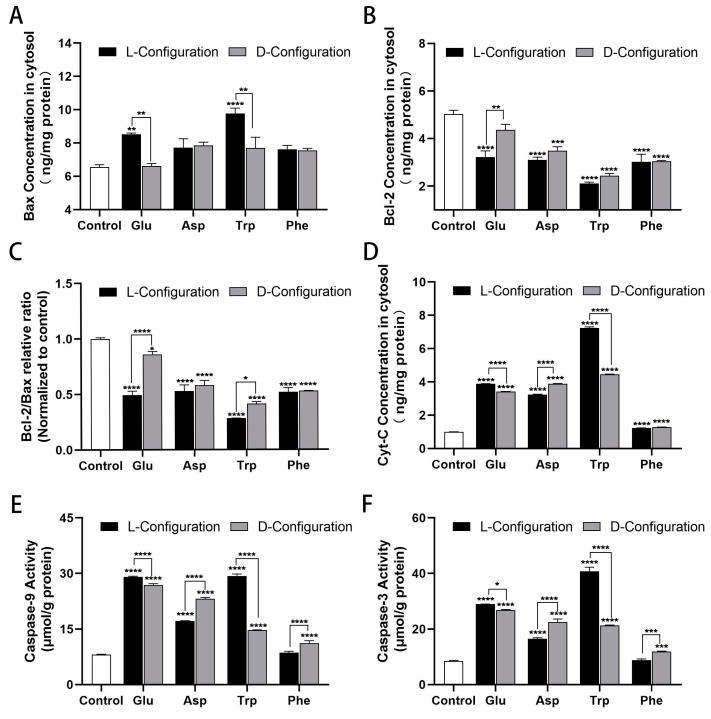
Amino acids are the basic structural units of life, and their intake levels affect disease and health. In the case of renal disease, alterations in amino acid metabolism can be used not only as a clinical indicator of renal disease but also as a therapeutic strategy. However, the biological roles and molecular mechanisms of natural chiral amino acids in human proximal tubular epithelial cells (HK-2) remain unclear. In this study, cell viability assays revealed that chiral acidic amino acids (Glu and Asp) and aromatic amino acids (Trp and Phe) inhibited cell growth. The molecular mechanisms indicated that cell growth was closely related to ROS levels. Specifically, chiral Glu, Asp, Trp, and Phe induced oxidative stress and mitochondria-dependent apoptosis in HK-2 cells. This was manifested by elevated levels of intracellular ROS, 8-OHdG, and MDA, increased activities of antioxidant enzymes CAT, SOD, and GPx, decreased mitochondrial membrane potential, increased cytoplasmic Ca concentration, and cell acidification. The expression levels of apoptosis-related molecules Caspase-9, Caspase-3, Cyt-C, and Bax were increased, and the expression level of anti-apoptotic molecule Bcl-2 was decreased. Moreover, L-Glu, D-Asp, L-Trp, and D-Phe exhibited a more pronounced inhibition of cell growth and elicited more substantial alterations in gene expression compared to the other configurations.
氨基酸是生命的基本结构单元,其摄入水平会影响疾病与健康。就肾脏疾病而言,氨基酸代谢的改变不仅可作为肾脏疾病的临床指标,还可作为一种治疗策略。然而,天然手性氨基酸在人近端肾小管上皮细胞(HK - 2)中的生物学作用和分子机制仍不清楚。在本研究中,细胞活力测定表明,手性酸性氨基酸(Glu和Asp)以及芳香族氨基酸(Trp和Phe)抑制细胞生长。分子机制表明,细胞生长与活性氧水平密切相关。具体而言,手性Glu、Asp、Trp和Phe在HK - 2细胞中诱导氧化应激和线粒体依赖性凋亡。这表现为细胞内活性氧、8 - OHdG和丙二醛水平升高,抗氧化酶CAT、SOD和GPx的活性增加,线粒体膜电位降低,细胞质钙浓度增加以及细胞酸化。凋亡相关分子Caspase - 9、Caspase - 3、细胞色素C和Bax的表达水平升高,抗凋亡分子Bcl - 2的表达水平降低。此外,与其他构型相比,L - Glu、D - Asp、L - Trp和D - Phe对细胞生长的抑制作用更明显,并且在基因表达上引起更显著的变化。