Barbosa Maria Letícia de Castro, Pinheiro Pedro de Sena Murteira, Alves da Conceição Raissa, Pires José Ricardo, Franco Lucas Silva, Sant'Anna Carlos Mauricio R, Barreiro Eliezer J, Lima Lídia Moreira
Faculty of Pharmacy, Department of Pharmaceutical Sciences, Federal University of Juiz de Fora, Juiz de Fora 36036-900, MG, Brazil.
Laboratory of Evaluation and Synthesis of Bioactive Substances (LASSBio), Institute of Biomedical Sciences, Federal University of Rio de Janeiro, Rio de Janeiro 21941-902, RJ, Brazil.
Molecules. 2024 Dec 20;29(24):6021. doi: 10.3390/molecules29246021.
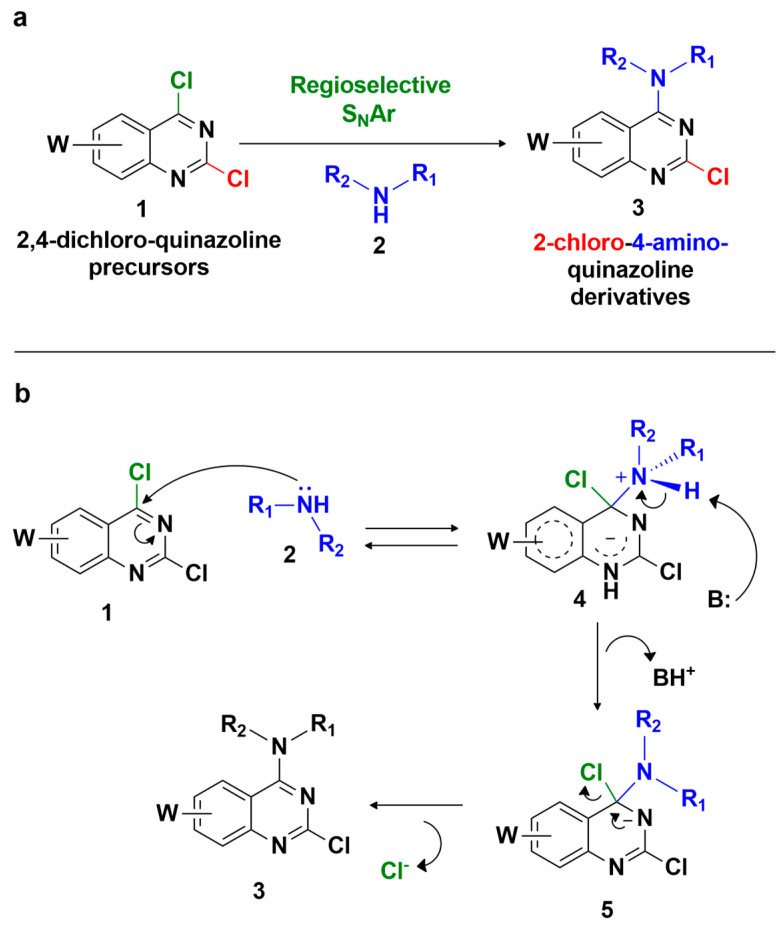
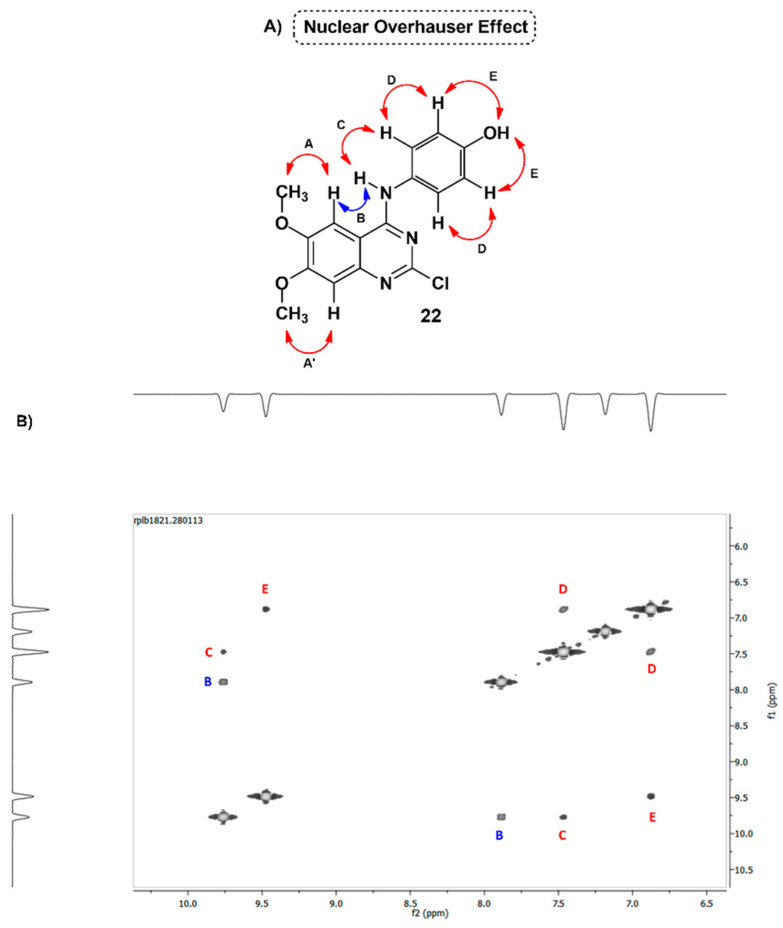
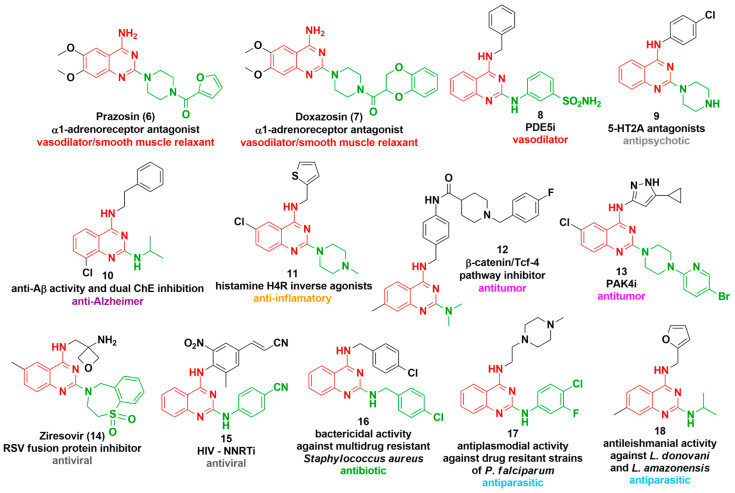
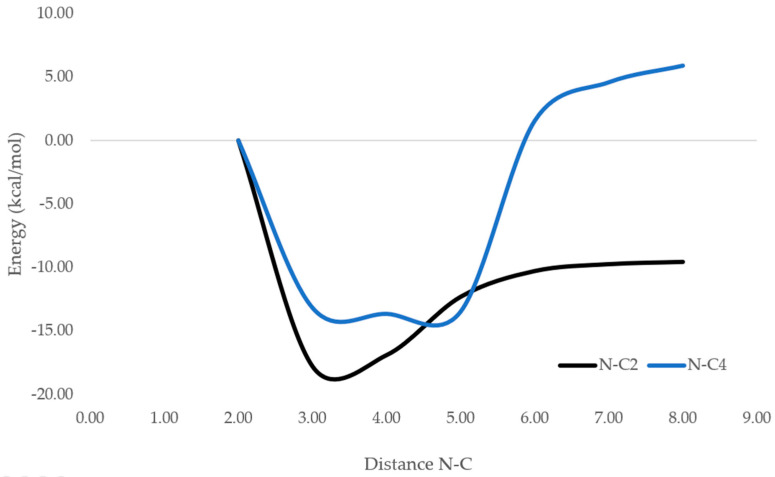
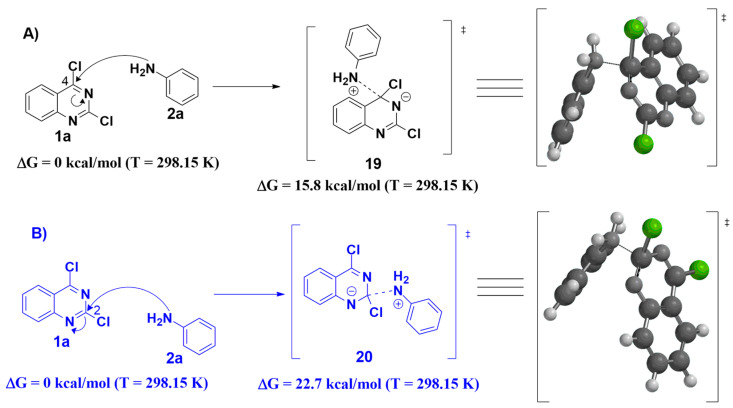
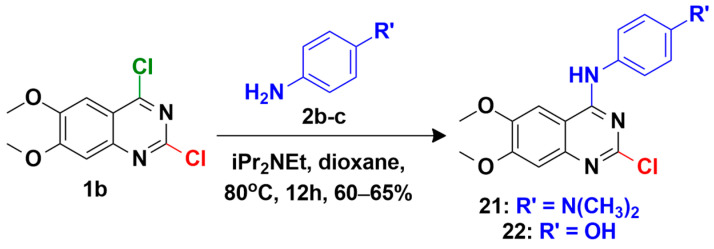
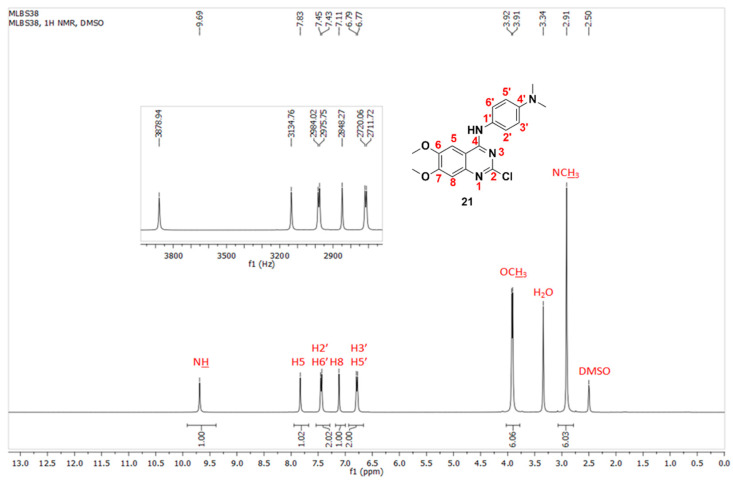
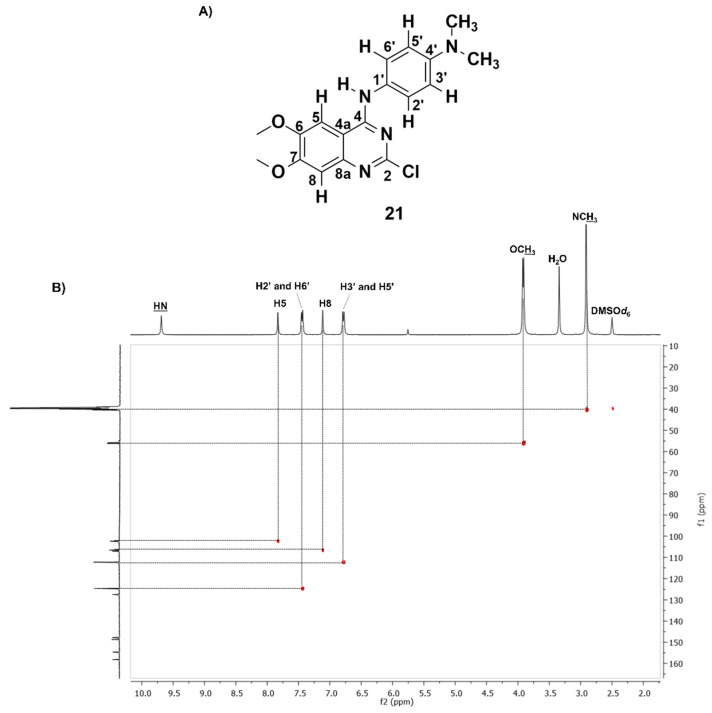
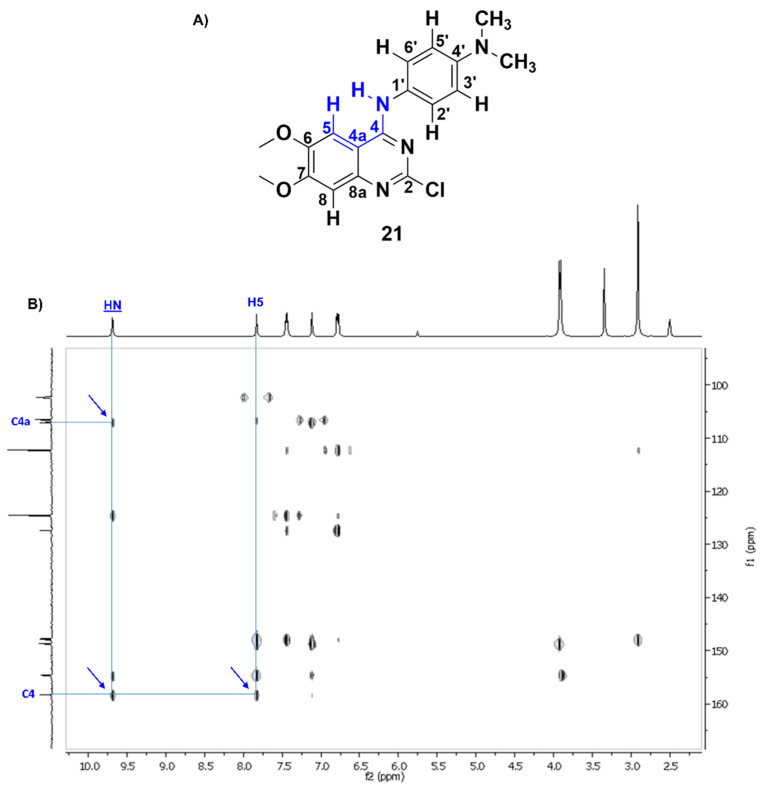
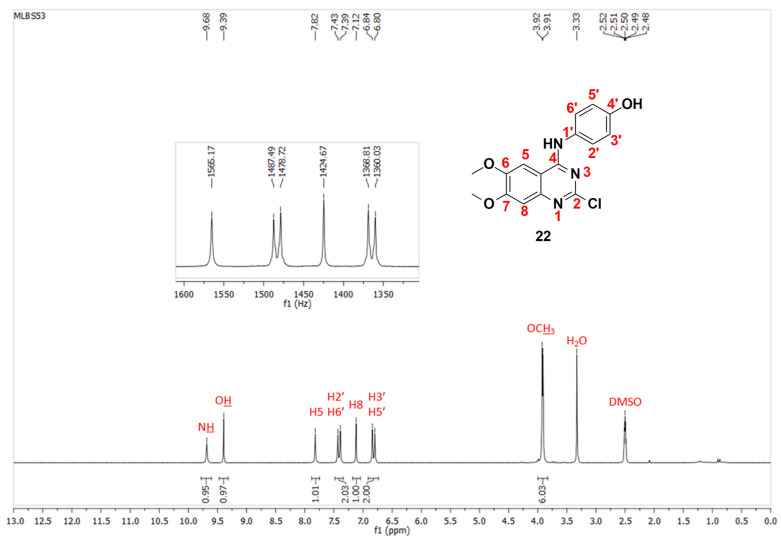
The 4-aminoquinazoline scaffold is a privileged structure in medicinal chemistry. Regioselective nucleophilic aromatic substitution (SAr) for replacing the chlorine atom at the 4-position of 2,4-dichloroquinazoline precursors is well documented in the scientific literature and has proven useful in synthesizing 2-chloro-4-aminoquinazolines and/or 2,4-diaminoquinazolines for various therapeutic applications. While numerous reports describe reaction conditions involving different nucleophiles, solvents, temperatures, and reaction times, discussions on the regioselectivity of the SAr step remain scarce. In this study, we combined DFT calculations with 2D-NMR analysis to characterize the structure and understand the electronic factors underlying the regioselective SAr of 2,4-dichloroquinazolines for the synthesis of bioactive 4-aminoquinazolines. DFT calculations revealed that the carbon atom at the 4-position of 2,4-dichloroquinazoline has a higher LUMO coefficient, making it more susceptible to nucleophilic attack. This observation aligns with the calculated lower activation energy for nucleophilic attack at this position, supporting the regioselectivity of the reaction. To provide guidance for the structural confirmation of 4-amino-substituted product formation when multiple regioisomers are possible, we employed 2D-NMR methods to verify the 4-position substitution pattern in synthesized bioactive 2-chloro-4-aminoquinazolines. These findings are valuable for future research, as many synthetic reports assume regioselective outcomes without sufficient experimental verification.
4-氨基喹唑啉骨架是药物化学中的一种优势结构。在科学文献中,关于2,4-二氯喹唑啉前体4位氯原子的区域选择性亲核芳香取代(SAr)已有充分记载,并且已证明在合成用于各种治疗应用的2-氯-4-氨基喹唑啉和/或2,4-二氨基喹唑啉方面很有用。虽然有许多报告描述了涉及不同亲核试剂、溶剂、温度和反应时间的反应条件,但关于SAr步骤区域选择性的讨论仍然很少。在本研究中,我们将密度泛函理论(DFT)计算与二维核磁共振(2D-NMR)分析相结合,以表征结构并了解2,4-二氯喹唑啉区域选择性SAr合成生物活性4-氨基喹唑啉背后的电子因素。DFT计算表明,2,4-二氯喹唑啉4位的碳原子具有较高的最低未占分子轨道(LUMO)系数,使其更容易受到亲核攻击。这一观察结果与在该位置亲核攻击计算出的较低活化能一致,支持了反应的区域选择性。为了在可能存在多种区域异构体时为4-氨基取代产物形成的结构确认提供指导,我们采用2D-NMR方法来验证合成的生物活性2-氯-4-氨基喹唑啉中的4位取代模式。这些发现对未来的研究很有价值,因为许多合成报告在没有充分实验验证的情况下就假定了区域选择性结果。