
可穿戴系统在残疾赛跑运动员表现分析中的应用
Wearable System Applications in Performance Analysis of RaceRunning Athletes with Disabilities.
作者信息
Shafizadeh Mohsen, Davids Keith
机构信息
School of Sport and Physical Activity, College of Health, Wellbeing and Life Sciences, Sheffield Hallam University, Sheffield S10 2BP, UK.
出版信息
Sensors (Basel). 2024 Dec 11;24(24):7923. doi: 10.3390/s24247923.
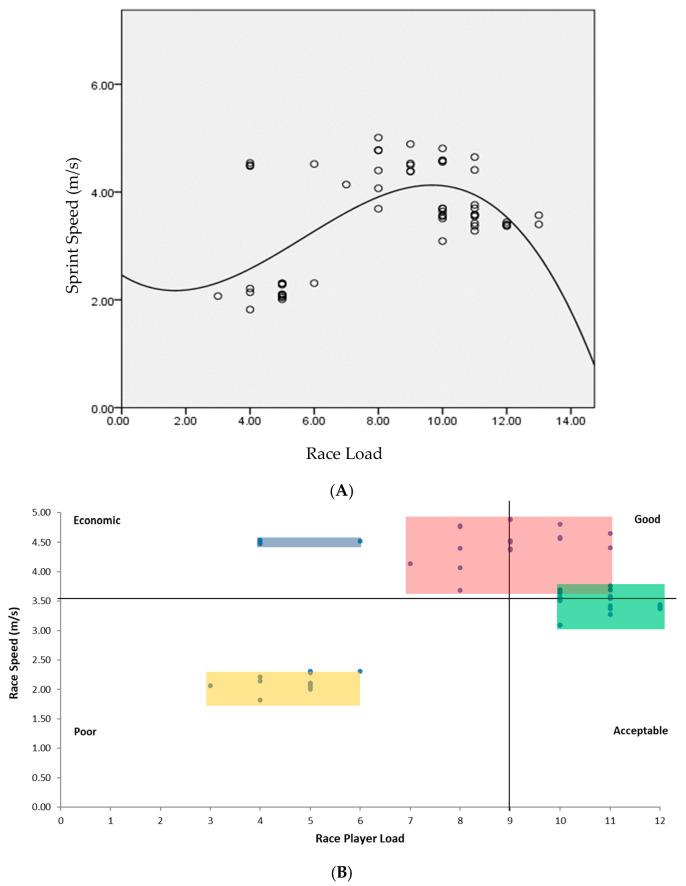
RaceRunning is a sport for disabled people and successful performance depends on reducing the amount of time spent travelling a specific distance. Performance analysis in RaceRunning athletes is based on traditional methods such as recording race time, distances travelled and frequency (sets and reps) that are not sufficient for monitoring training loads. The aims of this study were to monitor training loads in typical training sessions and evaluate technical adaptations in RaceRunning performance by acquiring sensor metrics. Five elite and competitive RaceRunning athletes (18.2 ± 2.3 yrs) at RR2 and RR3 levels were monitored for 8 weeks, performing in their usual training sessions while wearing unobtrusive motion sensors. The motion sensors were attached to the waist and lower leg in all training sessions, each lasting between 80 and 90 min. Performance metrics data collected from the motion sensors included player loads, race loads, work/rest ratio and impact shock directions, along with training factors (duration, frequency, distance, race time and rest time). Results showed that weekly training loads (player and race loads) followed acceptable threshold levels, according to assessment criteria (smallest worthwhile change, acute/chronic work ratio). The relationship between race velocity (performance index) and race load was non-linear and statistically significant, which led to different performance efficiency groups. Wearable motion sensor metrics revealed small to moderate technical adaptations following repeated sprint attempts in temporal running performance, variability and consistency. In conclusion, using a wearable-based system is an effective feedback tool to monitor training quality, revealing important insights into adaptations to training volumes in disabled athletes.
竞速跑是一项面向残疾人的运动,成功的表现取决于减少在特定距离内的行进时间。竞速跑运动员的表现分析基于传统方法,如记录比赛时间、行进距离和频率(组数和重复次数),但这些方法不足以监测训练负荷。本研究的目的是通过获取传感器指标来监测典型训练课程中的训练负荷,并评估竞速跑表现中的技术适应性。对五名RR2和RR3级别的精英和有竞争力的竞速跑运动员(18.2±2.3岁)进行了为期8周的监测,他们在日常训练课程中佩戴不显眼的运动传感器。在所有训练课程中,运动传感器都附着在腰部和小腿上,每次训练持续80至90分钟。从运动传感器收集的表现指标数据包括运动员负荷、比赛负荷、工作/休息比率和冲击方向,以及训练因素(持续时间、频率、距离、比赛时间和休息时间)。结果表明,根据评估标准(最小有价值变化、急性/慢性工作比率),每周训练负荷(运动员和比赛负荷)遵循可接受的阈值水平。比赛速度(表现指数)与比赛负荷之间的关系是非线性的且具有统计学意义,这导致了不同的表现效率组。可穿戴运动传感器指标显示,在重复短跑尝试后,在时间跑步表现、变异性和一致性方面有小到中等程度的技术适应性。总之,使用基于可穿戴设备的系统是监测训练质量的有效反馈工具,能揭示残疾运动员对训练量适应性的重要见解。



 Zotero 插件