McFadden Kimberley, Valkanas Helen, Rourke Leslie, Li Patricia, Bayoumi Imaan
Centre for Studies in Primary Care, Department of Family Medicine, Queen's University, 220 Bagot St, K7L 3G2, Kingston, ON, Canada.
McGill University Health Centre Research Institute, Montréal, QC, Canada.
BMC Prim Care. 2025 Jan 7;26(1):5. doi: 10.1186/s12875-024-02701-0.
For children under age six, regular preventative primary care is needed for administration of vaccinations, surveillance of development, and early diagnosis and intervention for any potential health conditions or developmental delays. The COVID-19 pandemic created many barriers to providing and accessing primary care. While many studies have explored these barriers, it is important to understand how primary care adapted to ensure these crucial early-years appointments were not missed throughout the pandemic. The objective of this study, therefore, was to discover innovative programs or services that were used, and suggestions for programs or services that could have been implemented, to facilitate delivery of, and access to, primary care for young children during the COVID-19 pandemic (March 2020-May 2023).
This qualitative descriptive study used a survey and semi-structured interviews to discuss primary care programs or services with parents or caregivers of children who were under the age of 6 during the pandemic and with primary care providers who deliver care to young children. The survey was sent to parent groups and primary care providers across the Canadian provinces of Ontario and Quebec from May to October 2023. Survey participants who indicated interest in further participation were subsequently contacted for an interview. Results were analyzed using content and thematic analyses.
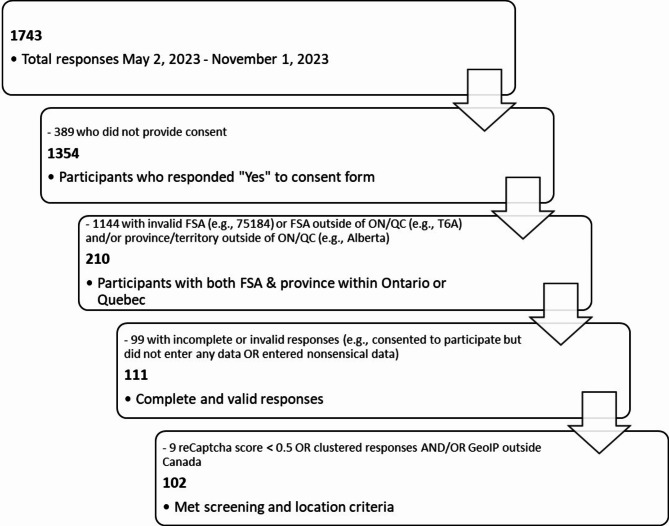
102 individuals (33 primary care providers and 69 parents or caregivers) responded to the survey and of those, 19 participated in the interviews. Six themes emerged from the innovative services or procedures that were discussed: Prioritization of young children; Creation or modification of primary care spaces; Clear decision-making guidelines; Virtual care integration; Proactive communication; and Interdisciplinary collaboration.
This qualitative study explored some creative and positive solutions to the struggle of providing and accessing primary care for young children during the COVID-19 pandemic. The results from this research highlight the importance of flexibility and innovation within the primary care system, especially under circumstances of sudden and unexpected increases in barriers to providing and accessing care. On-going development of innovations that improve communication, take a more collaborative approach, and adapt systems, spaces, and methods will improve primary care access and delivery.
Not applicable.
对于六岁以下儿童,需要进行定期预防性初级保健,以进行疫苗接种、监测发育情况,并对任何潜在的健康状况或发育迟缓进行早期诊断和干预。新冠疫情给初级保健的提供和获取造成了诸多障碍。尽管许多研究探讨了这些障碍,但了解初级保健如何调整以确保在整个疫情期间这些关键的幼儿期预约不被错过非常重要。因此,本研究的目的是发现疫情期间(2020年3月至2023年5月)用于促进幼儿初级保健服务的提供和获取的创新项目或服务,以及对本可实施的项目或服务的建议。
这项定性描述性研究通过一项调查和半结构化访谈,与疫情期间六岁以下儿童的父母或照料者以及为幼儿提供护理的初级保健提供者讨论初级保健项目或服务。该调查于2023年5月至10月发送给加拿大安大略省和魁北克省的家长团体和初级保健提供者。随后,与表示有兴趣进一步参与的调查参与者联系进行访谈。结果采用内容分析和主题分析进行分析。
102人(33名初级保健提供者和69名父母或照料者)回复了调查,其中19人参与了访谈。从所讨论的创新服务或程序中出现了六个主题:优先考虑幼儿;创建或改造初级保健空间;明确的决策指南;整合虚拟护理;积极沟通;以及跨学科协作。
这项定性研究探索了在新冠疫情期间为幼儿提供和获取初级保健方面所面临困难的一些创造性和积极的解决方案。本研究结果凸显了初级保健系统内灵活性和创新的重要性,尤其是在提供和获取护理的障碍突然意外增加的情况下。持续开展改进沟通、采取更协作方法以及调整系统、空间和方法的创新措施,将改善初级保健的获取和提供。
不适用。