Khuu Lisa, Pillay Alisha, Prichard Allan, Allen Lee-Ann H
Department of Molecular Microbiology and Immunology, University of Missouri, Columbia, Missouri, United States of America.
Department of Microbiology and Immunology, University of Iowa, Iowa City, Iowa, United States of America.
PLoS One. 2025 Jan 7;20(1):e0316912. doi: 10.1371/journal.pone.0316912. eCollection 2025.
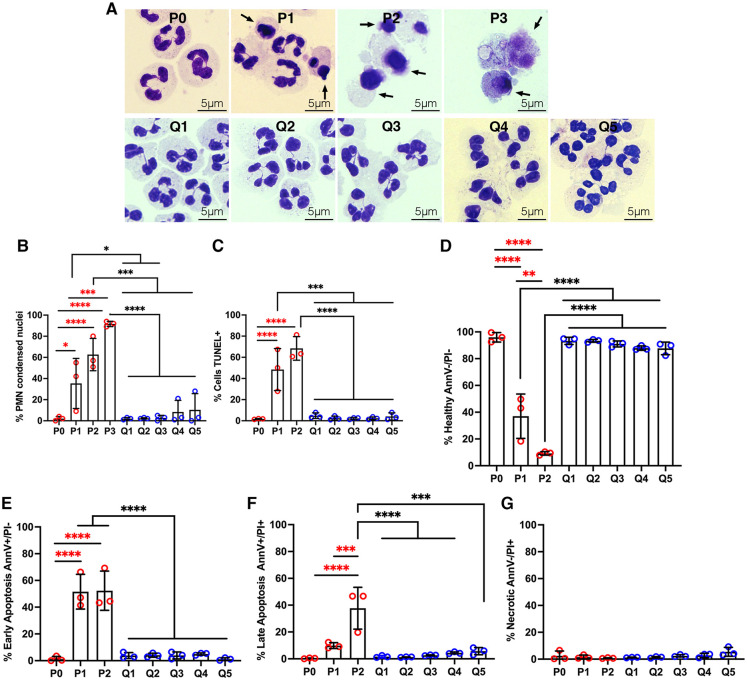
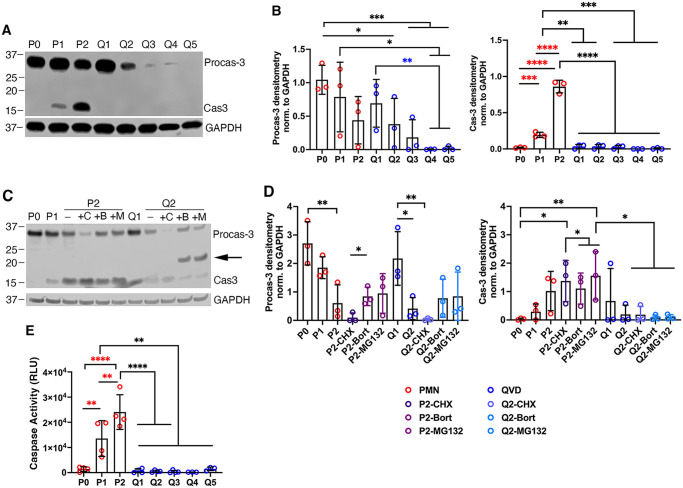
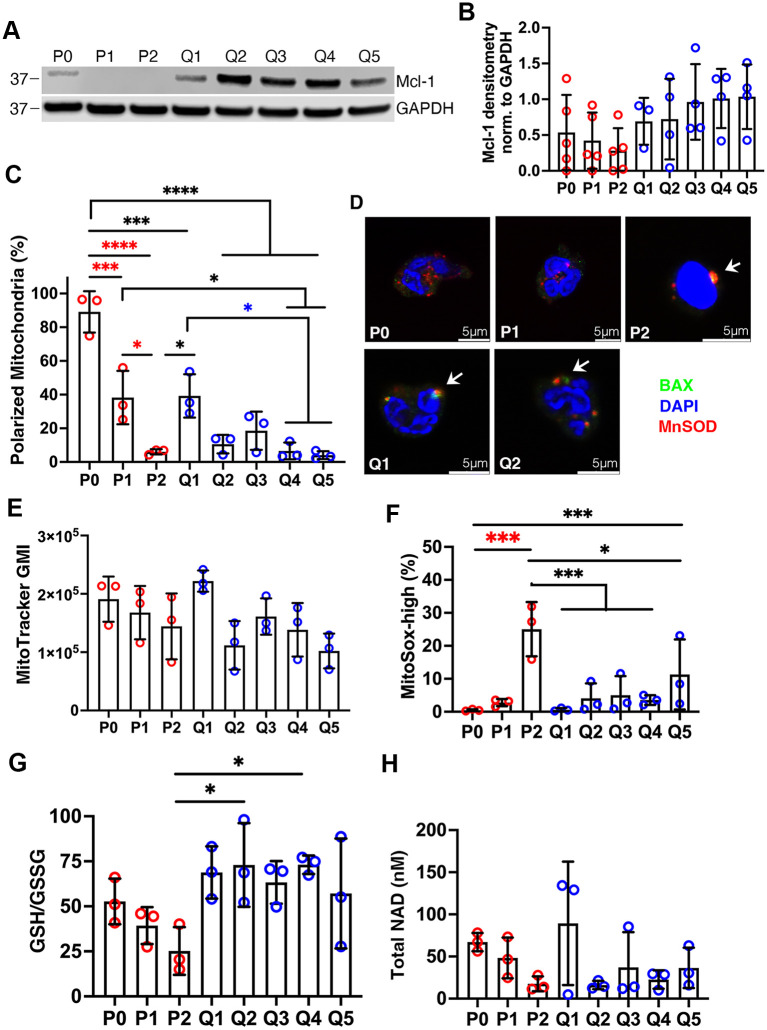
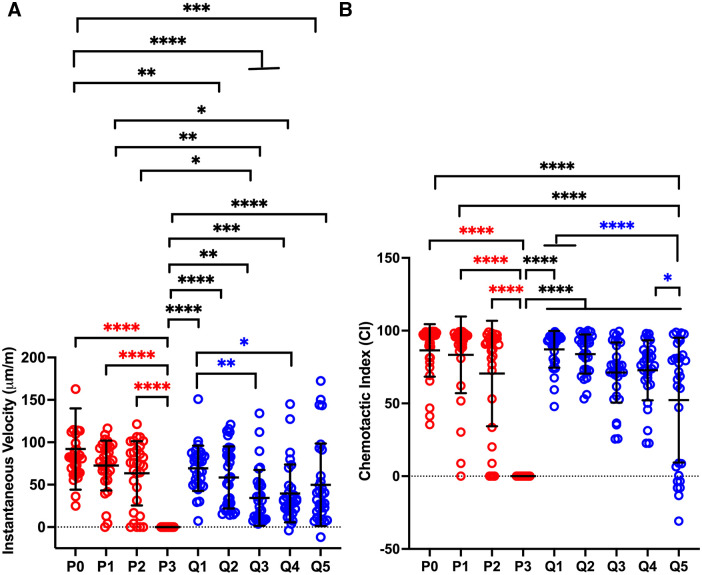
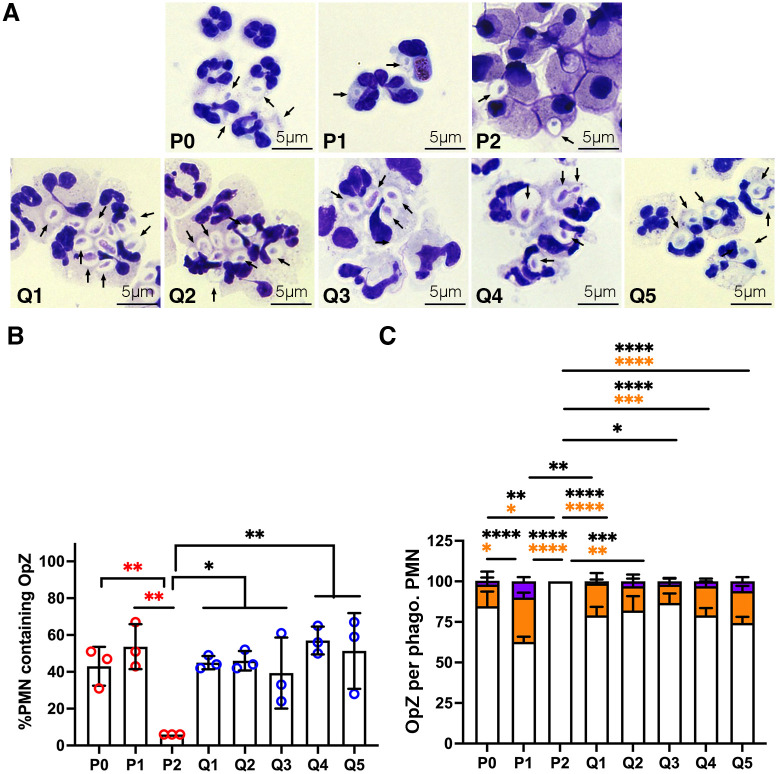
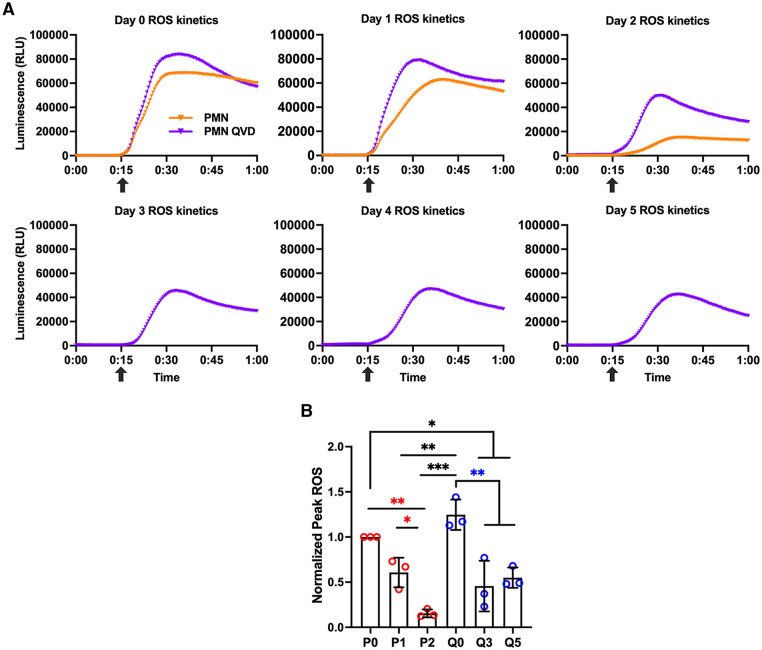
Human neutrophils are abundant, short-lived leukocytes that turn over at a rate of approximately 1011 cells/day via a constitutive apoptosis program. Certain growth factors, inflammatory mediators and infectious agents can delay apoptosis or induce neutrophils to die by other mechanisms. Nonetheless, a large body of data demonstrates that apoptosis of untreated neutrophils typically ensues within 24 hours of cell isolation and in vitro culture. At the molecular level apoptosis is driven by executioner caspase-3, and during this process cell proinflammatory capacity and host defense functions are downregulated. We undertook the current study to determine the extent to which human neutrophil viability and function could be prolonged by treatment with the non-toxic, irreversible, pan-caspase inhibitor Q-VD-OPh. Our data demonstrate that a single 10 μM dose of this drug was sufficient to markedly prolong cell lifespan. Specifically, we show that apoptosis was prevented for at least 5 days as indicated by analysis of nuclear morphology, DNA fragmentation, and phosphatidylserine externalization together with measurements of procaspase-3 processing and caspase activity. Conversely, mitochondrial depolarization declined despite abundant Myeloid Cell Leukemia 1 (MCL-1). At the same time, glutathione levels were maintained and Q-VD-OPh prevented age-associated increases mitochondrial oxidative stress. Regarding functional capacity, we show that phagocytosis, NADPH oxidase activity, chemotaxis, and degranulation were maintained following Q-VD-OPh treatment, albeit to somewhat different extents. Thus, a single 10 μM dose of Q-VD-OPh can sustain human neutrophil viability and function for at least 5 days.
人类中性粒细胞是数量丰富、寿命短暂的白细胞,通过组成性凋亡程序以约10¹¹个细胞/天的速率更新。某些生长因子、炎症介质和感染因子可延迟凋亡或诱导中性粒细胞通过其他机制死亡。尽管如此,大量数据表明,未经处理的中性粒细胞凋亡通常在细胞分离和体外培养后24小时内发生。在分子水平上,凋亡由执行蛋白半胱天冬酶-3驱动,在此过程中细胞的促炎能力和宿主防御功能会下调。我们进行了当前这项研究,以确定用无毒、不可逆的泛半胱天冬酶抑制剂Q-VD-OPh处理能在多大程度上延长人类中性粒细胞的活力和功能。我们的数据表明,单次10 μM剂量的这种药物足以显著延长细胞寿命。具体而言,我们通过分析核形态、DNA片段化、磷脂酰丝氨酸外翻以及测量前半胱天冬酶-3的加工和半胱天冬酶活性表明,凋亡至少被阻止了5天。相反,尽管有大量的髓系细胞白血病1(MCL-1),线粒体去极化仍有所下降。同时,谷胱甘肽水平得以维持,且Q-VD-OPh可防止与年龄相关的线粒体氧化应激增加。关于功能能力,我们表明,Q-VD-OPh处理后吞噬作用、NADPH氧化酶活性、趋化性和脱颗粒作用均得以维持,尽管程度有所不同。因此,单次10 μM剂量的Q-VD-OPh可维持人类中性粒细胞的活力和功能至少5天。