Ramadhan M, AlMehandi A, Al-Naseem A, Hayat J, Almarzouq A
Department of Surgery, Jaber Al-Ahmad Hospital, Kuwait City, Kuwait.
School of Medical Sciences, University of Manchester, Manchester, UK.
Arab J Urol. 2024 Sep 18;23(1):84-94. doi: 10.1080/20905998.2024.2395202. eCollection 2025.
To compare the outcomes of using prophylactic direct oral anti-coagulants (DOAC) and low-molecular-weight heparin (LMWH) after major urologic surgery.
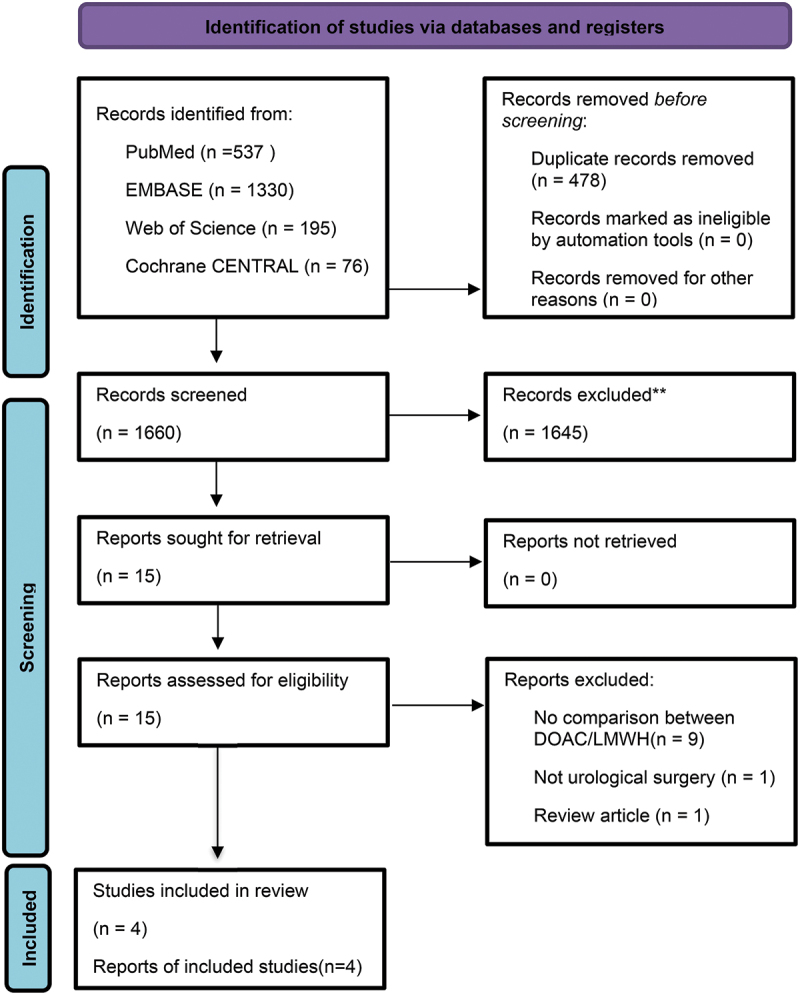
Systematic literature searches of MEDLINE, Embase, Web of Science, and Cochrane CENTRAL were performed up to 9 November 2023, and protocols were registered on PROSPERO (CRD42024494424). The primary outcomes were post-operative incidence of VTE and bleeding. The secondary outcomes included re-admissions and transfusions needed, post-operative complications and exploring the radical cystectomy sub-group. Outcomes were reported in 30 and 90 days where feasible with sub-group analysis.
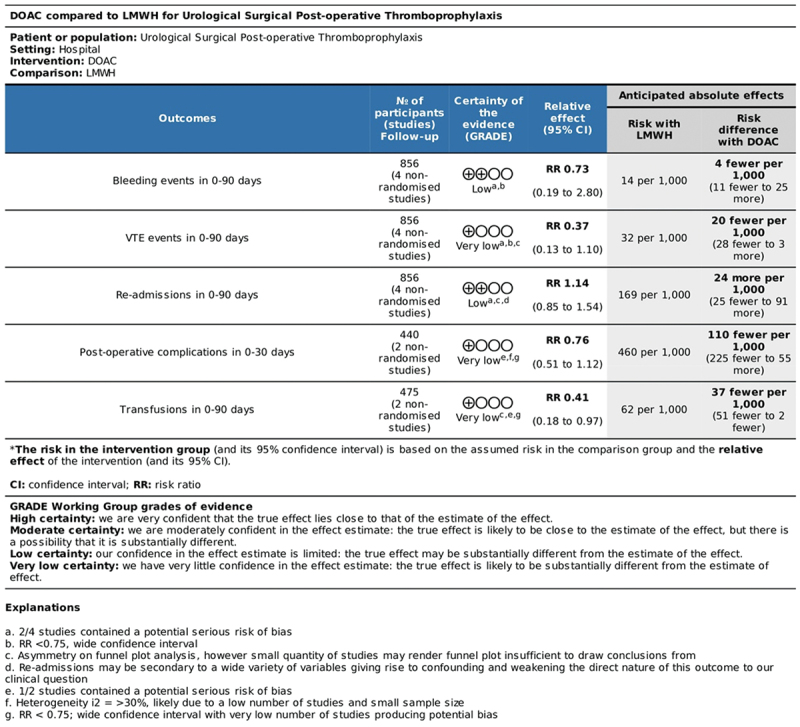
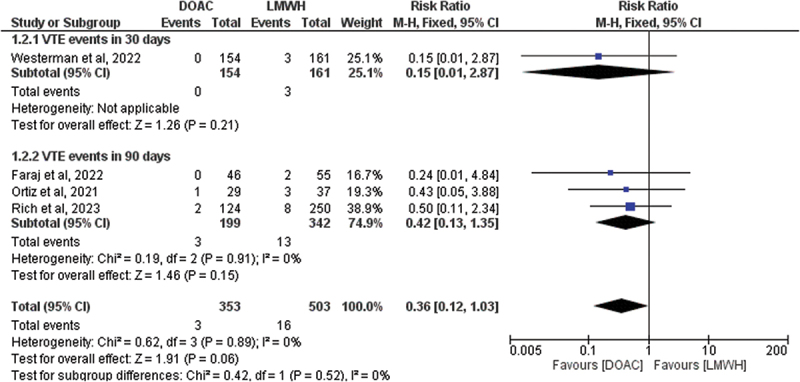
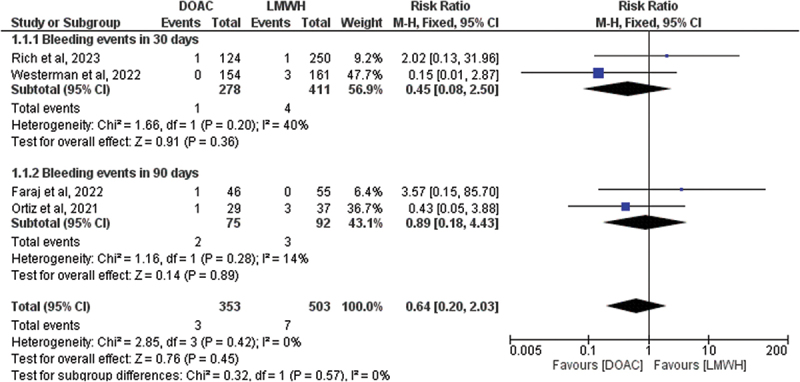
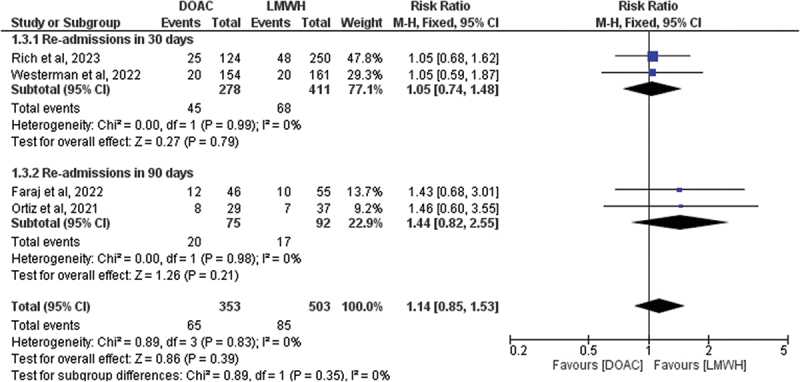
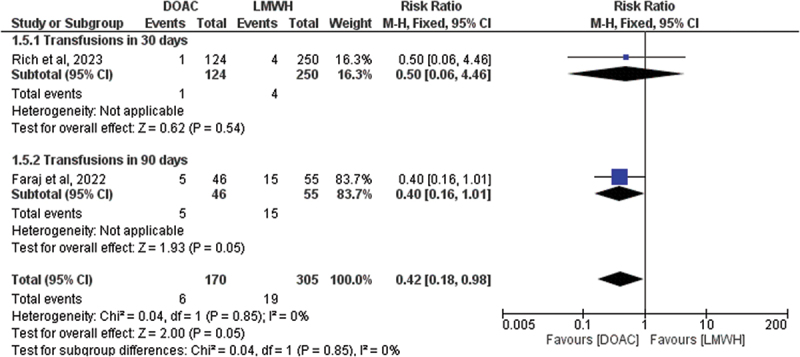
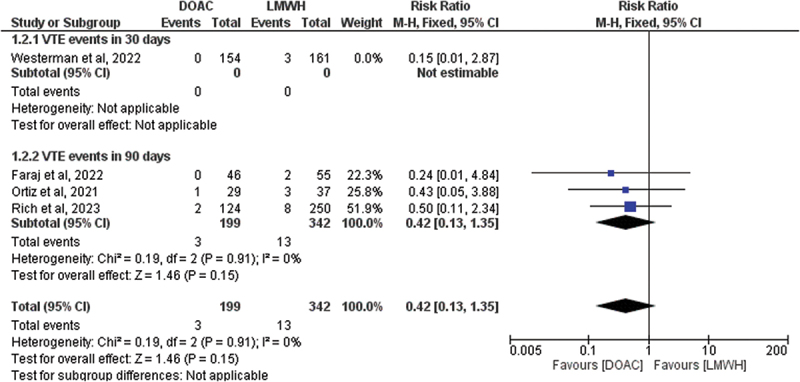
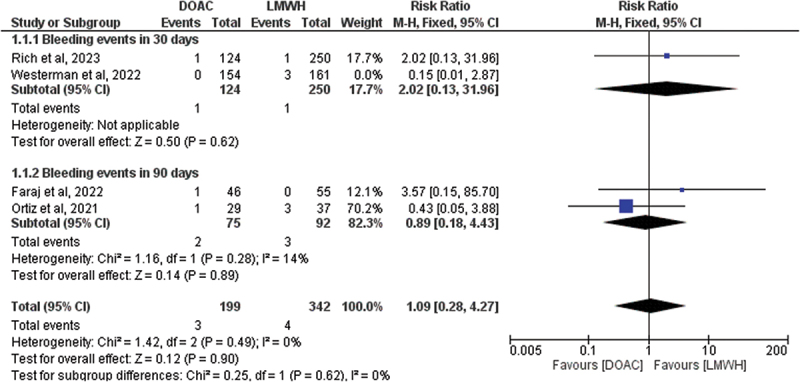
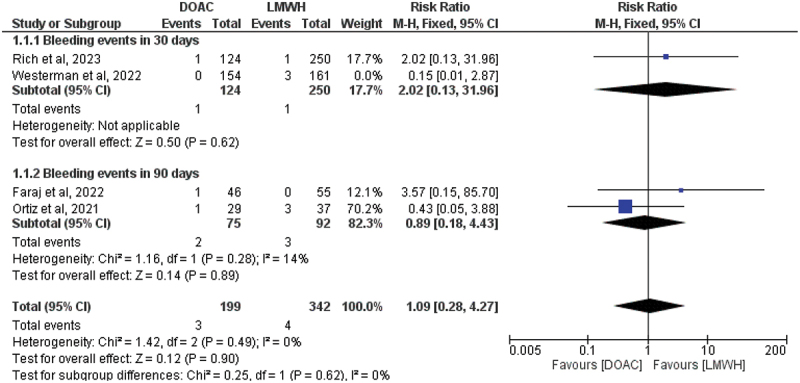
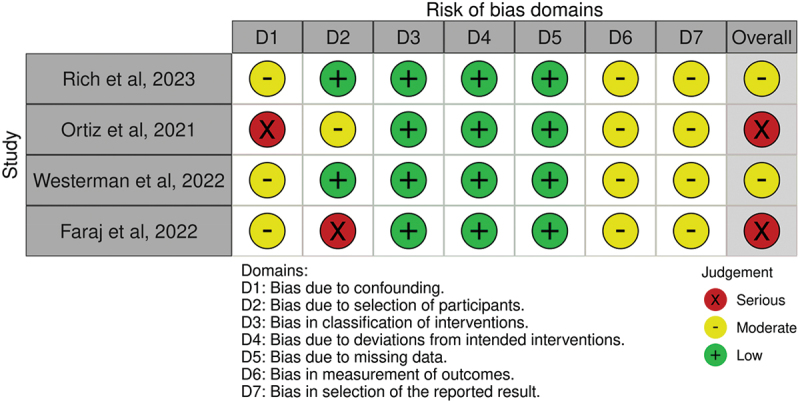
Searches yielded four studies that included 856 patients and the outcomes were reported within 30 and 90 days, with sub-analysis performed for each time-interval. We found no statistically significant differences between DOAC and LWMH within neither primary nor secondary outcomes; VTE events (RR 0.36; = 0.06); bleeding events (RR 0.64; = 0.45); re-admissions (RR 1.14; = 0.39); transfusions (RR 0.42; = 0.05) within 0-90 days and post-operative complications within 30 days (RR 0.76; = 0.17). Similar results were found when exploring radical cystectomy sub-group: VTE risk (RR 0.42, = 0.15), bleeding risk (RR 1.09; = 0.90), and re-admissions to hospital (RR 1.18, = 0.35). Limitations include small sample size, and difficult generalization to all urological surgery as most of the analyzed cohort underwent radical cystectomy.
DOACs may be a safe and possibly cost-effective alternative to LMWH as post-operative thromboprophylaxis. However, these findings should be interpreted with caution due to limitations; therefore, more randomized studies are needed to ascertain our findings.
比较在大型泌尿外科手术后使用预防性直接口服抗凝剂(DOAC)和低分子肝素(LMWH)的效果。
截至2023年11月9日,对MEDLINE、Embase、科学网和Cochrane CENTRAL进行了系统的文献检索,并在PROSPERO(CRD42024494424)上注册了研究方案。主要结局是术后静脉血栓栓塞(VTE)和出血的发生率。次要结局包括再次入院和所需输血情况、术后并发症以及探索根治性膀胱切除术亚组。在可行的情况下,在30天和90天报告结局并进行亚组分析。
检索得到四项研究,共纳入856例患者,结局在30天和90天内报告,并对每个时间间隔进行了亚分析。我们发现,在主要结局和次要结局方面,DOAC和LMWH之间均无统计学显著差异;0至90天内的VTE事件(风险比[RR] 0.36;P = 0.06);出血事件(RR 0.64;P = 0.45);再次入院(RR 1.14;P = 0.39);输血(RR 0.42;P = 0.05)以及30天内的术后并发症(RR 0.76;P = 0.17)。在探索根治性膀胱切除术亚组时也发现了类似结果:VTE风险(RR 0.42,P = 0.15)、出血风险(RR 1.09;P = 0.90)和再次入院(RR 1.18,P = 0.35)。局限性包括样本量小,且由于大多数分析队列接受了根治性膀胱切除术,难以推广到所有泌尿外科手术。
作为术后血栓预防措施,DOAC可能是LMWH的一种安全且可能具有成本效益的替代方案。然而,由于存在局限性,这些发现应谨慎解读;因此,需要更多随机研究来确定我们的发现。