
通过超分子纳米组装对美沙拉嗪进行药物重定位以治疗药物性急性肝衰竭。
Drug repositioning of mesalamine via supramolecular nanoassembly for the treatment of drug-induced acute liver failure.
作者信息
Park Byeongmin, Kim Eun Hye, Jang Hochung, Kim Yelee, Ryu Youngri, Choi Jiwoong, Shin Dongwon, Lee Myung Chul, Yang Yoosoo, Kim Kwangmeyung, Lee Sangmin, Kim Sun Hwa, Shim Man Kyu
机构信息
KU-KIST Graduate School of Converging Science and Technology, Korea University, Seoul 02841, Republic of Korea.
Medicinal Materials Research Center, Biomedical Research Division, Korea Institute of Science and Technology (KIST), Seoul 02792, Republic of Korea.
出版信息
Theranostics. 2025 Jan 1;15(3):1122-1134. doi: 10.7150/thno.101358. eCollection 2025.
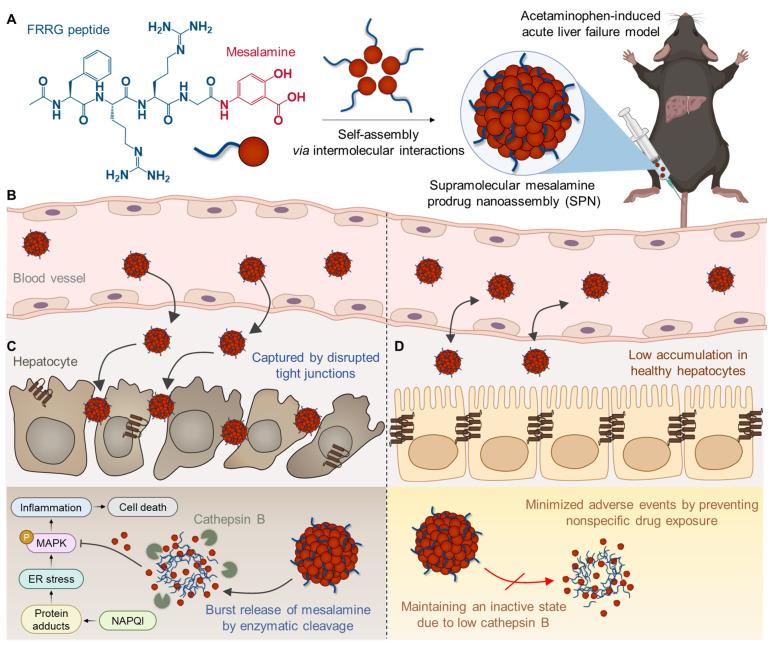
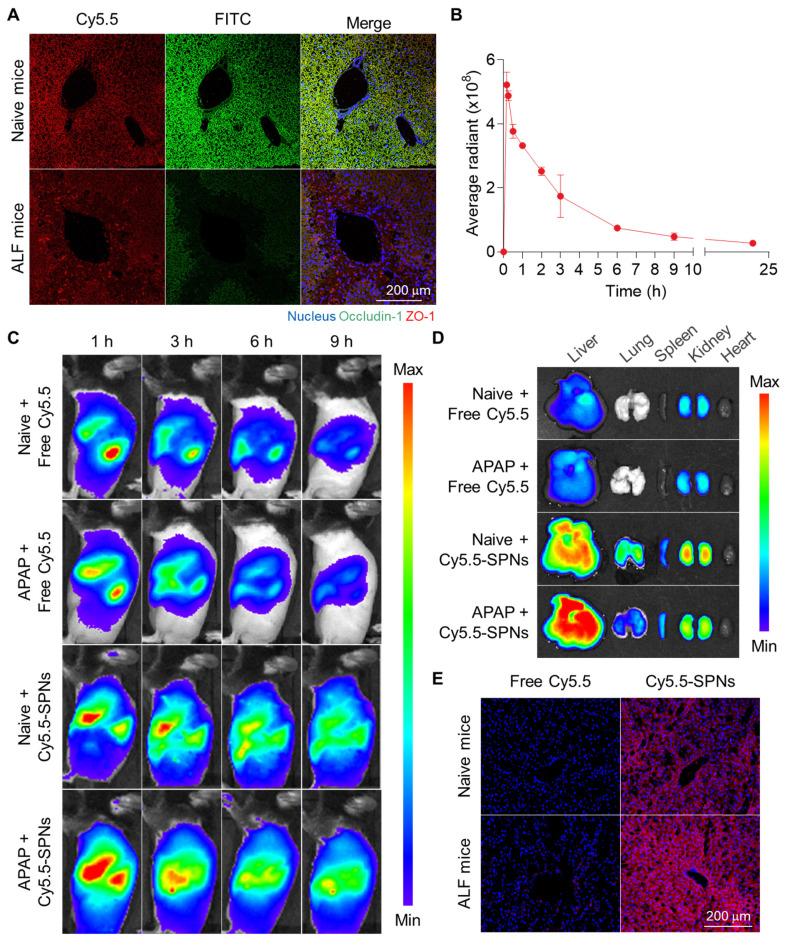
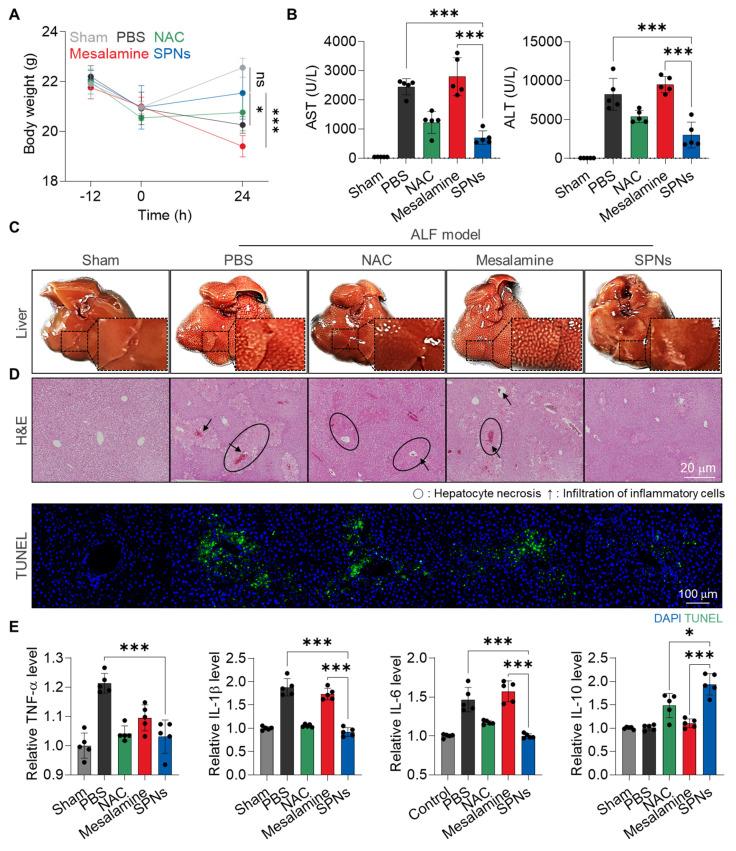
Acute liver failure (ALF) is characterized by rapid hepatic dysfunction, primarily caused by drug-induced hepatotoxicity. Due to the lack of satisfactory treatment options, ALF remains a fatal clinical disease, representing a grand challenge in global health. For the drug repositioning to ALF of mesalamine, which is clinically approved for the treatment of inflammatory bowel disease (IBD), we propose a supramolecular prodrug nanoassembly (SPNs). Mesalamine is modified with a functional peptide of the FRRG sequence. The resulting mesalamine prodrugs form nanoassemblies solely through intermolecular interactions, ensuring high drug loading capacity and reducing the potential toxicity associated with the carrier materials of conventional nanoparticle systems. In acetaminophen (APAP)-induced ALF mouse models, the SPNs predominantly accumulate in injured target tissues owing to the nanoparticles' propensity to target the liver. Subsequently, cathepsin B overexpressed in hepatocytes by drug-induced inflammation triggers the release of mesalamine from the nanoassemblies enzymatic cleavage, resulting in remarkable therapeutic efficacy. Meanwhile, nonspecific drug release in healthy cells is inhibited due to their relatively lower cathepsin B expression, which helps prevent the exacerbation of the ALF by minimizing adverse events related to drug exposure. This study provides valuable insights into designing rational nanomedicine for repurposing mesalamine in ALF treatment, potentially inspiring further research to discover effective and safe therapeutic options for patients.
急性肝衰竭(ALF)的特征是肝功能迅速衰退,主要由药物性肝毒性引起。由于缺乏令人满意的治疗方案,ALF仍然是一种致命的临床疾病,是全球健康领域的一大挑战。对于已获临床批准用于治疗炎症性肠病(IBD)的美沙拉嗪进行用于ALF的药物重新定位研究,我们提出了一种超分子前药纳米组装体(SPNs)。美沙拉嗪用FRRG序列的功能性肽进行修饰。所得的美沙拉嗪前药仅通过分子间相互作用形成纳米组装体,确保了高载药量,并降低了与传统纳米颗粒系统载体材料相关的潜在毒性。在对乙酰氨基酚(APAP)诱导的ALF小鼠模型中,由于纳米颗粒倾向于靶向肝脏,SPNs主要积聚在受损的靶组织中。随后,药物诱导的炎症使肝细胞中组织蛋白酶B过表达,通过酶促裂解触发纳米组装体中美沙拉嗪的释放,从而产生显著的治疗效果。同时,由于健康细胞中组织蛋白酶B表达相对较低,非特异性药物释放受到抑制,这有助于通过将与药物暴露相关的不良事件降至最低来防止ALF恶化。本研究为设计合理的纳米药物以将美沙拉嗪重新用于ALF治疗提供了有价值的见解,可能会激发进一步的研究,为患者发现有效且安全的治疗选择。
 Zotero 插件