
通过三种测序方法鉴定出的新型恒河猴免疫球蛋白种系基因。
Novel rhesus macaque immunoglobulin germline genes identified by three sequencing approaches.
作者信息
Guo Yicheng, Waltari Eric, Lu Hong, Sheng Zizhang, Wu Xueling
机构信息
Aaron Diamond AIDS Research Center, Columbia University Vagelos College of Physicians and Surgeons, New York, NY, United States.
Division of Infectious Diseases, Department of Medicine, Columbia University Vagelos College of Physicians and Surgeons, New York, NY, United States.
出版信息
Front Immunol. 2024 Dec 24;15:1506348. doi: 10.3389/fimmu.2024.1506348. eCollection 2024.
INTRODUCTION
Rhesus macaques have long been a focus of research for understanding immune responses to human pathogens due to their close phylogenetic relationship with humans. As rhesus macaque antibody germlines show high degrees of polymorphism, the spectrum of database-covered genes expressed in individual macaques remains to be determined.
METHODS
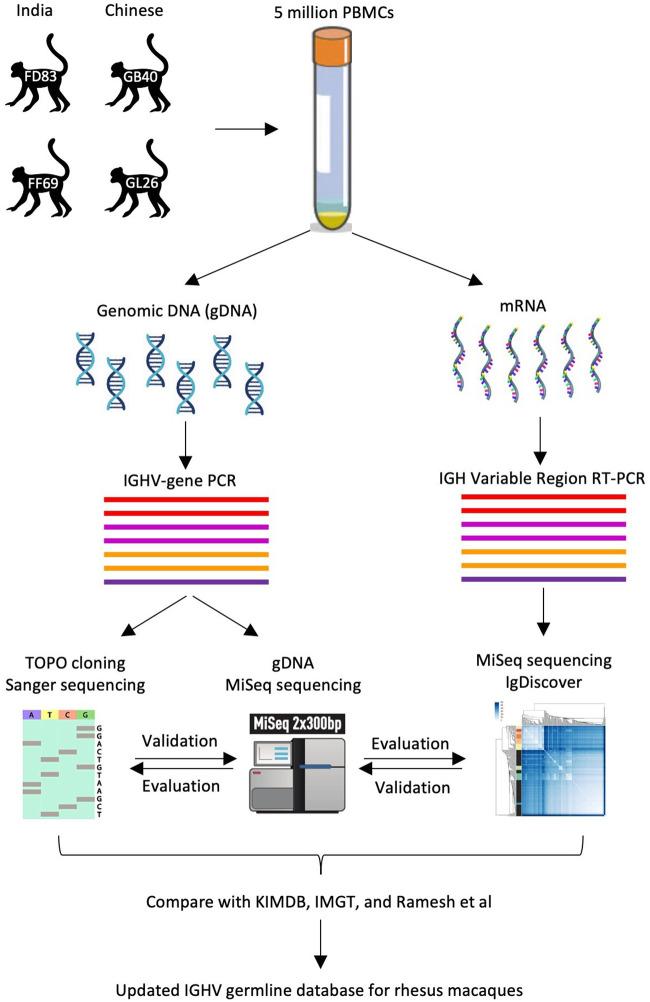
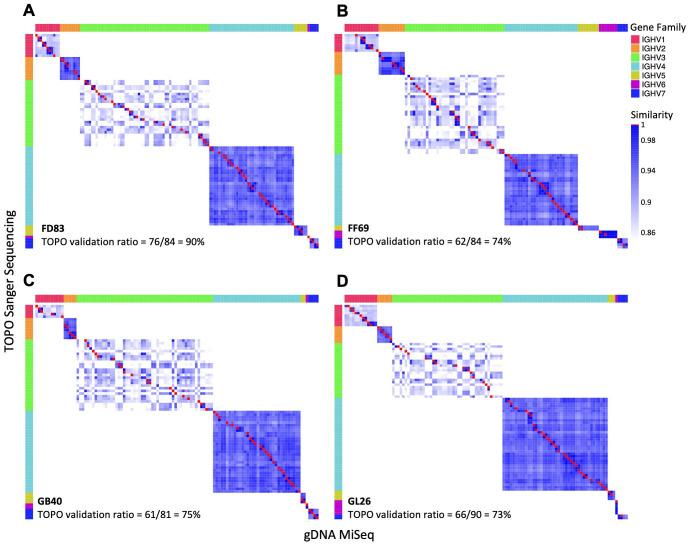
Here, four rhesus macaques infected with SHIV became a study of interest because they developed broadly neutralizing antibodies against HIV-1. To identify the immunoglobulin heavy chain V-gene (IGHV) germlines in these macaques, we applied three sequencing approaches - genomic DNA (gDNA) TOPO sequencing, gDNA MiSeq, and messenger RNA (mRNA) MiSeq inference with IgDiscover, and illustrated the detection power of each method.
RESULTS
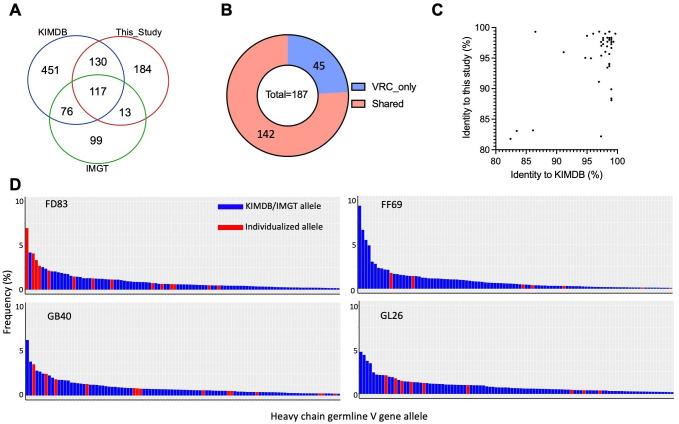
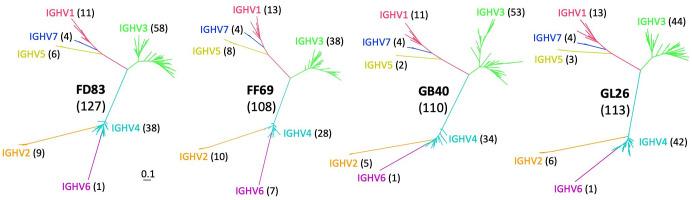
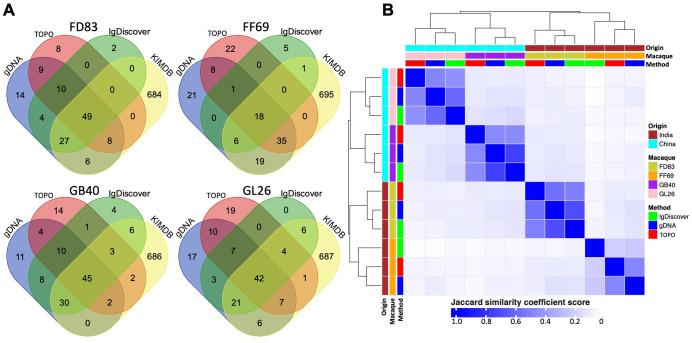
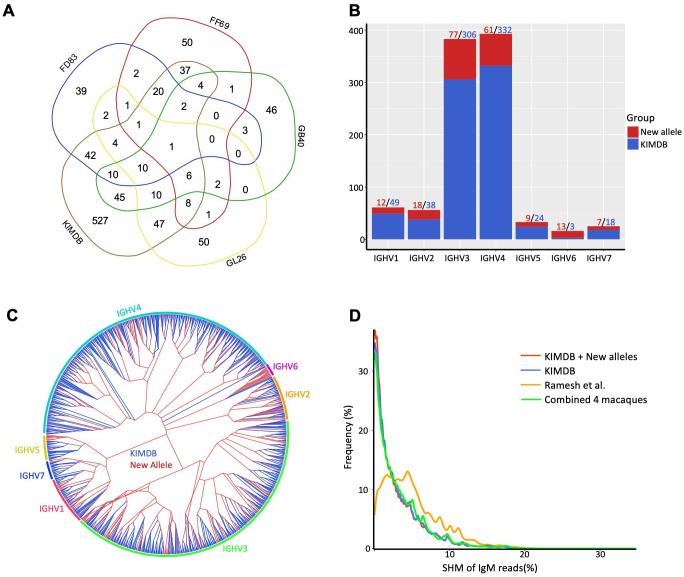
Of the 197 new rhesus IGHV germline sequences identified, 116 (59%) were validated by at least two methods, and 143 (73%) were found in at least two macaques or two sample sources. About 20% of germlines in each macaque are missing from the current database, including a subset frequently expressed. Overall, gDNA MiSeq determined the greatest number of germline sequences, followed by gDNA TOPO sequencing and mRNA MiSeq inference by IgDiscover, with IgDiscover providing direct evidence of allele expression and usage.
DISCUSSION
Our interdisciplinary study sheds light on germline sequencing, enhances the rhesus IGHV germline database, and highlights the importance of germline sequencing in rhesus immune repertoire studies.
引言
由于恒河猴与人类在系统发育上关系密切,长期以来一直是研究人类病原体免疫反应的重点。由于恒河猴抗体种系表现出高度多态性,个体猕猴中数据库覆盖基因的表达谱仍有待确定。
方法
在此,四只感染了猿猴免疫缺陷病毒/猴免疫缺陷病毒(SHIV)的恒河猴成为研究对象,因为它们产生了针对HIV-1的广泛中和抗体。为了鉴定这些猕猴中的免疫球蛋白重链V基因(IGHV)种系,我们应用了三种测序方法——基因组DNA(gDNA)TOPO测序、gDNA MiSeq测序以及使用IgDiscover的信使核糖核酸(mRNA)MiSeq推断,并阐述了每种方法的检测能力。
结果
在鉴定出的197个新的恒河猴IGHV种系序列中,116个(59%)通过至少两种方法得到验证,143个(73%)在至少两只猕猴或两个样本来源中被发现。每只猕猴中约20%的种系在当前数据库中缺失,包括一个经常表达的子集。总体而言,gDNA MiSeq确定的种系序列数量最多,其次是gDNA TOPO测序和使用IgDiscover的mRNA MiSeq推断,IgDiscover提供了等位基因表达和使用的直接证据。
讨论
我们的跨学科研究阐明了种系测序,增强了恒河猴IGHV种系数据库,并突出了种系测序在恒河猴免疫组库研究中的重要性。
 Zotero 插件